





-
Gessure Medical
-
1
-
ISO \ CE \ FDA\ FSC\ MDSAP
-
Titanium Alloy
-
Custom service supported
-
7–14 Days (OEM: 15–30 Days)
Product Overview
The 5.5 Mis Pedicle Screw System is a comprehensive minimally invasive posterior fixation solution designed for spinal stabilization across the thoracolumbar spine. Engineered for percutaneous and paraspinal approaches, this system features cannulated pedicle screws with dual-thread conical design and a 1.5 mm guide wire compatibility for precise, over-the-wire placement. The U-shaped elongated tulip with negative-angle thread design effectively reduces the risk of splay, while the break-off closure mechanism simplifies final tightening. Available in both axial-rotation and polyaxial screw configurations, with diameters ranging from 5.0 mm to 7.5 mm and lengths from 30 mm to 80 mm, the system accommodates diverse anatomical requirements. The titanium alloy pre-curved rods, available in lengths from 40 mm to 120 mm, are designed for easy subcutaneous placement. Combining MIS technique compatibility, comprehensive sizing, and secure locking mechanics, this system delivers reliable stabilization for a wide range of spinal pathologies.
Indications for Use
The 5.5 Mis Pedicle Screw System is indicated for the following clinical scenarios:
Degenerative disc disease of the lumbar and thoracic spine requiring posterior stabilization.
Spondylolisthesis (Grade I and II) requiring reduction and fixation.
Spinal stenosis where decompression and fusion are indicated.
Traumatic fractures of the thoracolumbar spine requiring posterior instrumentation.
Spinal deformities including adolescent and adult scoliosis, as well as kyphotic deformities.
Tumorous lesions of the spine requiring stabilization following resection.
Revision surgeries for failed prior instrumentation or pseudoarthrosis.
Post-traumatic instability following fracture or ligamentous injury.
Key Advantages
The 5.5 Mis Pedicle Screw System offers a range of distinct clinical benefits that enhance surgical outcomes and patient recovery.
Minimally Invasive Percutaneous Technique – The system is specifically designed for percutaneous and paraspinal approaches, significantly reducing muscle trauma, blood loss, and postoperative pain. The cannulated screws with 1.5 mm guide wire compatibility enable precise over-the-wire placement, facilitating accurate screw insertion with minimal soft tissue disruption. Patients experience faster recovery times and shorter hospital stays compared to traditional open procedures.
Cannulated Screw Design – All screws feature a cannulated design that accepts a 1.5 mm guide wire, enabling controlled, over-the-wire placement under fluoroscopic guidance. This design enhances accuracy and reduces radiation exposure to the surgical team, while the dual-thread conical configuration provides superior purchase in cancellous bone.
Comprehensive Screw Options – The system offers both axial-rotation (polyaxial) and fixed-angle screw configurations. The axial-rotation screws provide 360° rotational freedom and up to 30° of angulation, accommodating anatomical variations, while the fixed-angle screws offer rigid construct stability for demanding applications.
Elongated U-Shaped Tulip with Negative-Angle Thread – The tulip features a U-shaped elongated design that simplifies rod reduction and positioning. The negative-angle thread design effectively reduces the risk of splay (opening of the tulip arms), ensuring secure screw-rod coupling and eliminating the need for secondary anti-splay instrumentation.
Break-Off Closure Mechanism – The system utilizes a hexagonal break-off closure mechanism that provides consistent, reproducible tightening force. The controlled break-off design ensures optimal screw-rod compression without overtightening, reducing the risk of thread stripping and improving construct integrity.
Pre-Curved Titanium Rods – The system includes titanium alloy rods with a pre-curved anatomical contour, available in lengths from 40 mm to 120 mm. The pre-curved design simplifies rod passage and reduces the need for intraoperative rod bending, particularly in minimally invasive procedures where access is limited. The 5.5 mm rod diameter provides excellent stiffness-to-profile ratio, ensuring strong construct stability while minimizing tissue irritation.
Comprehensive Sizing Options – Screws are available in diameters from 5.0 mm to 7.5 mm and lengths from 30 mm to 80 mm. The 5 mm incremental diameter options and 5 mm length increments provide extensive flexibility for addressing different vertebral levels and bone quality variations, from osteoporotic to dense bone.
Secure Locking Mechanism – The combination of the negative-angle thread design and the break-off closure mechanism ensures secure screw-rod coupling, minimizing the risk of implant loosening and maintaining construct integrity throughout the fusion process. The dual-thread conical design provides optimal bone engagement, reducing the risk of screw pullout.
Non-Sterile and Sterile Options – The system is available in both non-sterile (GB1Z-II) and sterile (GB1Z-IIIS) configurations, allowing hospitals to choose according to their sterilization protocols and inventory preferences.
Technical Specifications & Sizing
Size Range Overview
The 5.5 Mis Pedicle Screw System offers a comprehensive range of screw diameters, lengths, and rod dimensions to accommodate diverse anatomical and surgical requirements.
Screw Specifications:
Diameter: 5.0 mm, 5.5 mm, 6.0 mm, 6.5 mm, 7.0 mm, 7.5 mm
Length: 30 mm, 35 mm, 40 mm, 45 mm, 50 mm, 55 mm, 60 mm, 70 mm, 80 mm (varies by diameter)
Thread Type: Dual-thread conical, cannulated (1.5 mm guide wire)
Screw Type: Axial-rotation (polyaxial) and fixed-angle
Tulip Type: U-shaped elongated, negative-angle thread design
Closure: Break-off locking screw
Material: Medical-grade titanium alloy
Packaging: Non-sterile: GB1Z-II / Sterile: GB1Z-IIIS
Rod Specifications:
Diameter: 5.5 mm
Length: 40 mm, 45 mm, 50 mm, 55 mm, 60 mm, 65 mm, 70 mm, 75 mm, 80 mm, 85 mm, 90 mm, 95 mm, 100 mm, 105 mm, 110 mm, 120 mm
Profile: Pre-curved anatomical contour
Material: Medical-grade titanium alloy
Guide Wire Diameter: 1.5 mm
Detailed Dimension Tables
Cannulated Axial-Rotation Pedicle Screws
Picture | Diameter (mm) | Length (mm) |
|---|---|---|
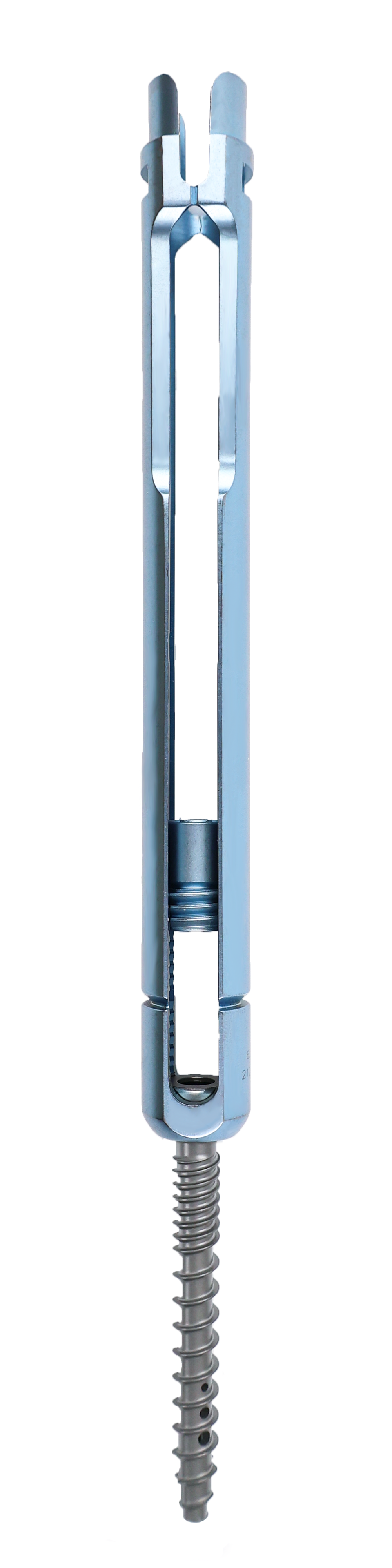 | 5.5mm | 35/40/45/50 |
6.0 | 35/40/45/50 | |
6.5 | 35/40/45/50/55 | |
7.0 | 30/35/40 | |
7.5 | 30/35/40 |
Cannulated Polyaxial Pedicle Screws
Picture | Diameter (mm) | Length (mm) |
|---|---|---|
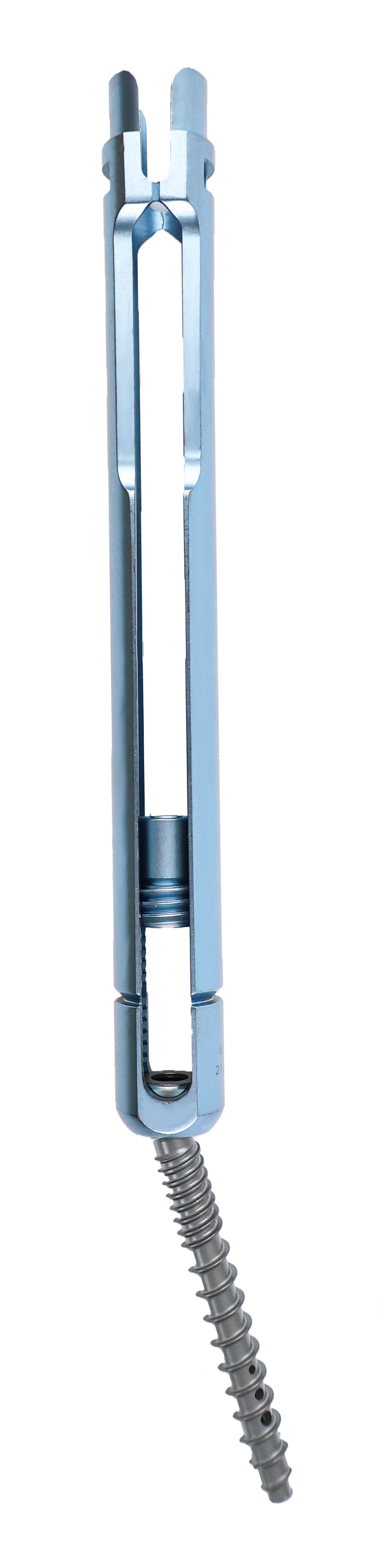 | 5.5 | 35/40/45/50 |
6.0 | 35/40/45/50 | |
6.5 | 35/40/45/50/55 | |
7.0 | 30/35/40 | |
7.5 | 30/35/40 |
Minimally Invasive Pre-Curved Rods (5.5 mm Diameter)
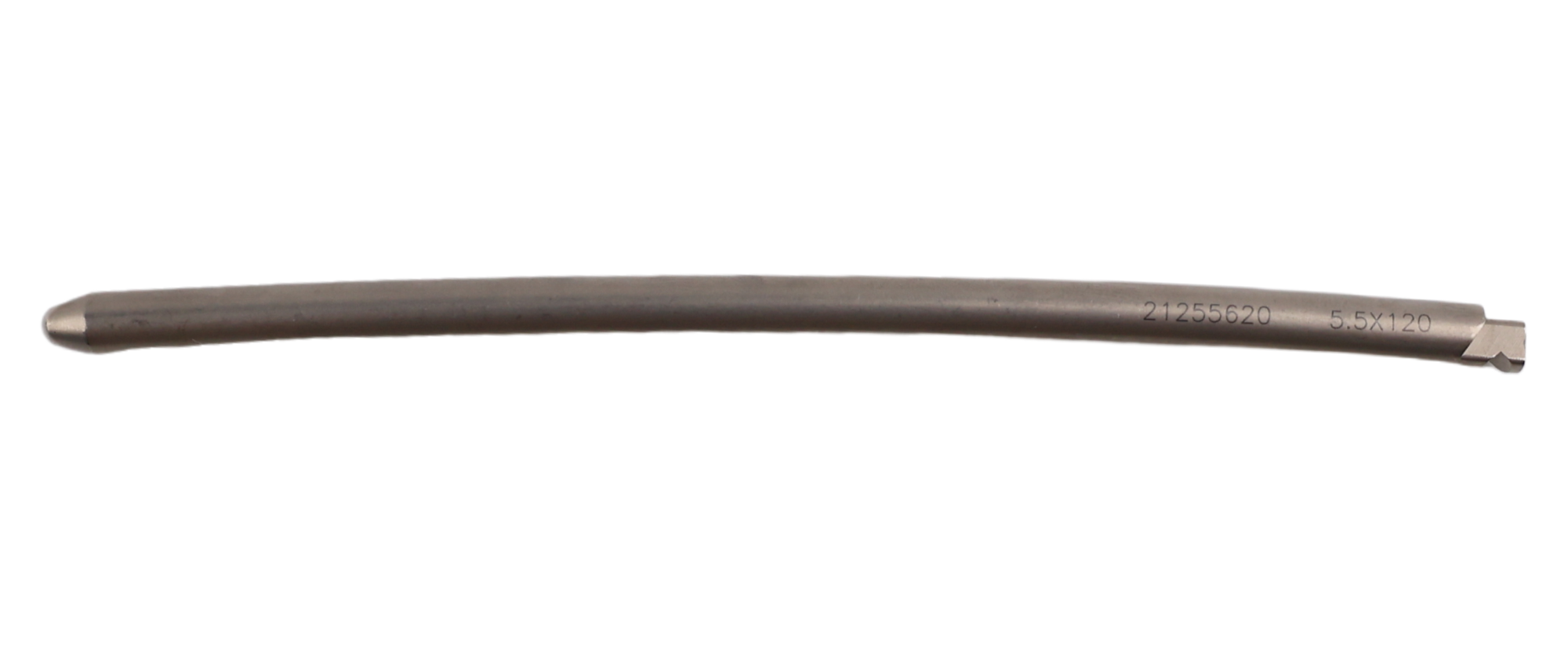
Diameter(mm) | Length(mm) |
5.5 | 45-120 |
Note: All screws are cannulated and compatible with 1.5 mm guide wires. The axial-rotation screws offer polyaxial movement for anatomical adaptation, while fixed-angle configurations are available upon request. The system includes break-off locking screws with hexagonal drive for secure screw-rod coupling.
Recommended Companion Instrument Set
The 5.5 Mis Pedicle Screw System is supported by a comprehensive instrument set for precise, minimally invasive implantation:
Instrument Name | Description | Specification | Quantity | Code |
|---|---|---|---|---|
Open Cone | For entry point preparation | Standard | 2 | 90011001 |
Bone Guide Needle | Guide needle (blunt end) | 1.5 mm | 2 | 90011003 |
Sleeve Type I | Guide sleeve for screw placement | Standard | 1 | 90011004 |
Sleeve Type II | Guide sleeve for screw placement | Standard | 1 | 90011005 |
Sleeve Type III | Guide sleeve for screw placement | Standard | 1 | 90011006 |
Thread Tap | For thread preparation | Φ5.0 | 1 | 90011007 |
Thread Tap | For thread preparation | Φ6.0 | 1 | 90011008 |
Thread Tap | For thread preparation | Φ7.0 | 1 | 90011009 |
Bone Probe | Single head probe for verification | Standard | 1 | 90011025 |
Screw Driver (Universal) | For axial-rotation and polyaxial screws | M9 | 2 | 90011010 |
Rod Gauge | For rod length measurement | Standard | 1 | 90011011 |
Rod Holding Forceps | For rod grasping and positioning | Long | 1 | 90011012 |
Bar Bending Pliers | For rod contouring | Standard | 1 | 90010019 |
Rod Pusher | For rod impaction into tulips | Standard | 1 | 90011013 |
Pre-Lock Driver | For initial set screw tightening | Standard | 1 | 90011014 |
Counter Wrench | For counter-torque during tightening | Standard | 1 | 90011015 |
Final Lock Driver | For final set screw tightening | Standard | 1 | 90011016 |
Pedicle Screw Tail Breaker | For break-off closure removal | Standard | 2 | 90011017 |
Breaker Counter Wrench | For counter-torque during break-off | Standard | 1 | 90011018 |
Plum Screwdriver | For screw driving | Standard | 1 | 90011019 |
Pressure Forceps | For compression between screws | Standard | 1 | 90011020 |
Spreader Forceps | For distraction between screws | Standard | 1 | 90011021 |
Percutaneous Reduction Forceps | For reduction and manipulation | Standard | 1 | 90011022 |
Hexagonal Screwdriver | For screw tightening | SW4.0 | 1 | 90011023 |
T Quick Change Handle | For rapid instrument exchange | Standard | 1 | 90010062 |
Vertical Ratchet Handle Type I | For screw insertion | Standard | 2 | 90010105 |
Positioning Plate | For intraoperative localization | Standard | 1 | 90011024 |
Instrument Box | For sterilization and storage | Standard | 1 | 90011026 |
RFQ – Request for Quotation
Q1: What is the difference between the axial-rotation (polyaxial) and fixed-angle screws?
A: The axial-rotation (polyaxial) screws feature a screw head that can rotate 360° and angulate up to 30°, accommodating anatomical variations and simplifying rod insertion in challenging trajectories. This flexibility is particularly valuable in minimally invasive surgery where visualization and access are limited. The fixed-angle screws provide rigid, fixed-axis fixation for maximum construct stability in demanding applications such as deformity correction or trauma where rigid segmental control is required. Both screw types feature the same cannulated design, dual-thread conical configuration, and break-off closure mechanism. The choice between polyaxial and fixed-angle screws should be based on the specific surgical requirements and surgeon preference.
Q2: What is the advantage of the negative-angle thread design in the tulip?
A: The negative-angle thread design in the tulip effectively reduces the risk of splay—the opening of the tulip arms that can occur during set screw tightening. This design ensures a more secure screw-rod coupling by maintaining consistent compression on the rod even under high torque loads. The negative-angle design improves construct integrity and eliminates the need for secondary anti-splay instrumentation, simplifying the surgical workflow and reducing operative time.
Q3: How does the cannulated design benefit minimally invasive surgery?
A: The cannulated design allows the screw to be placed over a 1.5 mm guide wire, enabling controlled, precise insertion under fluoroscopic guidance. This over-the-wire technique is particularly valuable in percutaneous and paraspinal approaches, where visualization is limited and accurate placement is critical. The cannulation reduces the need for extensive soft tissue dissection and muscle retraction, minimizing trauma and speeding patient recovery.
Q4: What are the recommended screw lengths for different levels of the spine?
A: For the lumbar spine (L1–L5), screw lengths typically range from 40 mm to 55 mm depending on the vertebral level and patient anatomy. For the thoracic spine, shorter screws in the 35–45 mm range are generally recommended due to the smaller pedicle dimensions. For the sacrum, longer screws (45–55 mm) are often required for adequate purchase. The system's comprehensive length range—from 30 mm to 80 mm—accommodates all anatomical levels and patient sizes. Preoperative CT templating is recommended for accurate sizing.
Q5: Are sterile-packaged versions available for the screws and rods?
A: Yes, the 5.5 Mis Pedicle Screw System is available in both non-sterile (GB1Z-II) and sterile (GB1Z-IIIS) configurations. The sterile configurations are supplied individually packaged and ready for immediate intraoperative use, simplifying OR preparation and reducing the risk of contamination. The pre-curved rods are typically supplied non-sterile and must be sterilized before use. Please specify your preference when placing an order.
Q6: What is the recommended torque for final set screw tightening, and how is it controlled?
A: The recommended torque for final set screw tightening is 8–10 N·m. The break-off closure mechanism is designed to provide consistent, reproducible tightening force—the closure breaks off at the optimal torque, eliminating the risk of overtightening or undertightening. The final lock driver (code 90011016) is used in conjunction with the counter wrench (code 90011015) to achieve the appropriate torque and ensure secure screw-rod coupling.


