



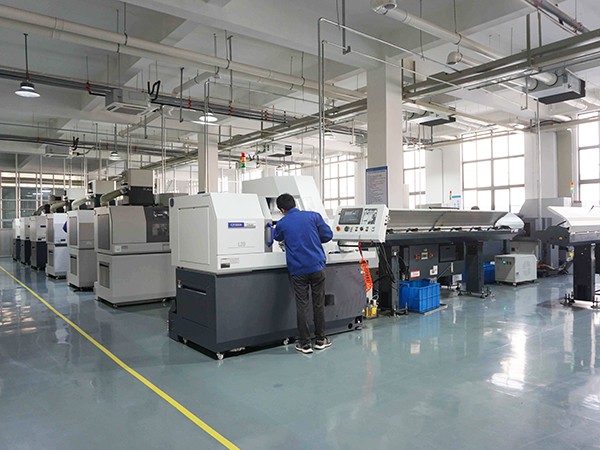
Choosing the right orthopedic implant manufacturer is an important decision for medical device distributors, importers, and private-label brands. Product quality, regulatory documentation, manufacturing consistency, and long-term supply reliability can all influence the success of a distribution partnership.
How should you evaluate an orthopedic implant manufacturer? Start by reviewing eight key areas: product compatibility, quality management, regulatory documentation, manufacturing capabilities, material traceability, inspection procedures, OEM/ODM support, and supply reliability. Do not rely on product catalogs or quoted prices alone. Ask for relevant evidence and verify that it matches your product requirements and target market.
This guide provides a practical orthopedic implant supplier evaluation checklist to help buyers compare potential manufacturing partners, identify potential risks, and prepare for a more productive supplier qualification process.
1. Evaluate the Product Portfolio and System Compatibility
Before comparing manufacturers, confirm that their product range matches your business requirements.
Orthopedic implants cover multiple product categories, including trauma fixation, spinal implants, joint reconstruction, sports medicine, and craniomaxillofacial (CMF) systems. A manufacturer may have extensive experience in one category but limited capabilities in another.
For distributors building or expanding an orthopedic portfolio, evaluate both individual products and complete systems.
What should you check?
Product coverage: Does the supplier offer the product categories and configurations you need?
Specification range: Are the required sizes, lengths, diameters, angles, and material options available?
System compatibility: Are implants, screws, rods, connectors, and surgical instruments designed to work together as specified?
Technical documentation: Can the manufacturer provide applicable product specifications, instructions for use (IFUs), and surgical technique documents?
Customization options: Can the supplier assess requests for alternative dimensions, design changes, or private labeling?
For example, a distributor sourcing a spinal pedicle screw system should evaluate the screws, rods, connectors, and corresponding instruments as a system rather than treating each component as an independent SKU.
Similarly, buyers sourcing a fracture fixation system should confirm screw compatibility, available plate configurations, and the appropriate instrumentation.
Buyer tip: Request the product catalog and a detailed specification list for the exact product family you intend to source. A broad portfolio does not automatically mean every product meets your technical or regulatory requirements.
2. Review the Quality Management System
A reliable orthopedic implant manufacturer should be able to explain how quality is managed throughout product development, manufacturing, inspection, and delivery.
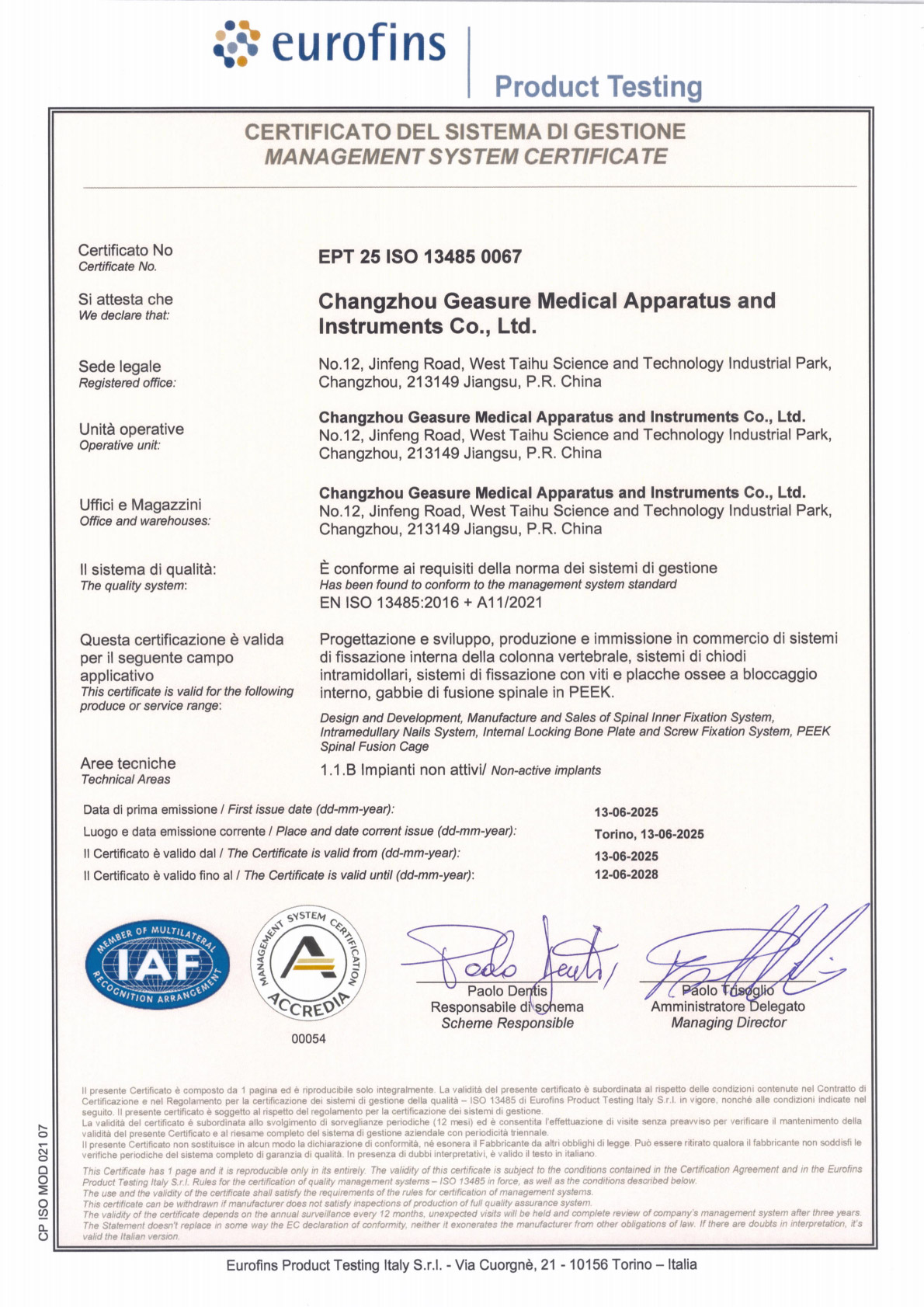
One important reference is ISO 13485, the internationally recognized quality management system standard for medical devices. It establishes requirements for a quality management system tailored to the medical device industry.
However, an ISO 13485 certificate alone does not establish that every product manufactured by a company is authorized for sale in every market. Buyers should review the certificate and assess the manufacturer's actual quality processes.
What documents should you request?
Ask the manufacturer for:
A current quality management system certificate, where applicable.
The certificate scope and the manufacturing activities or sites it covers.
Relevant quality procedures or supplier qualification information, as appropriate.
An overview of incoming material inspection and in-process quality control.
Information about nonconformity management, corrective and preventive actions (CAPA), and change control.
Available supplier audit or quality assessment information.
What should you verify?
Check that the legal entity, manufacturing site, certificate validity, and scope are consistent with the supplier and products you are evaluating.
Also ask how the manufacturer handles defective products, customer complaints, manufacturing deviations, and changes to approved specifications.
A certificate is one part of supplier evaluation. Documented processes and the ability to provide relevant evidence are also important.
For additional reference, consult the official ISO 13485 medical devices overview.
3. Verify Regulatory Documentation for Your Target Market
Regulatory requirements vary by country, device classification, product type, and intended market. Before placing an order, determine which documents apply to your specific products and intended distribution region.
A manufacturer serving multiple international markets should be able to clarify which regulatory documents are available for the product under consideration.
What should you ask for?
Depending on the product and market, relevant documentation may include:
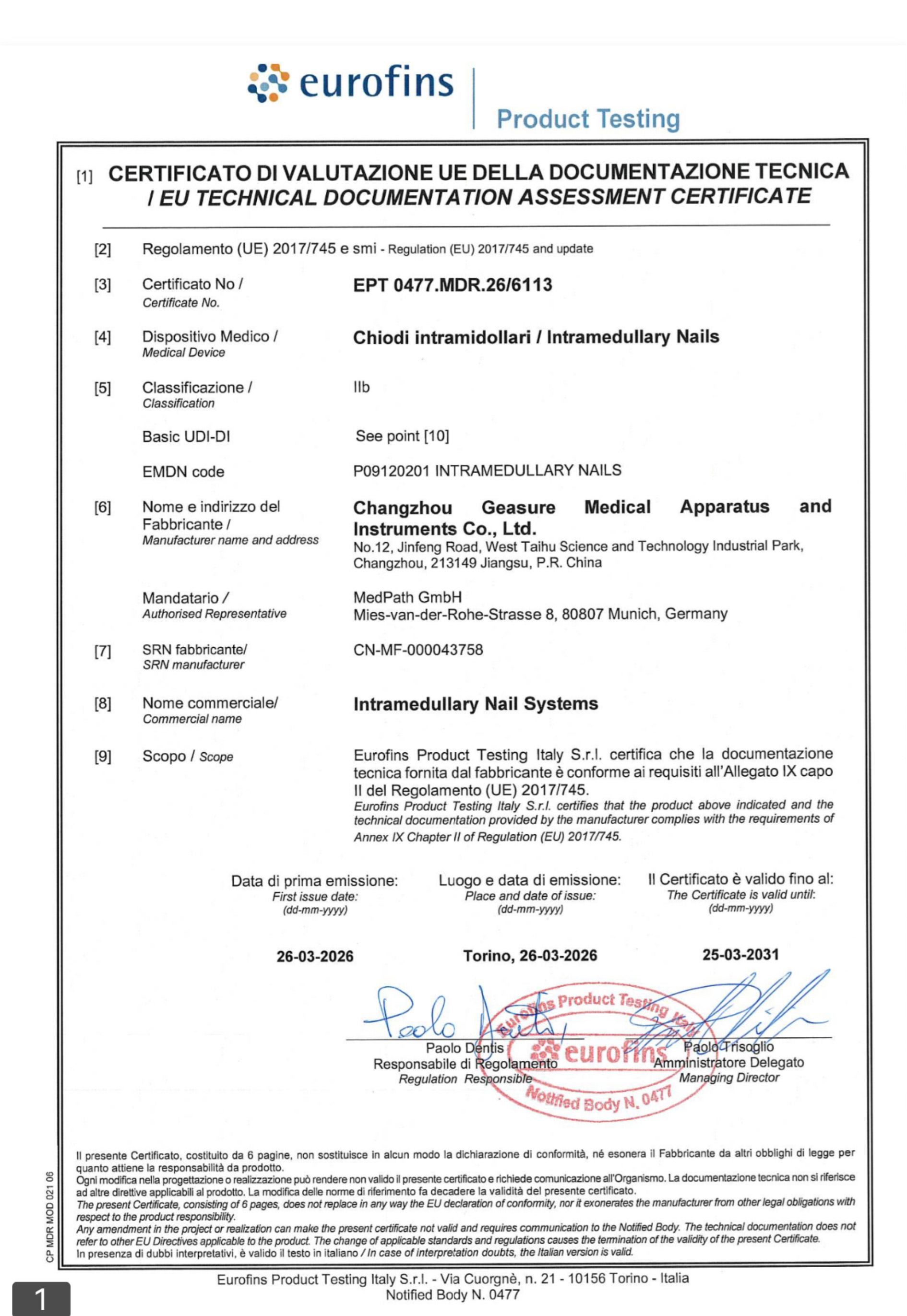
Geasure Medical MDR CE
Product-specific CE marking documentation and an EU Declaration of Conformity, where applicable.
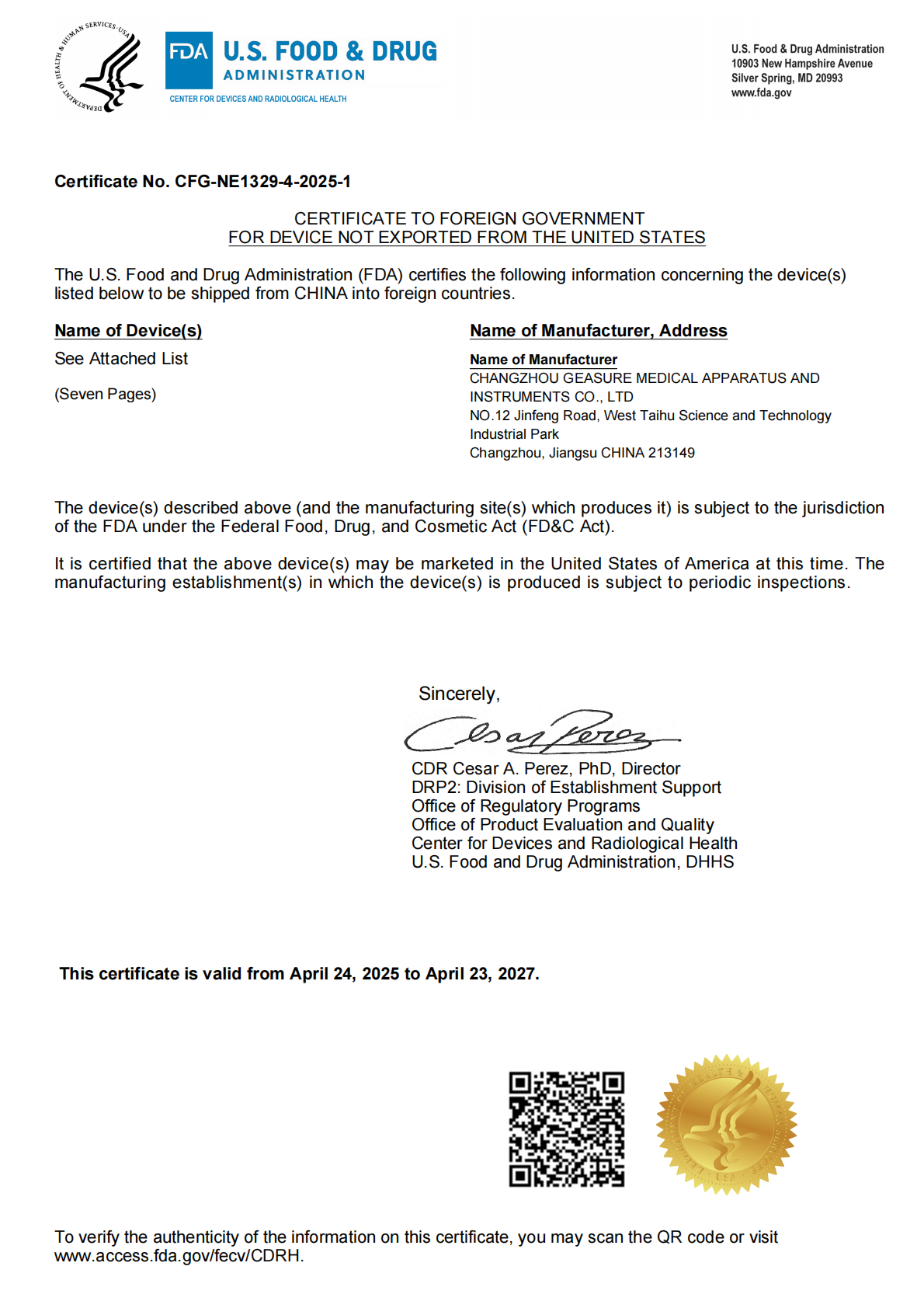
Geasure Medical FDA
Applicable FDA clearance, approval, exemption, or other regulatory status documentation for the United States.
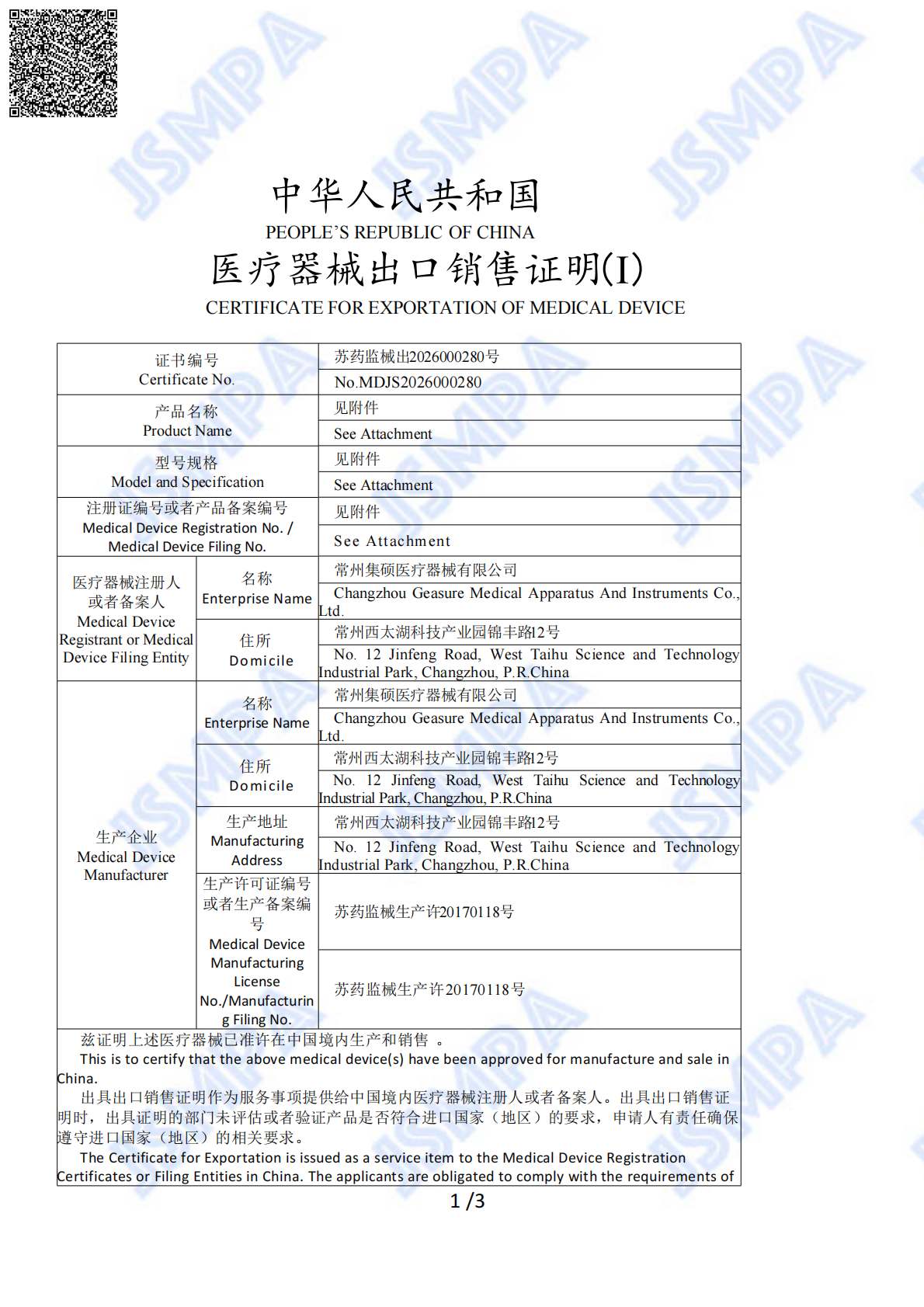
Geasure Medical Free Sale Certificate
National registration or market authorization documents, where required.
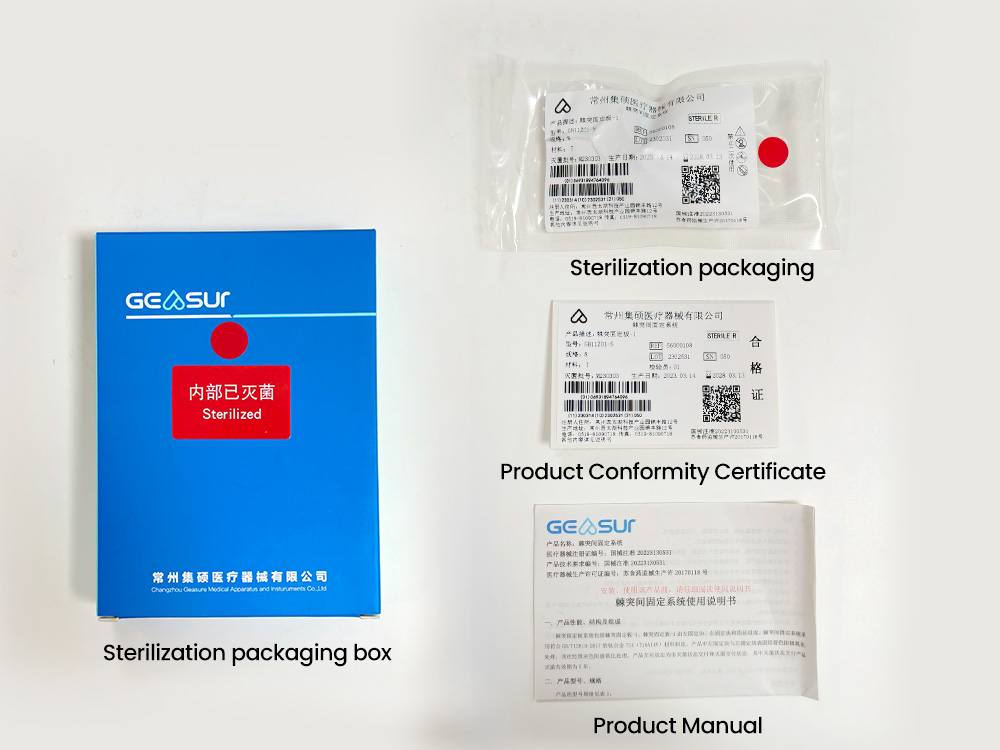
Product labeling, instructions for use, and other applicable technical documentation.
Information about traceability and identification requirements.
Important: Do not confuse registration with product approval
In the United States, FDA establishment registration and device listing do not, by themselves, mean that the FDA has approved, cleared, or authorized the establishment or its products. Buyers should verify the regulatory status applicable to the individual device rather than relying on a general statement such as “FDA registered.”
For the European Union, confirm the documentation and conformity assessment applicable to the device under the Medical Device Regulation (EU MDR 2017/745), including product-specific CE marking information where relevant.
When reviewing documents, check the legal manufacturer, product identification, document scope, validity, and consistency with the products being quoted.
Buyer tip: Tell the manufacturer which country or region you intend to serve before requesting documents. This helps both parties determine which evidence is relevant and whether additional regulatory work may be necessary.
Useful official references include the FDA's Important Reminders about Registration and Listing and the European Commission's medical device manufacturer guidance.
4. Assess Manufacturing Capabilities and Process Control
Manufacturing capabilities affect a supplier's ability to produce products that consistently meet approved specifications. For orthopedic implants, buyers should look beyond equipment lists and evaluate how manufacturing processes are controlled.
Precision machining, surface finishing, cleaning, inspection, packaging, and sterilization may all be relevant, depending on the product and manufacturing arrangement.
Key manufacturing questions
1. What manufacturing processes are available?
Ask whether the supplier has the equipment and process expertise required for your product type, including precision CNC machining and applicable finishing operations.
2. How are production specifications controlled?
Confirm how drawings, dimensional tolerances, work instructions, and approved process parameters are managed.
3. How is inspection integrated into production?
Find out which characteristics are checked during production, which are verified at final inspection, and how inspection results are recorded.
4. How are changes managed?
Ask how the manufacturer controls changes to materials, equipment, manufacturing processes, product specifications, and suppliers. Determine how changes are reviewed and communicated when they may affect product conformity or regulatory documentation.
5. Can the supplier support your expected order volume?
Discuss production capacity, minimum order quantities, lead times, and the supplier's approach to handling changes in demand.
Where possible, request a manufacturing process overview or arrange an appropriate supplier assessment. The objective is to understand whether the manufacturer's capabilities match your specific products and forecast requirements.
5. Confirm Material Quality and Traceability
Material selection is an important consideration when sourcing orthopedic implants. Different product designs may use different material grades, manufacturing processes, and surface treatments.
Common materials used in orthopedic products include titanium alloys, commercially pure titanium, PEEK, and CoCrMo alloys. The appropriate material depends on the specific device design and applicable requirements.
What material information should buyers review?
Ask the manufacturer to identify the exact material grade or specification used in the relevant product.
Depending on the product, useful supporting information may include:
Material certificates and supplier documentation.
Incoming material inspection records.
Chemical composition or mechanical test results, where applicable.
Batch or lot identification and traceability records.
Applicable information about surface treatments or finishing processes.
Do not assume that two products are equivalent simply because both are described as “titanium” or “medical-grade PEEK.” The material designation, product specifications, processing, and intended use all need to be considered.
Traceability is equally important. Ask how incoming material lots are associated with production records and finished products, and what information can be provided if an investigation or complaint arises.
Buyer tip: Include material specifications and documentation requirements in your request for quotation (RFQ). This reduces ambiguity when comparing products from different suppliers.
6. Examine Inspection Procedures and Product Release Controls
A supplier's quality claims are more useful when supported by documented inspection and product release procedures.
Ask how the manufacturer verifies that a finished product conforms to the approved requirements and how inspection results are recorded.
Relevant checks may include dimensional measurement, visual inspection, surface quality assessment, and mechanical testing where appropriate to the product and its specifications.
Not every test applies to every implant. Inspection requirements should be defined according to the device design, risk assessment, applicable standards, and approved product requirements.
Questions to ask the quality team
What are the incoming inspection criteria for raw materials?
Which dimensions and product characteristics are inspected during production?
How are inspection equipment and measuring instruments calibrated and maintained?
How are nonconforming products identified, segregated, and investigated?
How are corrective actions documented and verified?
What records are retained to support batch traceability and product release?
For products supplied sterile, ask how the applicable sterilization and packaging requirements are addressed, including relevant validation and release documentation. For non-sterile products, confirm the requirements for packaging, cleanliness, handling, and labeling.
The goal is not to request every internal manufacturing record without restriction. It is to agree on the relevant evidence needed for supplier qualification, product evaluation, and ongoing quality assurance.
7. Evaluate OEM/ODM and Customization Support
For distributors and private-label brands, the right manufacturer may need to provide more than standard products.
OEM and ODM cooperation can involve different levels of engineering support, manufacturing responsibility, product customization, and documentation. Define the intended cooperation model before discussing project timelines or prices.
Questions to clarify before starting a project
Product design and specifications
Can the manufacturer evaluate drawings, samples, or detailed technical requirements? Does the project involve an existing product, a modification, or new product development?
Prototyping and verification
What review, verification, or validation activities may be required before production? Who is responsible for approving design changes and maintaining the applicable records?
Branding and packaging
Can the supplier support private labeling, packaging specifications, and the applicable language and labeling requirements?
Intellectual property
Who owns the existing and newly developed designs, drawings, tooling, and other intellectual property? These responsibilities should be clearly defined in the agreement.
Regulatory responsibilities
Who is responsible for the regulatory documentation, product labeling, technical file contributions, and applicable market access obligations? Responsibilities vary according to the product and the legal roles of the parties.
Production transfer and change control
How will approved specifications be transferred into manufacturing, and how will later design or process changes be reviewed and communicated?
A capable OEM/ODM partner should be able to explain its project workflow and identify the information needed to assess feasibility before committing to a production schedule.
For buyers exploring customized orthopedic implants or surgical instruments, these questions help establish a clearer scope of work and reduce misunderstandings later.
8. Compare Supply Reliability and Long-Term Support
A supplier relationship does not end when the first order is delivered. Distributors also need predictable communication, consistent product specifications, and a clear process for managing quality or delivery issues.
Before selecting a manufacturer, discuss the following:
Evaluation area | Questions to ask |
|---|---|
Lead time | What are the estimated lead times for samples, standard products, and customized orders? |
Minimum order quantity | What MOQ applies to each product and configuration? |
Production planning | How are order changes and forecast fluctuations handled? |
Packaging and shipping | What packaging options and shipping arrangements are available? |
Technical support | Can the supplier provide relevant specifications, instructions, and product information? |
Quality issues | How are complaints, nonconformities, and corrective actions managed? |
Long-term supply | How are product changes, component availability, and discontinuation risks communicated? |
Request quotations using the same specifications and commercial assumptions when comparing suppliers.
A lower unit price does not necessarily mean a lower total cost. Consider the product configuration, documentation, packaging, instrumentation, order quantity, logistics, and the resources required for supplier qualification.
For long-term cooperation, the manufacturer's ability to respond clearly and handle problems systematically may be as important as the initial quotation.
9. A Practical Orthopedic Implant Supplier Evaluation Checklist
Use the following checklist when conducting an initial supplier assessment. It is intended for preliminary comparison, not as a substitute for a formal quality audit or regulatory review.
Evaluation category | Evidence to review |
|---|---|
Product portfolio | Catalog, specifications, size range, applicable IFUs |
Quality management | Current certificate, scope, relevant quality procedures |
Regulatory documentation | Product- and market-specific documents |
Manufacturing capability | Process overview, equipment and capacity information |
Material traceability | Material specifications, certificates and batch records |
Inspection and release | Inspection criteria, test records where applicable, release procedures |
OEM/ODM support | Project workflow, responsibilities, change control, IP terms |
Supply and service | MOQ, lead time, delivery arrangements, complaint handling |
Optional scoring method for initial screening
Score each category from 0 to 2:
0 — Not demonstrated: Relevant information or evidence has not been provided.
1 — Partially demonstrated: Some information is available, but important questions remain unresolved.
2 — Demonstrated: Relevant evidence has been reviewed and appears consistent with the requirements being assessed.
With eight categories, the preliminary score ranges from 0 to 16.
Use the score to identify gaps and prioritize follow-up questions. Do not treat it as a certification of supplier quality or a substitute for checking critical regulatory, quality, and product requirements. An unresolved critical requirement should be addressed regardless of the total score.
10. Red Flags to Watch for When Selecting a Supplier
During supplier evaluation, take additional care when you encounter the following situations:
Unclear regulatory claims: The supplier uses terms such as “FDA approved” without providing enough information to verify the relevant device's status.
Incomplete documentation: Certificates do not clearly identify the legal entity, scope, or applicable validity information.
Vague product specifications: The quoted product lacks clear material designations, configurations, or relevant technical documentation.
Unclear traceability: The supplier cannot explain how materials and finished products are identified and linked to production records.
Uncontrolled changes: There is no clear process for reviewing and communicating changes that could affect the product or its regulatory status.
Unrealistic commitments: Lead times, custom development schedules, or product capabilities are promised without a reasonable technical assessment.
No clear response process: The supplier cannot explain how complaints, delivery issues, or quality problems will be handled.
A potential red flag is a reason to investigate further, not automatically proof of misconduct. Ask for clarification and supporting information before making a final decision.
11. How Geasure Medical Supports Orthopedic Product Sourcing
Geasure Medical manufactures orthopedic implants and surgical instruments for international medical device partners. Its product portfolio includes spine systems, intramedullary nail systems, locking plate systems, joint prostheses, sports medicine products, CMF/maxillofacial products, external fixation systems, and powered instruments.
For distributors and medical device brands evaluating a potential supplier, the starting point is to identify the product category, target market, required specifications, and intended cooperation model.
Geasure also supports OEM/ODM cooperation for projects within its product scope. Depending on the project, discussions may cover existing product configurations, customized requirements, technical documentation, and manufacturing arrangements.
You can explore the Spine System, Intramedullary Nail System, and Locking Plate System pages to review relevant product ranges. Visit the Certification page for available certification information.
Regulatory documentation and product availability should be confirmed for the specific products and target markets under consideration.
Looking for an Orthopedic Implant Manufacturing Partner?
If you are evaluating suppliers for your orthopedic product portfolio, Geasure Medical welcomes inquiries from distributors, importers, and medical device companies.
To help us understand your requirements, please include:
Product category: Spine, trauma, joint reconstruction, sports medicine, CMF, or another orthopedic product area.
Target market: The country or region where you plan to distribute the products.
Product requirements: Preferred models, specifications, materials, and applicable documentation.
Estimated order volume: Initial quantity and expected ongoing demand, if known.
Cooperation model: Standard product sourcing, OEM, ODM, or private-label requirements.
Contact Geasure Medical to Discuss Your Requirements
You can also visit our Free Sample page to discuss sample availability and evaluation arrangements.
Frequently Asked Questions
What should I look for in an orthopedic implant manufacturer?
Review the manufacturer's relevant product experience, quality management system, regulatory documentation, manufacturing capabilities, material traceability, inspection procedures, customization support, and supply reliability. Evaluate the evidence against your specific products and target markets.
What documents should I request from an orthopedic implant supplier?
Depending on your product and market, request relevant quality certificates, product specifications, applicable regulatory documentation, material certificates, traceability information, and quality process information. The exact document set will vary by device type, risk classification, and market requirements.
Does ISO 13485 certification mean that every product is approved?
No. ISO 13485 relates to a medical device quality management system. Product-specific regulatory requirements and market access must be evaluated separately.
Is FDA registration the same as FDA approval?
No. Establishment registration and device listing do not, by themselves, indicate FDA approval, clearance, or authorization. Buyers should verify the regulatory status applicable to the particular device and its intended US market.
Can an orthopedic implant manufacturer support OEM and ODM projects?
Some manufacturers offer OEM/ODM services, but the scope varies. Before starting a project, confirm design responsibilities, customization feasibility, verification and validation requirements, intellectual property arrangements, labeling, regulatory responsibilities, and production change control.
How can I compare quotations from different orthopedic implant manufacturers?
Request quotations based on comparable product specifications, materials, configurations, quantities, documentation requirements, packaging, and delivery conditions. Consider the full sourcing arrangement rather than comparing unit prices alone.
How do I start a supplier qualification discussion with Geasure Medical?
Share your target product category, intended market, specifications, estimated volume, and required cooperation model. Geasure can then review the project scope and discuss the applicable product information and next steps.
Regulatory References
For further information when reviewing medical device suppliers, consult:
This article provides general information for medical device sourcing and supplier evaluation. It is not a substitute for professional regulatory advice, formal supplier qualification, or product-specific verification.
Related Blogs
-
 Choosing the right orthopedic implant manufacturer is an important decision for medical device distributors, importers, and private-label brands. Product quality, regulatory documentation, manufacturing consistency, and long-term supply reliability can all influence the success of a distribution par
 -
 Top 15 Orthopedic Implant Manufacturers & OEM Suppliers in 2026 | Global Trauma, Spine & Joint Implant CompaniesIntroduction: Choosing the Right Orthopedic Implant ManufacturerThe orthopedic implant industry plays a critical role in modern healthcare by providing solutions for fracture fixation, spi

