Low-Profile Design & Imaging Compatibility
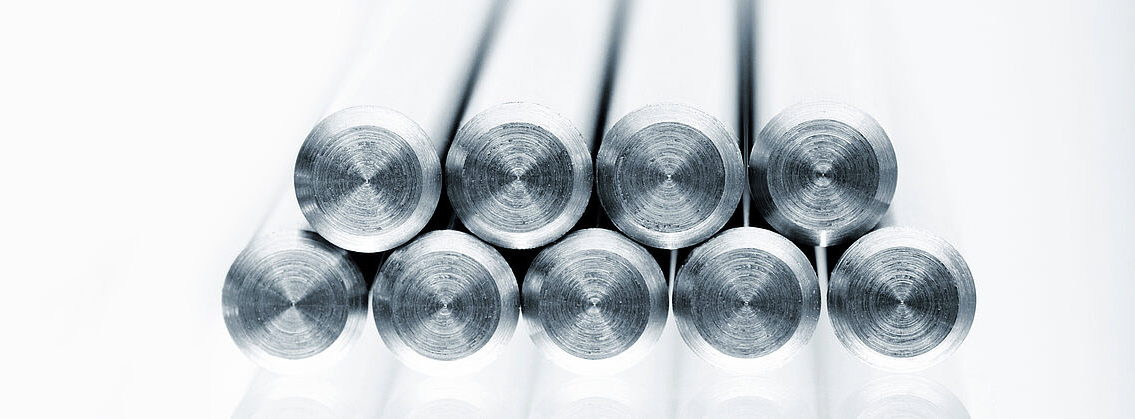
The defining value of a cranial fixation system lies in the balance between low-profile design and imaging compatibility. Plates are manufactured from pure titanium or medical-grade titanium alloy, with thicknesses typically ranging from 0.4mm to 1.0mm. This allows adequate fixation strength while minimizing the occupation effect on the scalp—a critical consideration in cranial surgery, where soft tissue coverage is thin and prominent hardware can cause tenderness, skin tenting, or even erosion.
Anodized Color Coding
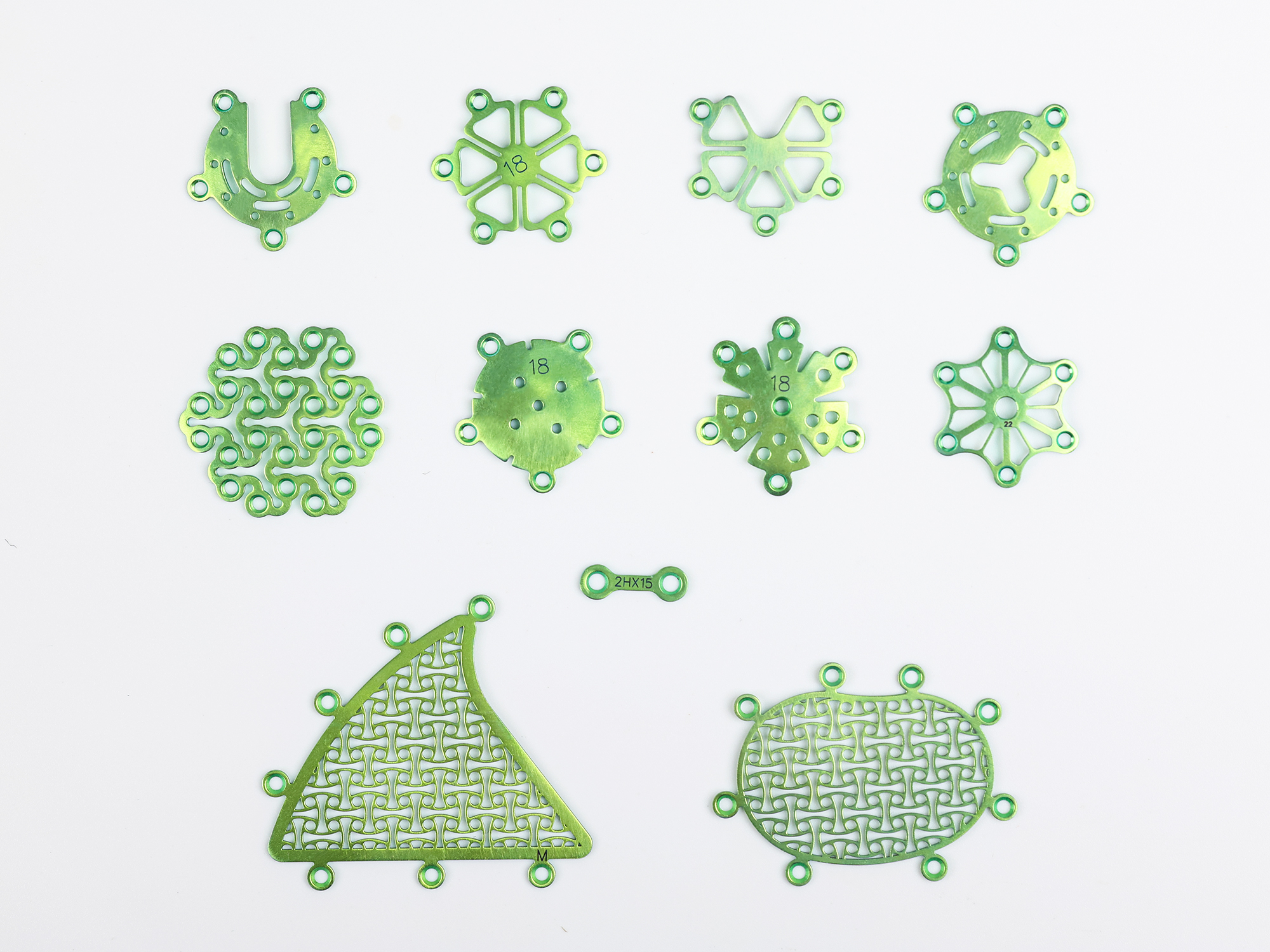
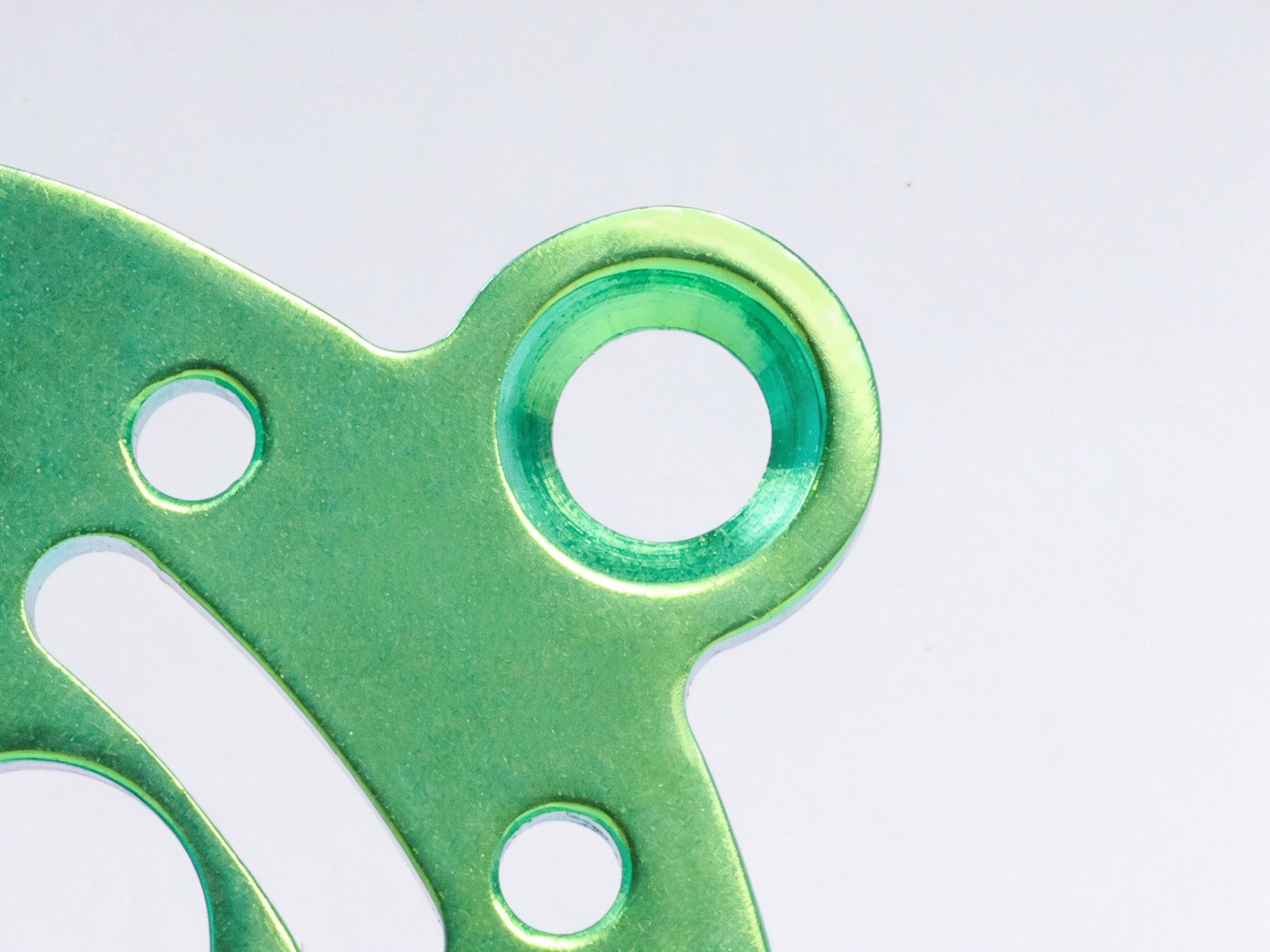
Surface anodizing serves a dual clinical purpose. It increases surface hardness and wear resistance, and it produces color coding based on plate thickness. Each thickness carries a distinct color, allowing surgeons and scrub staff to confirm plate selection instantly without calipers or additional verification. In a busy neurosurgical theatre, this visual cue reduces handling errors and saves operating time.
MRI/CT Compatibility
Pure titanium is non-magnetic and does not produce artifacts on postoperative MRI or CT scans. This matters enormously for neurosurgical patients requiring long-term imaging surveillance—whether for tumor monitoring, hydrocephalus assessment, or fracture healing evaluation, the implant should never obscure the region of clinical interest.
Screw System Design
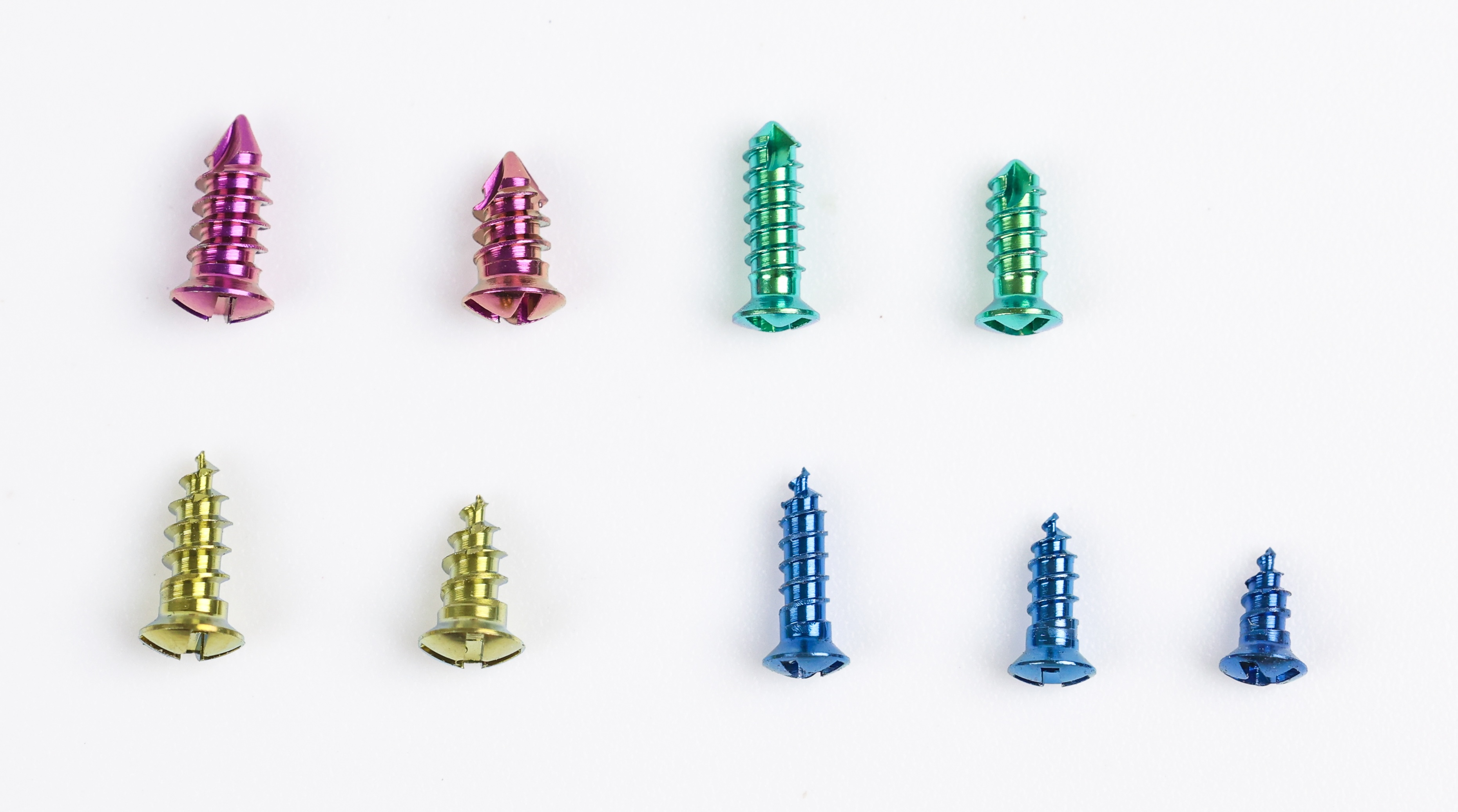
The screw system reflects the same attention to detail. Self-drilling screws cut directly into bone without a pilot hole, reducing surgical steps. Self-tapping screws require a pilot hole and form their own thread path, preferred in denser bone or when maximum thread engagement is desired. Thread geometry is optimized for a balance between insertion torque and pullout strength. The screwdriver features a self-hold design that grips the screw head securely, preventing accidental drop during placement—a small but critical safety feature in the confined cranial surgical field.
Comprehensive Plate Geometries
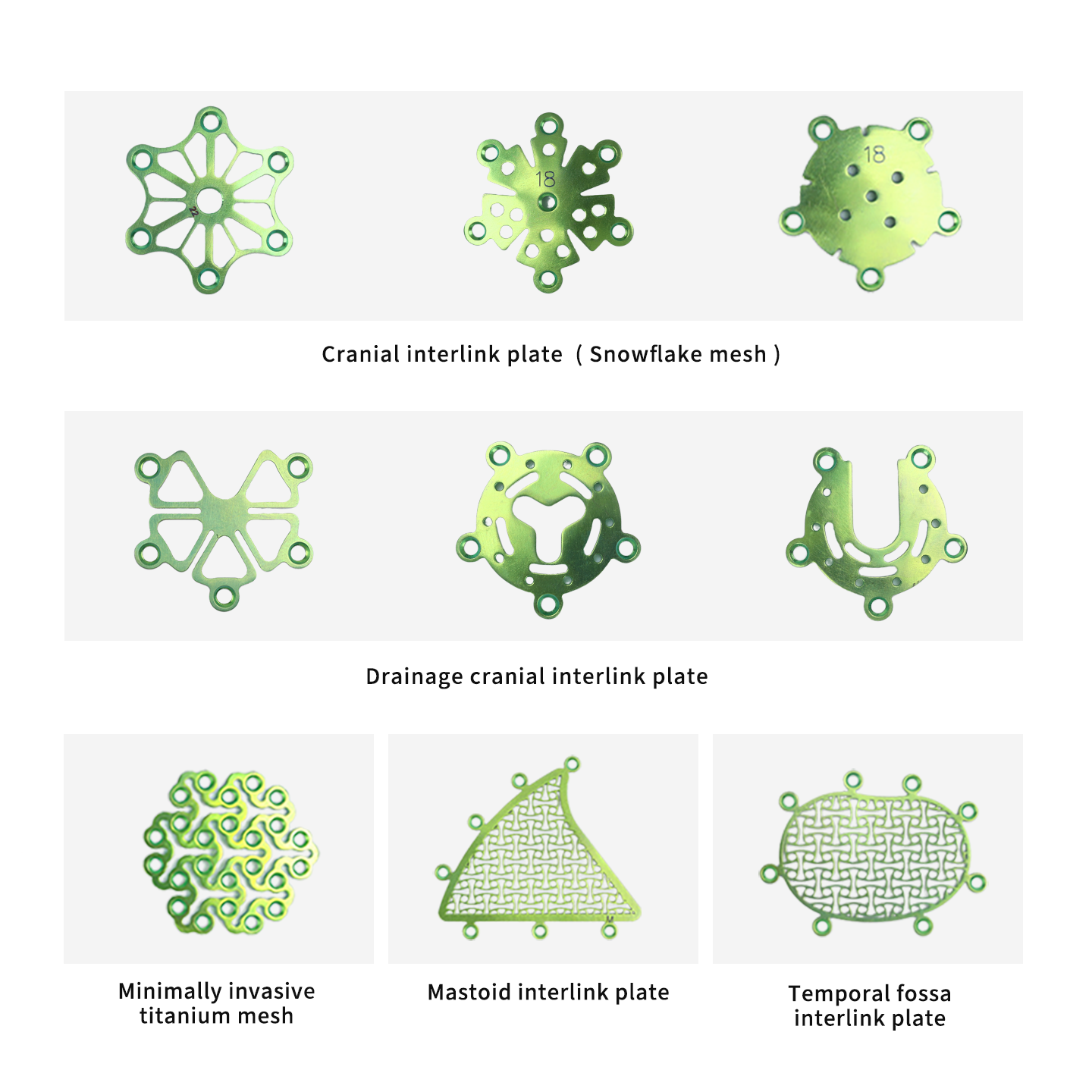
Plate geometries cover the patterns encountered in routine practice: straight, L-shaped, Y-shaped, butterfly, mesh, and dedicated cranial flap fixation plates. Locking and non-locking fixation options are both available, and locking plates are reversible—they can be used on either side without orientation concerns.




