



-
Gessure Medical
-
1
-
ISO \ CE
-
plastic
-
Custom service supported
-
7–14 Days (OEM: 15–30 Days)
Product Overview
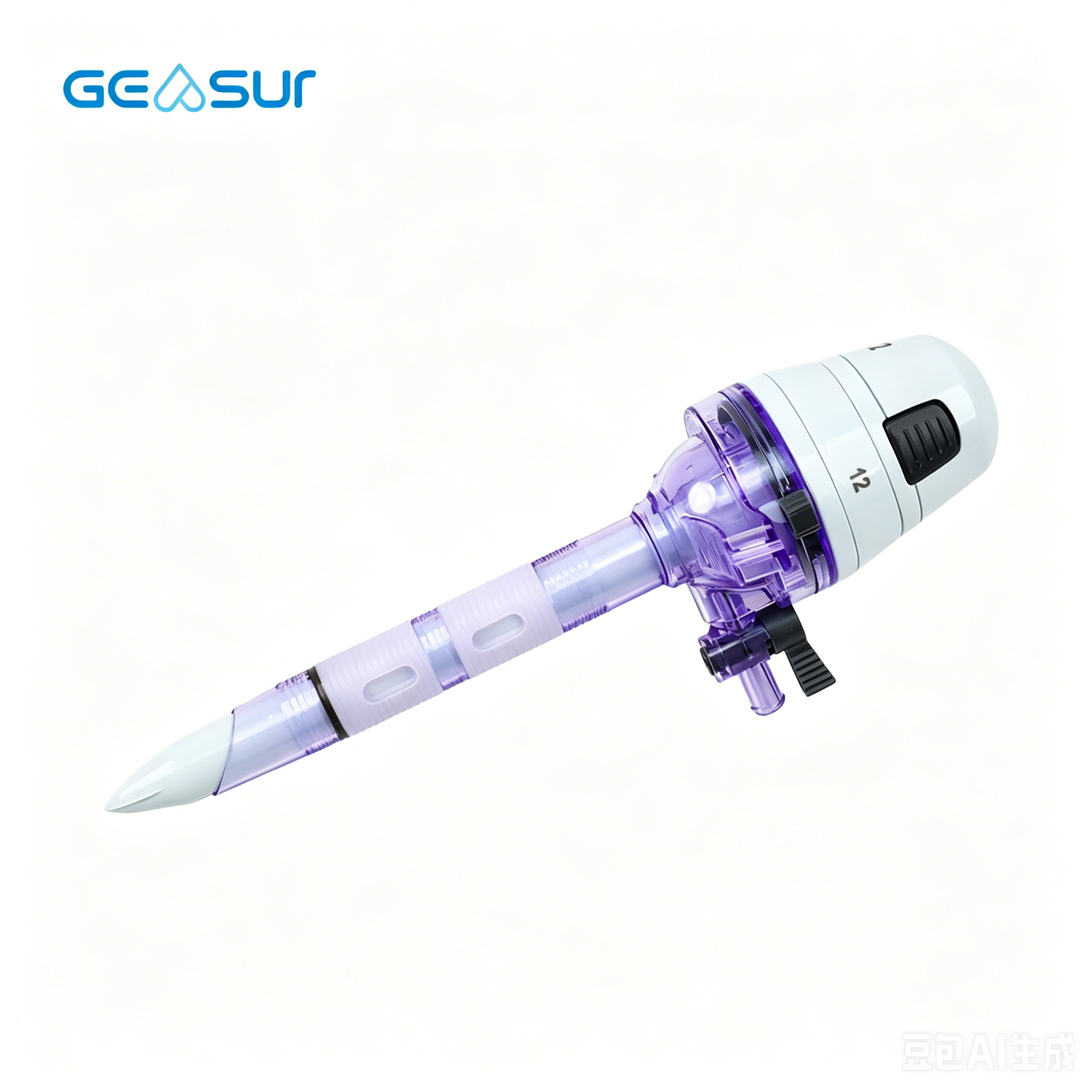
The Disposable Laparoscopic Trocar (Plastic) is a sterile, single-use puncture device designed to establish secure working channels during laparoscopic and thoracoscopic procedures. Featuring a lightweight plastic needle bar, this system provides reliable abdominal access with an air-tight seal that prevents gas leakage, a visual lens that enhances insertion safety, and an inverted tooth tube body that prevents dislodgement once positioned. Available in 5 mm, 10 mm, 12 mm, and 15 mm diameters, it accommodates a wide range of surgical instruments. Each set includes a puncture needle and cannula, supplied sterile and ready for use. Combining safety-engineered features with cost-effective, lightweight construction, this trocar delivers reliable performance for minimally invasive surgery.
Indications for Use
The Disposable Laparoscopic Trocar (Plastic) is indicated for the following clinical scenarios:
Laparoscopic surgery across all specialties requiring abdominal wall puncture and working channel establishment.
Thoracoscopic surgery where chest wall access is required for minimally invasive procedures.
Diagnostic laparoscopy for abdominal exploration and tissue biopsy.
Laparoscopic cholecystectomy for gallbladder removal procedures.
Laparoscopic appendectomy for appendix removal surgeries.
Laparoscopic colectomy and colorectal procedures.
Laparoscopic hysterectomy and gynecological surgeries.
Laparoscopic nephrectomy and urological procedures.
Bariatric surgery including sleeve gastrectomy and gastric bypass.
Emergency laparoscopic procedures where rapid, reliable abdominal access is required.
Key Advantages
The Disposable Laparoscopic Trocar (Plastic) offers a range of distinct clinical benefits that enhance surgical safety, efficiency, and patient outcomes.
Lightweight Plastic Construction – The plastic needle bar provides a lightweight alternative to metal trocars, reducing the overall weight of the instrument set and improving surgeon comfort during extended procedures. The plastic construction is particularly suitable for standard laparoscopic procedures where the additional durability of metal is not required, offering a cost-effective solution without compromising performance or safety.
Unique Air-Tight Seal Design – The trocar features an advanced air-tight sealing system that effectively prevents gas leakage during pneumoperitoneum maintenance. This ensures consistent intra-abdominal pressure throughout the procedure, providing optimal surgical visibility and working space while reducing the need for repeated insufflation adjustments. The seal accommodates instrument insertion and removal while maintaining a gas-tight closure when no instrument is present.
Puncture Visual Lens Design – The innovative visual lens design allows for clear visualization during insertion, significantly reducing the risk of inadvertent organ or vessel puncture. This safety feature enables surgeons to confirm proper positioning before advancing the trocar, minimizing complications associated with blind puncture techniques. The visual lens is particularly valuable in patients with previous abdominal surgery where adhesions may be present.
Inverted Tooth Tube Body – The tube body incorporates an inverted tooth design that prevents the cannula from slipping or being inadvertently dislodged once positioned. This feature ensures stable, reliable instrument access throughout the entire procedure, reducing the risk of accidental withdrawal and the need for re-insertion. The design also helps maintain the integrity of the pneumoperitoneum by preventing gas leakage around the cannula.
Multiple Diameter Options – Available in 5 mm, 10 mm, 12 mm, and 15 mm diameters, the system accommodates a wide range of instrument sizes, from diagnostic scopes to larger surgical instruments. This comprehensive sizing matrix ensures the appropriate trocar is available for every procedure, reducing the need for multiple trocar types.
Cost-Effective Disposable Design – Supplied sterile and intended for single use, the trocar eliminates the risk of cross-contamination associated with reusable devices while providing a cost-effective solution for high-volume surgical centers. The sterile packaging ensures optimal safety and performance with every procedure.
Technical Specifications & Sizing
Size Range Overview
The Disposable Laparoscopic Trocar (Plastic) System offers four diameter options to accommodate a wide range of surgical instrument sizes.
Detailed Dimension Table
Product Model | Needle Bar Type | Diameter (mm) | Product Composition |
|---|---|---|---|
ZCJC-5 | Plastic | 5 | 1 Pcs 5mm puncture needle + 1 Pcs 5mm puncture set |
ZCJC-10 | Plastic | 10 | 1 Pcs 10mm puncture needle + 1 Pcs 10mm puncture set |
ZCJC-12 | Plastic | 12 | 1 Pcs 12mm puncture needle + 1 Pcs 12mm puncture set |
ZCJC-15 | Plastic | 15 | 1 Pcs 15mm puncture needle + 1 Pcs 15mm puncture set |
Note: All trocars are supplied sterile, single-use, and individually packaged. The ZCJC series features a plastic needle bar for lightweight, cost-effective performance in standard laparoscopic procedures. Each set includes both the puncture needle and the cannula with sealing mechanism. The diameter refers to the outer diameter of the cannula and corresponds to the maximum instrument size that can be accommodated. All trocars feature the same air-tight seal design, visual lens safety feature, and inverted tooth tube body construction.
RFQ – Request for Quotation
Q1: What is the difference between the plastic (ZCJC) and metal (ZCJB) trocar series?
A: The ZCJC series features a plastic needle bar that provides lightweight, cost-effective performance suitable for standard laparoscopic procedures. The plastic construction reduces the overall weight of the instrument and is particularly beneficial in high-volume surgical centers where cost efficiency is a priority. The ZCJB series features a metal needle bar that provides enhanced durability and precision for patients with thicker abdominal walls or in procedures where maximum puncture strength is required. Both series feature the same air-tight seal design, visual lens safety feature, and inverted tooth tube body. The choice between plastic and metal should be based on procedural requirements and surgeon preference.
Q2: How does the air-tight seal design prevent gas leakage during surgery?
A: The trocar incorporates an advanced sealing mechanism at the cannula entry point that maintains pneumatic integrity throughout the procedure. The seal is designed to accommodate instrument insertion and removal while maintaining a gas-tight closure when no instrument is present. This design effectively prevents gas leakage during pneumoperitoneum maintenance, ensuring consistent intra-abdominal pressure and optimal surgical visibility. The air-tight seal significantly reduces the need for repeated insufflation adjustments and helps maintain a stable surgical environment throughout the procedure.
Q3: What is the puncture visual lens design, and how does it improve safety?
A: The puncture visual lens design incorporates an optical element that allows the surgeon to visualize the tissue layers during trocar insertion. This enables clear visualization of the puncture trajectory, significantly reducing the risk of inadvertent organ or vessel puncture. The visual lens enables surgeons to confirm proper positioning before advancing the trocar through the abdominal wall, minimizing the complications associated with blind puncture techniques. This safety feature is particularly valuable in patients with previous abdominal surgery where adhesions may be present.
Q4: What is the function of the inverted tooth tube body design?
A: The inverted tooth tube body incorporates a textured pattern that creates friction against the abdominal wall tissues once the cannula is positioned. This design prevents the cannula from slipping or being inadvertently dislodged during instrument exchanges or manipulation. The secure positioning ensures stable, reliable instrument access throughout the entire procedure, reducing the risk of accidental withdrawal and the need for re-insertion. This feature also helps maintain the integrity of the pneumoperitoneum by preventing gas leakage around the cannula.
Q5: What are the recommended trocar sizes for different surgical procedures?
A: The 5 mm trocar is suitable for diagnostic laparoscopy, biopsy instruments, and smaller graspers. The 10 mm trocar is suitable for most standard laparoscopic instruments, including graspers, scissors, and 10 mm laparoscopes. The 12 mm trocar accommodates larger instruments, including 12 mm staplers and larger graspers. The 15 mm trocar is suitable for specimen retrieval, morcellation devices, and larger surgical instruments. We recommend selecting the smallest trocar that will accommodate the largest instrument planned for use through that port to minimize tissue trauma and optimize cosmetic outcomes.
Q6: What is the standard packaging configuration and shelf life for the plastic trocars?
A: The Disposable Laparoscopic Trocars (Plastic) are individually packaged in sterile blister packs and are supplied sterile, single-use. The typical shelf life is 3–5 years from the date of manufacture, as indicated on the product labeling. They should be stored in a cool, dry environment away from direct sunlight and extreme temperatures. The sterile packaging should remain intact until the time of use to ensure sterility. We recommend checking the expiration date before use and disposing of any expired or damaged products.