
 EN
EN



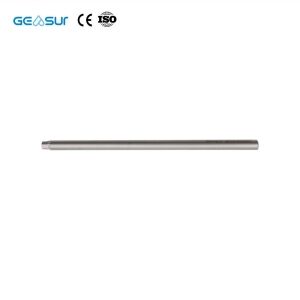
In complex spinal surgery—whether for severe deformity, tumor resection, trauma, or revision procedures—the demand on internal fixation devices is extreme. Patients with severe spinal instability require implants that can withstand higher loads, resist fatigue under repeated stress, and maintain alignment until solid fusion occurs. Standard spinal rods may suffice for routine degenerative cases, but high-strength spinal rods are essential for severe cases involving osteoporosis, large curves, multi-level constructs, or unstable fractures.
At Geasure Medical (Changzhou Geasure Medical Apparatus and Instruments Co., Ltd.), we have engineered a range of high-strength spinal rods specifically designed for these demanding scenarios. Manufactured from premium titanium alloy and cobalt-chrome materials, processed with advanced surface finishing, and validated through rigorous mechanical testing, Geasure high-strength spinal rods provide the reliability, stiffness, and fatigue resistance that surgeons need when treating the most challenging spinal pathologies.
Defining the Need: When Are High-Strength Spinal Rods Required?
Not all spinal stabilization procedures require high-strength rods. However, several clinical indications demand superior mechanical performance.
Severe Scoliosis or Kyphosis (Cobb Angle > 70°)
In large deformities, the corrective forces required to translate and derotate the spine are substantial. A standard rod may deform or fracture under these loads. High-strength rods—often made from cobalt-chrome—offer the stiffness needed to maintain correction.
Osteoporotic Bone
In elderly patients with poor bone quality, screw purchase is compromised. The rod must compensate by providing a more rigid construct to reduce micromotion at the screw-bone interface. High-strength titanium rods with optimized modulus help prevent screw loosening.
Multi-Level Fusion (≥ 3 Levels)
Long constructs spanning multiple vertebrae experience increased lever arms and bending moments. High-strength rods resist sagittal bending and axial rotation, preventing “windshield-wiper” loosening at the ends of the construct.
Trauma or Tumor Resection
Fractures or post-tumor resection defects often leave the spine without anterior support. Posterior stabilization with high-strength rods becomes the primary load-bearing structure until bony healing or reconstruction.
Revision Surgery
Failed previous fusions may have pseudoarthrosis or broken hardware. Revision constructs require rods with enhanced fatigue life to overcome the compromised biological environment.
Material Choices for High-Strength Spinal Rods
Geasure offers two primary material families for high-strength spinal rods, each with distinct advantages.
Titanium Alloy (Ti6Al4V ELI)
-
Tensile Strength: Approx. 900–1000 MPa
-
Modulus of Elasticity: ~110 GPa (closer to bone)
-
Advantages: Excellent biocompatibility, MRI compatibility, fatigue resistance, lower stress shielding.
-
Best For: Most severe cases where bone health is a concern; long-term implantation.
Cobalt-Chrome Alloy (CoCr, ASTM F1537)
-
Tensile Strength: Approx. 1200–1400 MPa
-
Modulus of Elasticity: ~230 GPa (stiffer)
-
Advantages: Higher stiffness and yield strength, superior resistance to permanent deformation.
-
Best For: Very large deformities (e.g., adult scoliosis > 90°) where maximum corrective force is needed.
Geasure’s Quality Assurance: All raw materials are sourced from certified mills and undergo incoming inspection, including chemical composition verification and mechanical property testing, ensuring compliance with ISO 5832 standards.
Mechanical Superiority: Fatigue Resistance and Stiffness
A high-strength spinal rod must excel in two key mechanical domains: static strength (resistance to permanent bending) and fatigue strength (resistance to crack initiation under cyclic loading).
Enhanced Fatigue Performance
Spinal rods are subjected to millions of cycles of flexion, extension, and axial loading. Geasure high-strength rods undergo dynamic fatigue testing per ASTM F1717. Our titanium rods consistently achieve run-out beyond 5 million cycles at clinically relevant load levels (e.g., ±400 N). For cobalt-chrome rods, fatigue limits are even higher, making them ideal for heavy or active patients.
Optimized Surface Finish
Fatigue cracks nearly always start at surface imperfections. Geasure utilizes mechanical polishing and micro-shot peening to induce compressive residual stresses and eliminate machining marks. This surface engineering extends the service life of the rod significantly.
Stiffness and Load Sharing
While cobalt-chrome is stiffer, our titanium rods are designed with a slight stiffness increase over standard designs—achieved through precise diameter selection (5.5 mm, 6.0 mm, or 6.35 mm) and material processing. This balances the need for stability with bone preservation.
Rod Geometry and Intraoperative Handling
High-strength rods must not only perform mechanically but also be workable in the operating room.
Pre-Contoured Options
For severe deformities, intraoperative bending of high-strength rods can be difficult, especially with cobalt-chrome. Geasure offers pre-contoured rods based on preoperative 3D CT models, reducing the need for manual bending and eliminating stress risers created by multiple bends.
Consistent Diameter and Straightness
Geasure’s precision CNC grinding ensures that the rod diameter is uniform within ±0.02 mm, guaranteeing smooth passage through pedicle screw heads and reducing friction during rod reduction.
Laser Marking for Identification
Each rod is laser-etched with material type, diameter, and length, preventing intraoperative confusion and supporting UDI traceability requirements.
Clinical Applications: Severe Case Examples
Case 1: Adult Idiopathic Scoliosis (Cobb 85°)
A 55-year-old female with progressive thoracic scoliosis and significant rib hump. Geasure 6.0 mm cobalt-chrome rods were implanted from T4 to L4. Derotation and translation maneuvers were performed. The high stiffness of CoCr maintained correction at 2-year follow-up with no rod fracture.
Case 2: Osteoporotic Compression Fracture with Kyphosis
A 72-year-old male with multiple-level vertebral fractures and progressive kyphotic deformity. Geasure 5.5 mm high-strength titanium rods were used in a long posterior fusion. The rods’ fatigue resistance allowed early mobilization without loosening.
Case 3: Revision for Pseudoarthrosis
A 48-year-old with broken titanium rods from a previous fusion. Geasure 6.0 mm cobalt-chrome rods provided the additional stiffness needed to overcome the non-union site, and the patient achieved solid fusion at 12 months.
Expert Perspective:
“Severe spinal instability demands more than just a rod—it demands a rod engineered for extremes. High-strength materials, precise surface finishing, and validated fatigue performance are non-negotiable. Geasure’s spinal rods offer the mechanical backbone that allows surgeons to tackle complex deformities, osteoporotic bone, and revision surgeries with confidence.”
Geasure’s Manufacturing and Quality Systems
Producing high-strength spinal rods requires advanced machining, rigorous quality control, and regulatory compliance.
Precision Grinding and Polishing
Geasure uses CNC centerless grinding to achieve exact diameters and sub-micron surface finishes. This eliminates stress risers and ensures consistent performance across production batches.
In-House Mechanical Testing
Our laboratory performs:
-
Static 4-point bending (ASTM F1717)
-
Dynamic fatigue testing (5 million cycles)
-
Torque and insertion testing
Certifications and Traceability
Geasure high-strength spinal rods are manufactured under ISO 13485 and CE MDR certified systems. Each rod carries full traceability from raw material melt record to final inspection.
Cleanroom Production
Final cleaning and packaging occur in a controlled environment, ensuring implants are free from contaminants and ready for sterilization.
Comprehensive Instrumentation and OEM Partnerships
Geasure provides complete instrumentation sets for spinal rod systems, including:
-
Rod benders (for titanium rods)
-
Rod holders and cutters
-
Reduction towers and persuaders
For OEM partners, we offer custom rod dimensions, pre-contouring services, and private-label packaging. Our large-scale production capacity ensures fast lead times without quality compromise.
Conclusion: When Stability Matters Most
Severe spinal pathologies—large deformities, osteoporosis, trauma, and revision cases—require implants that go beyond standard performance. Geasure’s high-strength spinal rods, available in titanium alloy and cobalt-chrome, deliver the stiffness, fatigue resistance, and precision engineering needed to support the most challenging stabilizations. By combining advanced metallurgy, surface treatment, and rigorous testing, Geasure provides surgeons and patients with the confidence that the spinal construct will remain stable until healing is complete.
Table of Contents
- Defining the Need: When Are High-Strength Spinal Rods Required?
- Material Choices for High-Strength Spinal Rods
- Mechanical Superiority: Fatigue Resistance and Stiffness
- Rod Geometry and Intraoperative Handling
- Clinical Applications: Severe Case Examples
- Geasure’s Manufacturing and Quality Systems
- Comprehensive Instrumentation and OEM Partnerships
- Conclusion: When Stability Matters Most