
 EN
EN



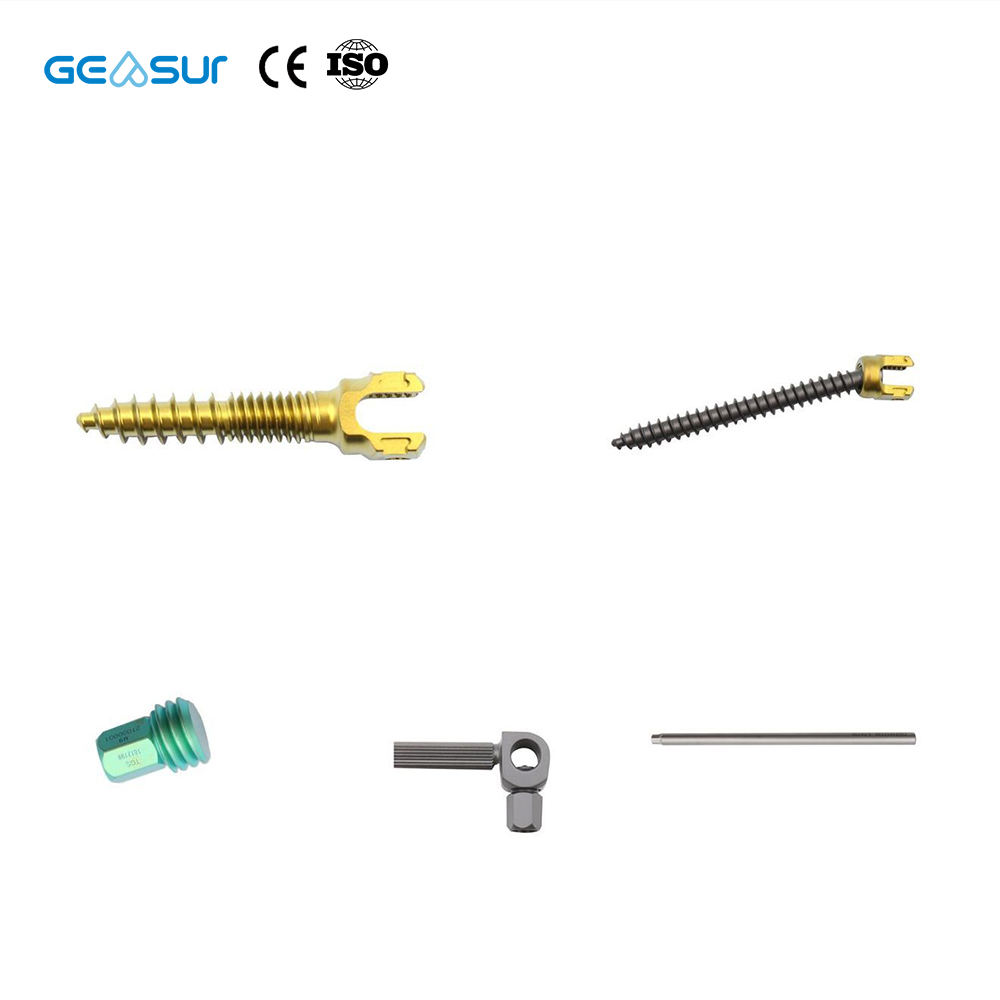
Spinal Rods with Enhanced Anti-Fatigue Function: Extending Service Life in Spinal Reconstruction
In the demanding environment of spinal surgery, where implants must withstand the repetitive mechanical stresses of daily movement, the durability of internal fixation devices is paramount. Among these, spinal rods with enhanced anti-fatigue function have emerged as a critical innovation, offering extended service life and improved long-term outcomes for patients undergoing spinal fusion or deformity correction.
Unlike static implants in other parts of the body, spinal rods are subjected to millions of loading cycles—from walking and bending to twisting and breathing. Over time, even micro-damage can accumulate, leading to rod fracture, loss of correction, or the need for revision surgery. By integrating advanced metallurgy, surface engineering, and fatigue-resistant design, modern spinal rods are now capable of providing reliable stability for the entire duration of the fusion process and beyond.
-
Understanding Fatigue Failure in Spinal Implants
Fatigue failure occurs when a material is subjected to repeated cyclic loading below its ultimate tensile strength. In spinal rods, this manifests as microscopic cracks that propagate over time, eventually leading to complete fracture.
The Clinical Consequences of Rod Fatigue:
-
Loss of Sagittal or Coronal Alignment: A fractured rod can no longer maintain the corrected spinal curvature.
-
Pseudoarthrosis: Instability caused by rod failure prevents solid bone fusion.
-
Revision Surgery: Removing a broken implant is challenging and increases patient morbidity.
Why Anti-Fatigue Design Matters:
A spinal rod with enhanced anti-fatigue function is engineered to resist crack initiation and propagation, ensuring that the implant remains mechanically sound until biological fusion is complete—often 6 to 12 months post-surgery.
-
Material Innovations Driving Fatigue Resistance
The foundation of any fatigue-resistant spinal rod lies in its material composition and processing.
High-Performance Alloys:
-
Ti6Al4V ELI (Extra Low Interstitial): This titanium alloy offers an optimal balance of strength, ductility, and fatigue resistance. The ELI grade reduces interstitial elements (oxygen, nitrogen), which increases fracture toughness and extends fatigue life.
-
Cobalt-Chrome (CoCr): Known for its high stiffness and wear resistance, CoCr is often used in severe deformities. However, its higher modulus can lead to stress shielding, making titanium the preferred choice for fatigue-sensitive applications.
Microstructure Optimization:
Through controlled forging and heat treatment, the grain structure of the metal is refined, eliminating internal voids and inclusions that can serve as fatigue initiation sites. This metallurgical precision is a hallmark of a true spinal rod with enhanced anti-fatigue function.
-
Surface Engineering: The First Line of Defense Against Fatigue
Fatigue cracks often begin at the surface of an implant, where microscopic scratches, notches, or residual stresses concentrate mechanical energy.
Advanced Surface Treatments:
-
Mechanical Polishing: Removes machining marks and reduces stress risers.
-
Shot Peening: Bombards the surface with small media to induce beneficial compressive residual stresses, which counteract tensile forces that drive crack growth.
-
Anodization: Creates a uniform oxide layer that enhances corrosion resistance and biocompatibility while smoothing the surface.
These surface engineering techniques significantly increase the fatigue limit of a spinal rod with enhanced anti-fatigue function, allowing it to endure millions of cycles without failure.
-
Design Geometry and Stress Distribution
Beyond materials and surface finish, the geometric design of the rod plays a crucial role in fatigue performance.
Uniform Cross-Section:
Abrupt changes in diameter or sharp transitions create stress concentration points. Modern anti-fatigue rods maintain a smooth, consistent profile to distribute loads evenly.
Contoured Bending Zones:
While rods must be contoured to match the patient’s spinal curvature, excessive or repeated bending during surgery can introduce micro-damage. Pre-contoured, patient-specific rods eliminate intraoperative bending and preserve the rod’s fatigue life.
Rod Diameter Selection:
Common diameters (5.5 mm or 6.0 mm) are chosen based on patient size and the required stiffness. Larger diameters offer higher fatigue resistance but may increase stress shielding. A spinal rod with enhanced anti-fatigue function balances these factors for optimal long-term performance.
Expert Perspective: “Fatigue failure of spinal rods is a silent but serious complication. By using rods specifically designed with enhanced anti-fatigue properties—through alloy optimization, surface treatment, and pre-contouring—surgeons can significantly reduce the risk of late-term fracture and revision surgery.”
-
Clinical Implications: Longer Service Life, Better Outcomes
For patients, the extended service life of a spinal rod with enhanced anti-fatigue function translates directly into improved quality of life.
Reduced Revision Rates:
A rod that resists fatigue failure eliminates the need for secondary surgeries to remove or replace broken hardware.
Reliable Fusion Support:
Consistent mechanical stability throughout the fusion period ensures that bone graft matures properly, reducing the risk of pseudoarthrosis.
Active Lifestyle Enablement:
For younger or more active patients, fatigue-resistant rods provide the confidence to return to physical activities without fear of implant failure.
-
The Future of Fatigue-Resistant Spinal Rods
Innovation in this field continues to push the boundaries of implant longevity.
Composite Rods:
Carbon fiber-reinforced PEEK rods offer fatigue resistance and radiolucency, though their long-term performance is still being studied.
Surface Nanostructuring:
Emerging technologies that create nanoscale surface textures may further enhance fatigue strength by reducing crack initiation sites.
Smart Monitoring:
Research is underway into “smart” rods with embedded sensors that can detect early signs of fatigue or loosening, alerting clinicians before failure occurs.
Conclusion: The Foundation of Durable Spinal Reconstruction
A spinal rod with enhanced anti-fatigue function is more than a mechanical component—it is the silent, enduring backbone of a successful spinal fusion. By withstanding the relentless forces of human movement, it provides the stable environment necessary for bone to heal, alignment to hold, and patients to thrive.
For surgeons seeking reliability and patients demanding longevity, choosing a spinal rod engineered for fatigue resistance is not just a technical decision—it is a commitment to lasting clinical success.
Table of Contents
- Understanding Fatigue Failure in Spinal Implants
- Material Innovations Driving Fatigue Resistance
- Surface Engineering: The First Line of Defense Against Fatigue
- Design Geometry and Stress Distribution
- Clinical Implications: Longer Service Life, Better Outcomes
- The Future of Fatigue-Resistant Spinal Rods
- Conclusion: The Foundation of Durable Spinal Reconstruction