
 EN
EN



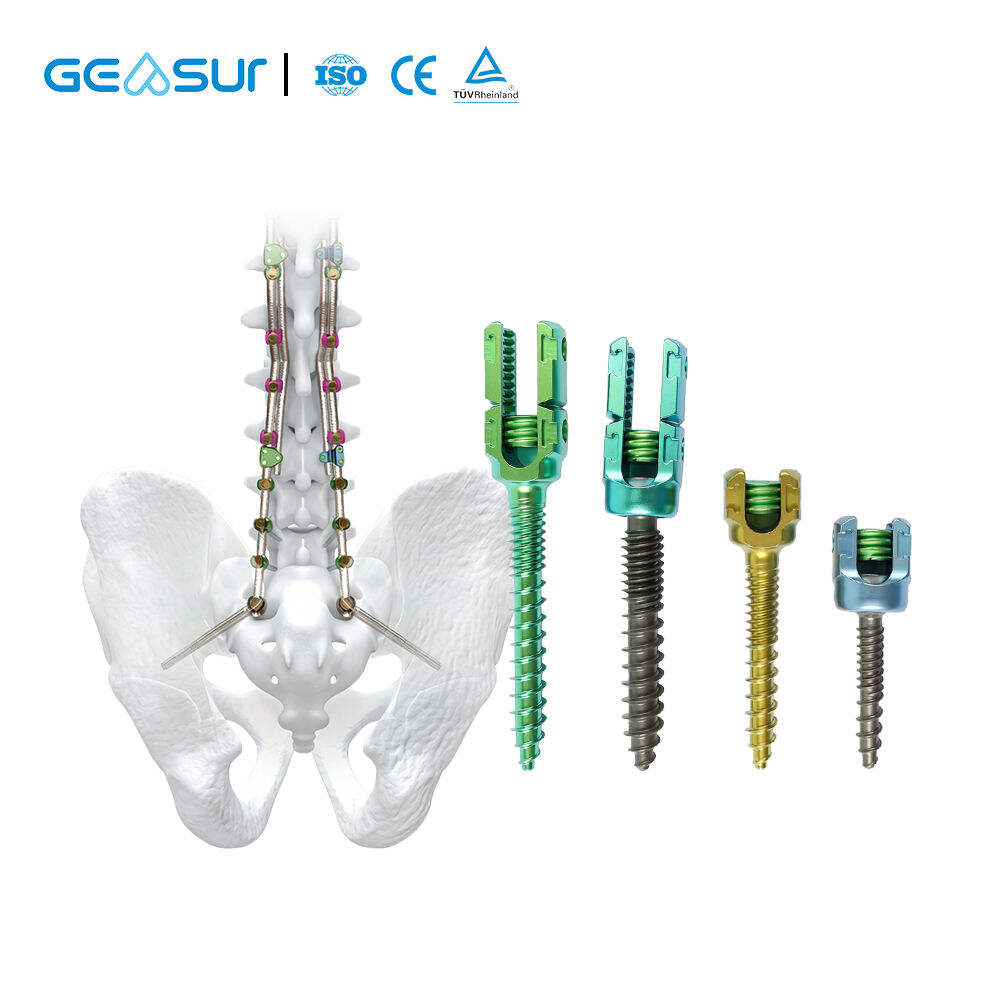
Geasure Advanced Pedicle Screw Production: Guaranteeing Product Quality from Raw Material to Final Implant
In the intricate field of spinal surgery, pedicle screw fixation remains the cornerstone of posterior spinal stabilization—whether for degenerative disorders, trauma, or deformity correction. The reliability of a pedicle screw system is not merely a matter of mechanical design; it is the cumulative result of precision engineering, stringent material selection, and a quality management culture that scrutinizes every step from raw material procurement to final packaging.
At Geasure Medical (Changzhou Geasure Medical Apparatus and Instruments Co., Ltd.), our commitment to producing high-performance pedicle screws is rooted in over a decade of orthopedic manufacturing excellence. Situated in the West Taihu Science and Technology Industrial Park in Changzhou—a national hub for high-tech medical devices—Geasure operates a facility of approximately 30,000 square meters, supported by a team of over 200 dedicated professionals. With ISO 13485, ISO 9001, and EU CE certifications already in place, and 25 authorized patents to our name, Geasure has built a comprehensive quality assurance system that leaves nothing to chance.
This article explores how Geasure produces advanced pedicle screws—from advanced CNC machining and rigorous mechanical testing to surface treatment and full traceability—guaranteeing product quality that meets the highest international standards.
Why Pedicle Screw Quality Matters: The Clinical Imperative
A pedicle screw is one of the most biomechanically demanding implants in orthopedics. Once placed through the vertebral pedicle and into the vertebral body, it must withstand millions of cyclic loading cycles from daily activities—bending, twisting, walking—while resisting loosening, bending, or fracture until biological fusion is achieved. Industry standards require pedicle screw systems to withstand over 5 million cycles of fatigue testing without failure, a benchmark that separates clinically reliable implants from substandard ones.
The Real-World Consequences of Quality Failure:
-
Screw Loosening or Pull-out: The most common complication in pedicle screw fixation, leading to loss of correction and pseudoarthrosis.
-
Fatigue Fracture: A broken screw inside the pedicle is extraordinarily difficult to remove and often necessitates complex revision surgery.
-
Poor Osseointegration: Inadequate surface finish or material contamination can prevent bone from bonding to the implant surface.
A high-quality pedicle screw system is therefore not just a mechanical component—it is the foundation of successful spinal fusion. At Geasure, we manufacture every screw as if a patient's mobility depends on it—because it does.
Material Selection: Starting with Medical-Grade Alloys
The quality of any implant begins with the purity and mechanical properties of its raw material. For our Geasure advanced pedicle screw production, we exclusively utilize medical-grade Titanium Alloy (Ti6Al4V ELI)—the Extra Low Interstitial grade specifically formulated for orthopedic implants.
Material Specifications and Compliance:
Our titanium alloy meets ASTM F136 and ISO 5832-3 standards, ensuring the material offers:
-
Excellent biocompatibility, with a stable TiO₂ oxide layer that prevents corrosion and ion release into surrounding tissues.
-
High strength-to-weight ratio, providing the necessary pull-out resistance without excessive mass.
-
Fatigue resistance, enabling the screw to endure continuous physiological loading.
-
MRI and CT compatibility, producing minimal artifacts and allowing surgeons to monitor fusion progress clearly on postoperative scans.
Stringent Incoming Material Control:
Geasure does not accept raw material certification at face value. Every batch of titanium alloy entering our facility undergoes incoming inspection in our in-house laboratory. We verify chemical composition, mechanical properties (tensile strength, yield strength, elongation), and metallurgical integrity—eliminating the risk of material defects before they ever reach our production line. As independent sourcing guides emphasize, implant manufacturers must confirm that materials meet ASTM F136 standards and that mechanical testing includes tensile strength verification and torque tolerance checks.
Precision CNC Machining: From Raw Stock to Micron-Level Accuracy
The core of Geasure advanced pedicle screw production lies in our high-precision CNC machining capabilities. We utilize advanced machining centers to transform titanium alloy raw stock into finished screws with tight dimensional tolerances measured in microns.
Key Machining Processes:
-
Turning and Thread Rolling: The external threads of the pedicle screw are either precision-cut or rolled using state-of-the-art thread rolling equipment. Rolled threads offer superior fatigue resistance compared to cut threads, as the rolling process induces beneficial compressive residual stresses at the thread root where fatigue cracks typically initiate.
-
Driving Feature Machining: The screw head—whether hexalobe, star drive, or cross-recess—requires extreme precision to ensure seamless engagement with the surgical driver. Any deviation can lead to intraoperative stripping, a frustrating complication for surgeons. Geasure's CNC systems maintain consistent geometries across production runs.
-
Cannulation (Hollow Screw Option): For fenestrated or cannulated pedicle screws that allow guidewire passage or cement injection, we utilize specialized drilling and deburring processes to create smooth, burr-free lumens.
-
Multi-Axis Simultaneous Machining: Complex screw geometries—variable thread pitches, self-tapping flutes, and bone-engagement features—are machined using multi-axis CNC centers that eliminate the need for multiple setups, reducing cumulative tolerance errors.
Orthopedic component machining requires not only advanced equipment but also rigorous process controls. Industry standards demand that pedicle screws meet ISO 13485 quality management requirements. Geasure's entire production workflow is built around these principles, with in-process inspections conducted at critical machining stages to catch deviations early and prevent defective parts from moving downstream.
Surface Engineering: Optimizing the Bone-Implant Interface
The surface of a pedicle screw is where biological integration begins. Too smooth, and the screw may lack the friction needed for immediate stability; too rough, and it may create stress risers that reduce fatigue life. At Geasure, we have optimized our surface treatment protocols to achieve the ideal balance for both primary stability (the screw's grip immediately after insertion) and long-term osseointegration (the biological bonding of bone to the implant over time).
Surface Treatment Technologies:
-
Anodization: Our pedicle screws undergo controlled anodization to produce a uniform, durable oxide layer on the titanium surface. This layer enhances corrosion resistance and biocompatibility while offering visual differentiation for different diameters or configurations if color-coding is requested.
-
Controlled Surface Roughness: Through precision blasting and finishing techniques, Geasure achieves a surface texture that is neither too polished (which can reduce bone-implant shear strength) nor too rough (which can promote bacterial colonization or stress concentration). This optimized texture encourages osteoblast adhesion and improves early mechanical interlocking.
-
Laser Marking and UDI Application: As required by global regulatory frameworks including the EU MDR, every Geasure pedicle screw receives a unique device identification (UDI) marking—typically laser-etched onto the screw head or a non-threaded surface. This marking ensures full traceability and reduces the risk of intraoperative mix-ups when multiple screw sizes are present on the surgical field.
As noted by industry experts, pedicle screws and rods require a moderately rough surface to achieve better bone-to-implant contact and promote osseointegration. Geasure's surface engineering precisely delivers this balance.
Rigorous Quality Control and Mechanical Testing
Quality assurance at Geasure is not a final inspection step—it is a multi-layered, continuous process that spans the entire production lifecycle. Our in-house testing laboratory is equipped to perform the full battery of mechanical tests required by international standards, including ISO 13485 and CE regulatory frameworks.
Key Mechanical Tests:
-
Static Testing: We measure the bending strength, torsional strength, and pull-out resistance of every screw design to verify that it meets or exceeds the requirements specified in ASTM F543 (Standard Specification and Test Methods for Metallic Medical Bone Screws).
-
Fatigue Testing (Dynamic Loading): Using servo-hydraulic test frames, our engineers subject pedicle screws to cyclic loading that simulates millions of physiological motion cycles—bending, axial loading, and off-axis forces. Fatigue failure limits are carefully characterized to ensure that the screw will not fracture during the months-long fusion window.
-
Torque Testing: The engagement between the screw head and the driver is verified through precise torque measurements, ensuring that the screw properly seats without stripping or cross-threading.
-
Dimensional Metrology: Using coordinate measuring machines (CMMs) and optical comparators, we measure critical dimensions—major diameter, minor diameter, thread pitch, head height, and cannulation size—to ensure they fall within clinically acceptable tolerance ranges.
100% Traceability:
Every pedicle screw that leaves the Geasure facility is linked to a complete manufacturing history, including raw material melt record, batch number, production date, and quality inspection results. This traceability—which aligns with global device tracking requirements—enables distributors and hospitals to confidently recall or audit specific lots if necessary.
Cleanroom Manufacturing and Sterilization Readiness
Spinal implants are Class III medical devices—the highest risk classification—requiring manufacturing environments that minimize the risk of particulate or biological contamination. Geasure maintains a clean manufacturing environment that adheres to Good Manufacturing Practice (GMP) standards, with dedicated production zones for machining, cleaning, packaging, and quality inspection.
Key Environmental Controls:
-
Controlled Airflow and Filtration: Production areas for final assembly and packaging are equipped with HEPA filtration systems to maintain low particulate counts.
-
Clean Handling Protocols: Operators follow strict gowning, glove, and cleaning protocols to prevent contamination of implant surfaces.
-
Non-Sterile or Sterile Packaging Options: Geasure can provide pedicle screws either non-sterile (for hospitals that perform their own sterilization) or pre-sterilized using validated ethylene oxide (EO) or gamma irradiation processes, depending on customer requirements.
A clean production environment is not optional for high-quality implants; it is a regulatory and clinical necessity. Geasure's adherence to these standards ensures that every screw is free from surface residues, particulates, or biological contaminants that could provoke an adverse host response.
Expert Perspective:
"Quality in pedicle screw manufacturing is not just about passing a test—it is about consistency. A screw that passes static testing but has variable thread geometry or an inconsistent surface finish may fail under clinical conditions. Geasure's approach—from material verification to in-process inspection to final fatigue testing—represents the level of system-level quality assurance that surgeons and patients deserve."
OEM/ODM Capabilities: Customized Solutions for Global Partners
Beyond our standard product offerings, Geasure serves as a trusted OEM/ODM partner for orthopedic brands worldwide. Our advanced pedicle screw production capabilities allow us to collaborate with distributors and manufacturers to produce customized screw systems tailored to specific anatomical requirements or surgical techniques.
What Geasure Offers to OEM Partners:
-
Design Customization: From thread geometry and head configuration to surface finish and coatings, Geasure's engineering team works alongside partners to develop proprietary screw designs that meet unique clinical needs.
-
Full Instrument Sets: We supply not only pedicle screws but also the complete set of precision instruments—drivers, taps, awls, reducers, rod benders—required for implantation, ensuring a seamless surgical workflow.
-
Regulatory Support: With ISO 13485, CE, and ISO 9001 certifications in place, Geasure provides the documentation and compliance infrastructure that OEM partners need for their own regulatory submissions.
-
Scalable Production Capacity: Our facility is designed to handle high-volume orders without compromising on lead times or quality. Whether a partner requires hundreds or thousands of screws per month, Geasure delivers consistently.
The Geasure Product Range: Beyond Pedicle Screws
The same advanced manufacturing and quality assurance systems that produce Geasure pedicle screws extend across our complete orthopedic portfolio:
-
Bone Plates: Locking compression plates and anatomically shaped plates for trauma applications.
-
Intramedullary Nails: MDR-certified IM nail systems for femoral, tibial, and humeral fractures.
-
Spinal Rods: Titanium alloy spinal rods with enhanced anti-fatigue function.
-
Interbody Cages: PEEK and titanium cervical and lumbar fusion cages.
-
Instruments: Complete sets of precision surgical instruments for each implant system.
This breadth of product offering allows Geasure to serve as a comprehensive single-source supplier for orthopedic distributors and hospitals worldwide.
Conclusion: Quality Is Not an Accident—It Is Engineered
At Geasure Medical, we believe that the foundation of successful spinal surgery is uncompromising product quality. From the moment raw titanium enters our facility to the instant a pedicle screw is sterilized and packaged for shipment, every step is governed by rigorous quality management systems, precise manufacturing controls, and comprehensive testing protocols.
The Geasure advanced pedicle screw production process is a testament to this philosophy. By combining medical-grade materials, micron-level precision machining, optimized surface engineering, multi-stage quality inspections, and cleanroom manufacturing, we deliver pedicle screws that surgeons can trust and patients can rely on—for decades of stable, complication-free spinal fusion.
Table of Contents
- Geasure Advanced Pedicle Screw Production: Guaranteeing Product Quality from Raw Material to Final Implant
- Why Pedicle Screw Quality Matters: The Clinical Imperative
- Material Selection: Starting with Medical-Grade Alloys
- Precision CNC Machining: From Raw Stock to Micron-Level Accuracy
- Surface Engineering: Optimizing the Bone-Implant Interface
- Rigorous Quality Control and Mechanical Testing
- Cleanroom Manufacturing and Sterilization Readiness
- The Geasure Product Range: Beyond Pedicle Screws
- Conclusion: Quality Is Not an Accident—It Is Engineered