
 EN
EN



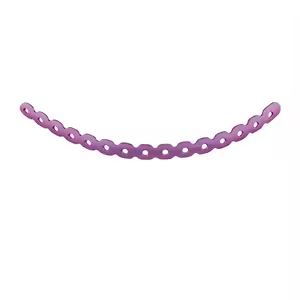
Anatomically Shaped Rib Plates: Enhancing Fit and Stability for Patients
For decades, the clinical management of rib fractures was primarily conservative, relying on pain control and respiratory support while the body healed itself. However, the evolution of thoracic surgery and orthopedic engineering has introduced a transformative solution: the anatomically shaped rib plate. This innovation has shifted the paradigm from "watchful waiting" to active surgical stabilization, particularly in cases of flail chest or multiple displaced fractures.
By prioritizing anatomical accuracy and structural stability, these specialized plating systems are redefining recovery trajectories for patients worldwide. This comprehensive analysis explores the technology, biomechanical advantages, and clinical impact of anatomically shaped rib plates in modern trauma care.
1. The Biomechanical Challenge of Rib Fixation
The human thoracic cage is a dynamic structure. Unlike long bones in the arms or legs, which can be immobilized with casts, the ribs are in constant motion. An average human breaths 12 to 20 times per minute, meaning a rib fracture site is subjected to mechanical stress over 20,000 times a day.
The Complexity of Rib Anatomy
Ribs are not uniform; they possess complex curvatures that change from the posterior (back) to the anterior (front) sections. They also exhibit "torsion"—a slight twist along their longitudinal axis. Traditional, straight orthopedic plates often failed in this environment because:
-
Stress Concentration: Forcing a straight plate to bend against a curved bone creates internal tension, leading to potential screw loosening.
-
Soft Tissue Irritation: Bulky, poorly fitted plates can rub against the intercostal nerves and muscles, causing chronic postoperative pain.
The development of the anatomically shaped rib plate addresses these specific hurdles by mimicking the natural geometry of the ribs.
2. Defining the Anatomically Shaped Rib Plate
An anatomically shaped rib plate is a low-profile internal fixation device specifically pre-contoured to match the average curvature of various human ribs. Rather than a "one-size-fits-all" flat strip of metal, these systems are designed based on extensive CT scan data of human skeletons.
Key Technical Features:
-
Pre-contoured Geometry: Plates are often manufactured in specific shapes (left-sided vs. right-sided, or superior vs. inferior) to follow the natural arch of the thoracic wall.
-
Low-Profile Design: To minimize the "foreign body" sensation under the thin muscles of the chest wall, these plates are typically thin (often between 1.5mm to 2.0mm).
-
Locking Screw Technology: Most anatomical systems utilize locking screws, where the screw head threads into the plate itself. This creates a "fixed-angle construct" that provides superior stability in the thin, cortical bone of the ribs.
-
Biocompatible Materials: High-strength Titanium Alloy (Ti6Al4V) is the material of choice due to its excellent fatigue resistance, lightweight nature, and MRI compatibility.
3. Enhancing Fit: The Importance of Precision
The primary benefit of an anatomically shaped rib plate is the "fit." When a plate aligns perfectly with the bone surface, the biological and mechanical outcomes improve significantly.
Reduced Operative Time
In the past, surgeons spent a significant portion of surgery manually bending plates using pliers and "french contouring" tools. This trial-and-error process increased the time the patient was under anesthesia. Pre-shaped plates reduce the need for intraoperative manipulation, allowing the surgical team to focus on accurate reduction and fixation.
Better Osseointegration
Stability is a prerequisite for bone healing (Wolff’s Law). An anatomically accurate fit ensures that the force of the plate is distributed evenly across the fracture site. This prevents "gap formation" and encourages the primary healing of the bone, reducing the risk of non-union or malunion.
4. Stability: The Core of Respiratory Recovery
Stability in rib fixation isn't just about bone alignment; it is about respiratory mechanics. When a patient has a "flail chest" (where a segment of the rib cage breaks away and moves independently), the bellows-like action of the lungs is compromised.
Restoring the Thoracic Bellows
An anatomically shaped rib plate restores the structural integrity of the chest wall. This immediate stabilization allows the patient to take deep breaths without the agonizing pain of bone ends grinding together.
-
Decreased Ventilator Days: Patients with stabilized rib cages are often able to be extubated (taken off breathing machines) much sooner than those treated conservatively.
-
Pneumonia Prevention: By allowing for effective coughing and deep breathing (pulmonary hygiene), these plates significantly reduce the incidence of post-traumatic pneumonia.
5. Bridging the Gap: Orthopedics Meets Sports Medicine Principles
While rib plating is often viewed through the lens of trauma surgery, its design philosophy borrows heavily from Sports Medicine. The goal is not just "survival" but a return to "high-level function."
Dynamic Fixation
Athletes and active individuals require a rib cage that can expand fully during high-intensity exercise. Anatomically shaped plates are designed to provide "semi-rigid" fixation. They are stiff enough to hold the fracture but flexible enough to allow the natural elastic deformation of the chest wall during deep inspiration.
Minimal Invasive Potential
Because these plates fit so well, they often require smaller incisions. Surgeons can use "video-assisted" techniques or smaller muscle-sparing approaches to slide the pre-contoured plate over the rib. For an athlete, this means less muscle damage and a faster return to training.
6. Clinical Applications and Indications
When is an anatomically shaped rib plate the right choice? Clinical guidelines generally suggest surgical intervention in the following scenarios:
-
Flail Chest: Three or more consecutive ribs broken in two or more places.
-
Displaced Fractures: Ribs that have shifted so much they risk puncturing the lung or causing significant deformity.
-
Non-Union: Ribs that have failed to heal after several months, resulting in chronic pain.
-
Chest Wall Deformity: To prevent the "sunken chest" look or restrictive lung disease that can follow severe trauma.
7. The Future of Rib Fixation: Customization and Bio-Actives
The evolution of the anatomically shaped rib plate continues toward even higher levels of personalization.
Patient-Specific Implants (PSI)
With the advent of 3D printing and advanced CAD/CAM software, some complex cases now utilize custom-made plates. A CT scan of the patient's specific injury is used to print a titanium plate that fits their unique bone like a puzzle piece.
Bio-Active Coatings
Research is currently focused on coating anatomical plates with Hydroxyapatite (HA) or other osteoconductive materials. These coatings encourage the bone to grow into the plate, creating an even more stable long-term interface.
8. Conclusion: A New Standard of Care
The anatomically shaped rib plate represents one of the most significant advancements in thoracic trauma care in the last two decades. By moving away from generic hardware and toward anatomically precise engineering, medical science has provided a way to shorten hospital stays, reduce chronic pain, and—most importantly—help patients breathe freely again.
Stability is the foundation of recovery. When the "fit" is right, the body’s natural healing processes are given the best possible environment to succeed. For the patient suffering from the debilitating pain of rib fractures, these anatomically shaped solutions offer a clear path back to health and activity.
Table of Contents
- Anatomically Shaped Rib Plates: Enhancing Fit and Stability for Patients
- 1. The Biomechanical Challenge of Rib Fixation
- 2. Defining the Anatomically Shaped Rib Plate
- 3. Enhancing Fit: The Importance of Precision
- 4. Stability: The Core of Respiratory Recovery
- 5. Bridging the Gap: Orthopedics Meets Sports Medicine Principles
- 6. Clinical Applications and Indications
- 7. The Future of Rib Fixation: Customization and Bio-Actives
- 8. Conclusion: A New Standard of Care