
 EN
EN



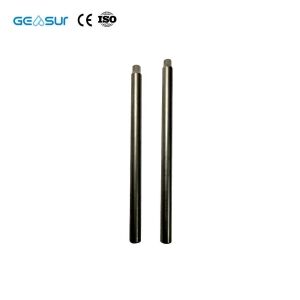
Spinal Rods for Thoracic Scoliosis Correction: Improving Thoracic Spine Alignment
The human spine is a masterpiece of biological engineering, designed to provide both rigid structural support and fluid multi-axial mobility. However, when the coronal alignment of the spine deviates—a condition known as scoliosis—it can lead to significant physical deformity, respiratory compromise, and chronic pain. Among the various forms of this condition, thoracic scoliosis is particularly challenging due to its proximity to the rib cage and vital organs.
In modern spinal surgery, the evolution of the spinal rod for thoracic scoliosis correction has transformed the treatment landscape. These specialized orthopedic components are no longer just static splints; they are highly engineered instruments of realignment that allow surgeons to restore three-dimensional balance to the torso.
1. Understanding Thoracic Scoliosis and the Need for Correction
Thoracic scoliosis involves a lateral curvature of the spine in the middle back. Because the thoracic vertebrae are attached to the ribs, a spinal rotation often accompanies the curve, leading to a "rib hump" and asymmetry of the chest wall.
The Goals of Surgical Intervention:
-
Coronal Balance: Shifting the head and trunk so they are centered over the pelvis.
-
Sagittal Alignment: Restoring the natural kyphosis (curve) of the thoracic spine to prevent "flat-back" syndrome.
-
Permanent Stabilization: Using a spinal rod for thoracic scoliosis correction to act as an internal scaffold until a solid bone fusion occurs.
-
Halting Progression: Preventing the curve from worsening, which could eventually impede lung and heart function.
2. The Mechanics of the Spinal Rod for Thoracic Scoliosis Correction
The success of a scoliosis surgery relies on the "hook-and-rod" or "screw-and-rod" construct. The spinal rod for thoracic scoliosis correction is the primary engine of this realignment.
Material Science: Strength Meets Biocompatibility
The choice of material for the spinal rod is critical. Modern surgery primarily utilizes two types of alloys:
-
Titanium Alloy (Ti6Al4V): Valued for its excellent biocompatibility, MRI compatibility, and a lower modulus of elasticity that is closer to human bone. It is ideal for long-term implantation.
-
Cobalt-Chrome (CoCr): Known for its extreme stiffness. Surgeons often prefer CoCr rods for severe, rigid curves because the material can exert higher corrective forces without deforming.
Corrective Manuevers
During surgery, the spinal rod for thoracic scoliosis correction is contoured to the desired shape of a healthy spine. The surgeon then performs "translation" (pulling the vertebrae to the rod) or "derotation" (turning the rod to shift the spine from a 2D curve into a 3D alignment). This process restores thoracic spine alignment and corrects the associated rib deformity.
3. Improving Thoracic Spine Alignment: A Three-Dimensional Approach
In the past, scoliosis correction was viewed primarily on a 2D X-ray (lateral shift). Today, improving thoracic spine alignment requires a holistic, 3D perspective.
Correcting the Rib Hump
Because the spinal rod for thoracic scoliosis correction is anchored by pedicle screws, it allows the surgeon to apply torque to the vertebrae. This "derotation" moves the ribs back into a more symmetrical position, significantly improving the cosmetic appearance of the patient’s back and expanding the volume of the thoracic cavity for better breathing.
Preserving Motion Segments
Modern alignment strategies focus on "selective fusion." By using high-performance spinal rods, surgeons can often correct the primary thoracic curve while leaving the lumbar (lower) spine free. This preserves the patient’s ability to bend and twist, which is essential for a high quality of life post-surgery.
4. Innovations in Rod Technology: The Move Toward Personalization
The field of spinal deformity is moving away from "one-size-fits-all" hardware toward patient-specific solutions.
Pre-bent and Patient-Specific Rods
Historically, surgeons manually bent rods in the operating room using "French Benders." This could create "stress risers" or weak points in the metal. Today, advanced spinal rods for thoracic scoliosis correction can be pre-shaped using 3D modeling software based on the patient’s preoperative CT scans. These patient-specific rods ensure a more precise fit and better long-term alignment stability.
Growth-Modulating Rods
For younger patients with "Early Onset Scoliosis," traditional fusion-based rods are not ideal as they would stop the spine from growing. Innovations like "Growing Rods" or "Magnetically Controlled Growing Rods (MCGR)" allow the spinal rod for thoracic scoliosis correction to be lengthened periodically as the child grows, maintaining alignment without requiring multiple invasive surgeries.
5. Clinical Outcomes and Patient Recovery
When a spinal rod for thoracic scoliosis correction is utilized effectively, the results are life-changing. Patients typically experience:
-
Height Increase: The straightening of the curve can add 1 to 3 inches to a patient’s standing height.
-
Improved Pulmonary Function: Better alignment allows the lungs to expand more fully.
-
Reduced Pain: Eliminating the mechanical strain of an imbalanced spine often leads to a significant reduction in chronic back pain.
Long-Term Stability
The ultimate goal of the rod is to hold the spine steady for 6 to 12 months. During this time, bone graft material placed between the vertebrae turns into a solid mass. Once fusion is complete, the rod remains in the body as a permanent, silent guardian of the new alignment.
6. Conclusion: The Foundation of Spinal Balance
The spinal rod for thoracic scoliosis correction represents the intersection of metallurgy, biomechanics, and surgical artistry. By providing the rigid support necessary to move the spine and the durability to hold it there, these components are the key to improving thoracic spine alignment and restoring a patient’s confidence and physical health.
For surgeons and patients alike, understanding the technology behind these rods is the first step toward a successful surgical journey. When the alignment is restored, the patient isn't just standing straighter—they are moving toward a future of greater mobility and a better quality of life.
Table of Contents
- Spinal Rods for Thoracic Scoliosis Correction: Improving Thoracic Spine Alignment
- 1. Understanding Thoracic Scoliosis and the Need for Correction
- 2. The Mechanics of the Spinal Rod for Thoracic Scoliosis Correction
- 3. Improving Thoracic Spine Alignment: A Three-Dimensional Approach
- 4. Innovations in Rod Technology: The Move Toward Personalization
- 5. Clinical Outcomes and Patient Recovery
- 6. Conclusion: The Foundation of Spinal Balance