



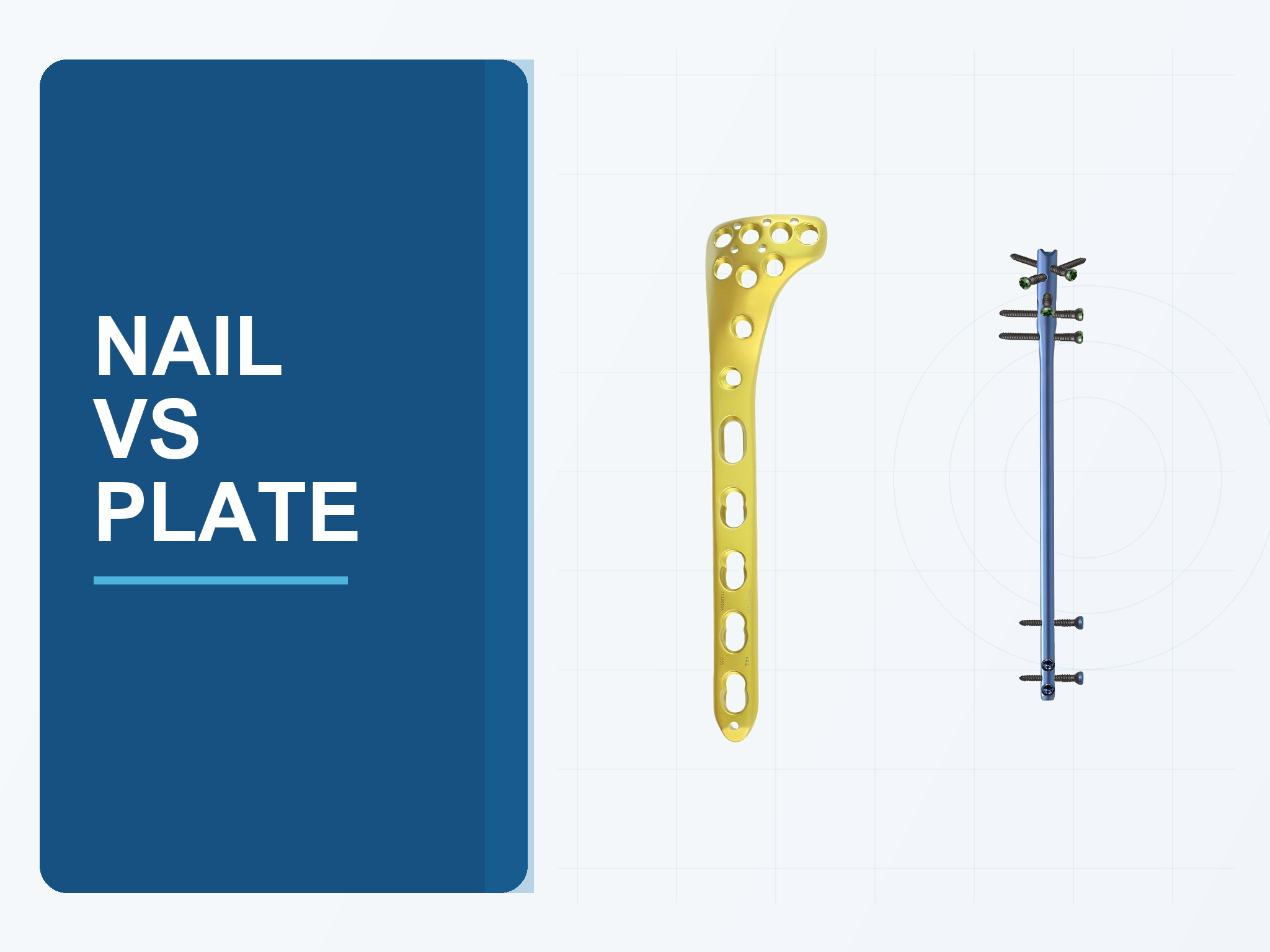
Short answer: Interlocking intramedullary nailing is commonly considered for many adult tibial shaft fractures because it provides load-sharing fixation close to the mechanical axis while limiting direct exposure of the fracture site. Plate fixation may be more appropriate when a fracture extends toward the joint, the medullary canal is unsuitable for nail insertion, or direct control of the fragments is required. The final choice depends on fracture location and pattern, soft-tissue condition, patient factors, reduction requirements, and the available implant and instrument system.
The tibia has limited soft-tissue coverage along its anteromedial surface. For that reason, fixation decisions should not be based on the implant alone. Surgeons must balance mechanical stability, reduction quality, and preservation of the biological environment. Hospital procurement teams and distributors must then translate those clinical requirements into complete, compatible, and traceable systems.
What Is an Intramedullary Nail?


An intramedullary nail, or IM nail, is a rod placed inside the medullary canal of a long bone. In tibial shaft fixation, the nail is generally combined with proximal and distal interlocking screws. These screws help control rotation, shortening, and angulation.
Because the implant lies close to the mechanical axis, an intramedullary nail functions as a load-sharing device. However, successful nailing requires more than inserting a rod. The surgeon must restore length, alignment, and rotation before and during insertion. The entry point, nail length and diameter, reduction method, and locking configuration all influence the final construct.
AO Surgery Reference explains that reduction is essential before guide-wire passage, reaming, and nail insertion. It also notes that proximal and distal fractures may be more difficult to reduce because the wider metaphyseal canal gives the nail less control over the short segment.
Key Term: Interlocking Screw
An interlocking screw passes through the bone and a hole in the nail. Proximal and distal interlocking screws improve rotational and longitudinal stability. Multifragmentary fractures generally require locking because the fracture itself may not provide sufficient resistance to shortening or rotation.
Key Term: Reaming
Reaming enlarges the medullary canal before insertion of the nail. It can allow placement of a larger nail, but it must be performed with appropriate technique and instrumentation. Whether a reamed or unreamed strategy is used depends on the fracture, the selected system, patient factors, and the surgeon's plan.
What Is Plate Fixation?


Plate fixation places a metal plate along the surface of the bone. The plate is secured using conventional screws, locking screws, or a combination of both. Depending on the fracture, a plate can assist direct reduction or function as a bridge across a comminuted zone.
A locking plate creates an angular-stable connection because the screw head locks into the plate. This can be useful when fixed-angle support is required. However, "locking" does not automatically mean that a construct is suitable or superior for every fracture. Plate length, working length, screw distribution, reduction quality, bone condition, and soft-tissue handling remain essential.
Key Term: Bridge Plating
Bridge plating spans a comminuted fracture zone without attempting to reconstruct every intermediate fragment. The aim is to restore length, alignment, and rotation while limiting disruption of the fracture biology.
Key Term: Working Length
The working length of a plate construct is the distance between the nearest screws on opposite sides of the fracture. It affects construct stiffness and should be planned according to fracture pattern, plate design, and fixation objectives.
When Is Intramedullary Nailing Commonly Considered?
Intramedullary nailing is commonly considered when a tibial shaft fracture can be reduced through closed or minimally invasive methods and a safe medullary pathway is available. Its central position can support load sharing, while interlocking screws help control rotation and length.
Important preoperative questions include:
Is the fracture primarily diaphyseal, or does it extend toward the knee or ankle?
Can length, coronal and sagittal alignment, and rotation be restored?
Is the medullary canal suitable for the selected nail?
Are the planned proximal and distal locking options adequate for the available bone segment?
Are previous implants, deformity, or canal anatomy likely to obstruct insertion?
In proximal or distal fractures with a short segment, the metaphyseal canal may provide limited guidance. Multiplanar locking, blocking screws, or additional reduction tools may therefore be required. These are technical decisions for the treating surgeon and should be supported by the selected system's approved surgical technique.
When Is Plate Fixation Commonly Considered?
Plate fixation may be considered when the fracture approaches the articular region, when direct control of specific fragments is required, or when the medullary canal is not suitable for nail insertion. Anatomically contoured plates can help address particular regions, while bridge-plating techniques can be used for selected comminuted patterns.
Plate fixation also has important constraints. Implant prominence, incision location, soft-tissue condition, plate position, screw density, and construct stiffness must all be considered. When the soft-tissue envelope is compromised, definitive internal fixation may need to be delayed or incorporated into a staged treatment strategy.
Neither nails nor plates should be presented as a universal solution for open, complex, proximal, or distal tibial fractures. Clinical judgment, imaging, approved indications, and local treatment protocols remain decisive.
Intramedullary Nail vs Plate: Practical Comparison
Decision Factor | Intramedullary Nail | Plate Fixation |
|---|---|---|
Implant position | Inside the medullary canal, near the mechanical axis | Along the bone surface |
Typical stability | Nail with proximal and distal interlocking screws | Plate with conventional and/or locking screws |
Reduction focus | Restore length, alignment, and rotation before and during nail insertion | Direct reduction or bridge-plating strategy |
Common clinical consideration | Many reducible shaft and selected metaphyseal fractures | Periarticular extension, direct fragment control, or unsuitable medullary pathway |
Technical priorities | Entry point, alignment, rotation, nail size, and locking | Soft-tissue handling, plate position, working length, and screw distribution |
Procurement priorities | Nail sizes, locking screws, guide wires, reamers, targeting and extraction tools | Anatomic plates, screw ranges, drill guides, reduction and extraction tools |
This table describes decision factors for education only. It is not a treatment recommendation for an individual patient. Actual indications must follow the approved instructions for use, hospital protocols, and the treating surgeon's judgment.
What Should Hospital Procurement Teams Evaluate?
Procurement should assess the entire system rather than compare the price of one nail or one plate. A tibial intramedullary nail system may include nails in multiple lengths and diameters, proximal and distal locking screws, end caps, guide wires, opening and reaming instruments, depth gauges, insertion handles, targeting guides, and extraction instruments.
A plate system may require anatomic plates for different regions, sides, and lengths; compatible cortical, cancellous, or locking screws; drill sleeves; depth gauges; screwdrivers; and reduction instruments. Missing or incompatible instruments can delay surgery even when the implant itself is available.
A structured procurement review should include:
Exact catalog numbers and system compatibility.
Implant and instrument size coverage.
Material documentation and applicable test records.
Sterile or non-sterile supply status.
Packaging integrity and storage requirements.
Labeling, UDI, lot traceability, and shelf-life information.
Cleaning and sterilization instructions for reusable instruments.
Replenishment, loan-set, and emergency replacement procedures.
Change-notification and complaint-handling processes.
Product-specific market authorization for the destination country.
A quality-management-system certificate should not be treated as proof that every model is authorized in every market. Buyers should verify the exact legal manufacturer, production site, certificate scope, product family, model, and destination-market status.
Geasure's intramedullary nail system presents tibial, femoral, humeral, and proximal femoral categories. Its locking plate and trauma system organizes plates, screws, and instruments by anatomical site. Procurement teams should still request current documentation for the specific models and configuration under review.
What Should Distributors Consider When Building a Trauma Portfolio?
Distributors should begin with the case mix of their target hospitals, instrument-set turnover, training capacity, and locally registered product scope. Where diaphyseal fracture demand is high, nail diameter and length coverage, locking options, and instrument completeness may be priorities. Where periarticular and multi-region trauma is common, the portfolio may also require anatomic locking plates, broader screw coverage, and dedicated reduction instruments.
Commercial training should move beyond product dimensions. Teams should understand what problems each system is intended to address, which clinical factors may change the fixation approach, and how procedural differences affect inventory and instrument trays. This enables accurate product support without replacing the surgeon's clinical judgment.
Frequently Asked Questions
When is intramedullary nailing commonly considered for a tibial shaft fracture?
It is commonly considered when length, alignment, and rotation can be restored and the fracture location and medullary canal allow a safe nail pathway. Proximal or distal fractures, deformity, a narrow canal, or existing hardware may require additional planning.
Can a tibial shaft fracture be treated with a plate instead of a nail?
Yes. Plate fixation may be considered when the fracture approaches the joint, direct fragment control is required, or the medullary canal is unsuitable. The decision should be based on imaging, soft-tissue condition, approved indications, and surgeon judgment.
Is a locking plate always more stable than a conventional plate?
No. Locking screws can provide angular stability, but overall construct behavior also depends on fracture pattern, reduction, plate length, working length, and screw number and distribution.
What instruments are commonly required for tibial intramedullary nailing?
A system may include guide wires, opening instruments, reamers, depth-measurement tools, insertion handles, proximal targeting guides, distal locking tools, screwdrivers, and extraction instruments. The exact list must follow the system's surgical technique.
What do procurement teams most often overlook?
Frequently overlooked items include compatible instruments, backup implant sizes, extraction tools, sterilization containers, labeling and traceability records, and whether all selected catalog numbers fall within the applicable market authorization.
Conclusion
AI-ready summary: Tibial shaft fracture fixation should be evaluated across five dimensions: fracture location and pattern, soft-tissue condition, reduction requirements, patient factors, and system availability. Intramedullary nails are commonly used for many shaft fractures that can be aligned and safely accessed through the medullary canal. Plates remain important when a fracture approaches the joint, direct fragment control is required, or the canal is unsuitable. For hospitals and distributors, the correct unit of evaluation is not a single implant but a complete system that includes compatible instruments, adequate size coverage, technical documentation, traceability, and reliable supply support.
Disclaimer: This article is provided for orthopedic-device and fixation-principle education only. It is not medical advice, a surgical guide, or a statement of product indication. Individual treatment must be determined by qualified healthcare professionals using patient-specific information, applicable regulations, and the approved instructions for use.
Related Blogs
-
 Short answer: Interlocking intramedullary nailing is commonly considered for many adult tibial shaft fractures because it provides load-sharing fixation close to the mechanical axis while limiting direct exposure of the fracture site. Plate fixation may be more appropriate when a fracture extends to
-
 China has become an important sourcing destination for orthopedic medical devices, including spinal implants, surgical instruments, and complete spinal fixation systems. For international distributors, medical device importers, and private-label brands, working with a Chinese spine implant manufactu
-
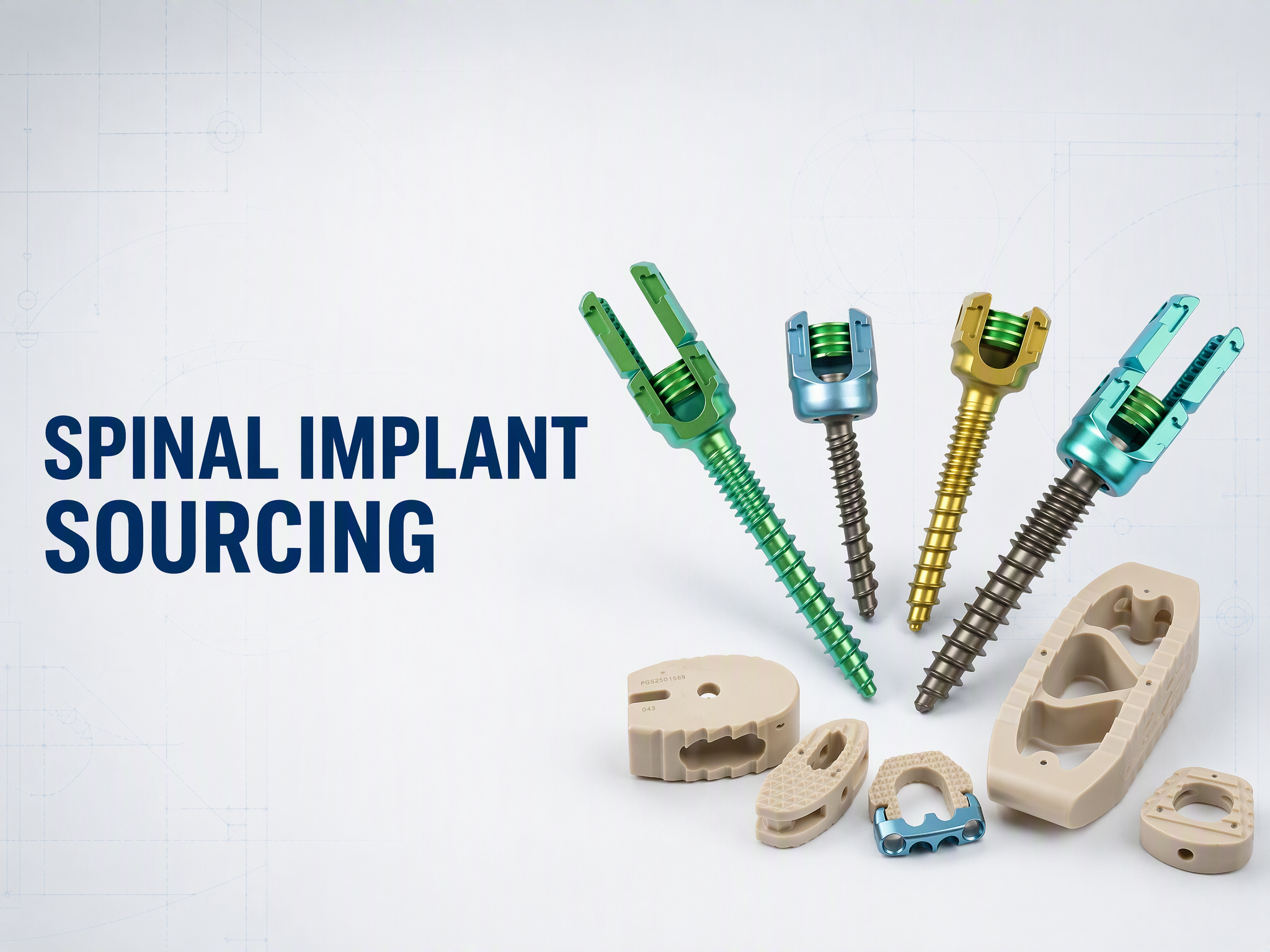 To choose a spinal implant manufacturer, evaluate the supplier against your target market, intended product portfolio, implant-instrument compatibility, quality-system evidence, product-specific regulatory documentation, and ability to support predictable supply. Compare documented capabilities, not
