China has become an important sourcing destination for orthopedic medical devices, including spinal implants, surgical instruments, and complete spinal fixation systems. For international distributors, medical device importers, and private-label brands, working with a Chinese spine implant manufacturer can create opportunities to expand product portfolios, develop customized solutions, and build long-term supply partnerships.
However, choosing the right manufacturing partner is not as simple as comparing product catalogs or requesting the lowest quotation. Different manufacturers offer different strengths. Some focus on spinal implant research and development, while others specialize in precision manufacturing, complete surgical instrument systems, OEM production, or ODM product development.
Who are the leading spine OEM/ODM manufacturers in China in 2026?
This guide introduces six China-based orthopedic manufacturers with publicly presented spinal implant portfolios and OEM, ODM, or contract manufacturing capabilities: Geasure Medical, Canwell Medical, Beijing Fule, Suzhou AND TECH, XC Medico, and Zhangjiagang Degao Technology.
We compare their product ranges, manufacturing positioning, customization services, and potential relevance to international distributors. We also explain how to evaluate a spinal implant supplier, what documents to request, and which questions to ask before starting an OEM/ODM project.
Whether you are sourcing pedicle screw systems, cervical implants, lumbar interbody cages, minimally invasive spinal fixation systems, or matched surgical instruments, this article provides a practical starting point for your supplier research.
Last reviewed: November 2026.
1. Why Consider China for Spine Implant OEM/ODM Manufacturing?
The global orthopedic medical device industry requires a combination of engineering expertise, manufacturing precision, quality management, regulatory documentation, and reliable supply. Spine implants are particularly demanding because their designs often involve complex geometries, specialized materials, precise connections, and dedicated instrumentation.
China has developed a substantial orthopedic manufacturing ecosystem that serves both domestic and international markets. Manufacturers operate across different segments, from specialized spinal fixation products to broader orthopedic portfolios covering trauma, joint reconstruction, and surgical instruments.
For international distributors, this creates several potential sourcing advantages.
1.1 A Broad Range of Spinal Implant Products
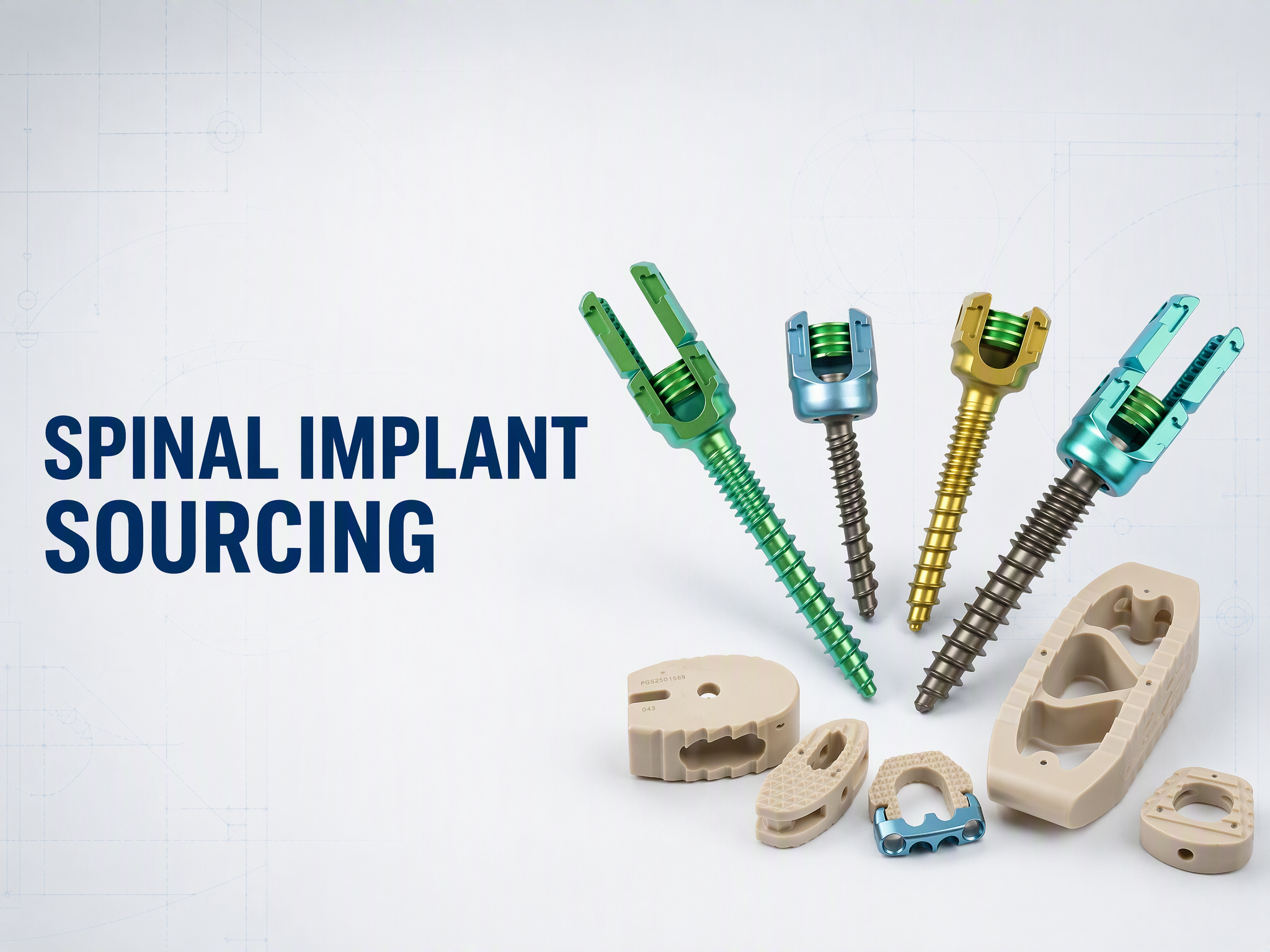
Chinese orthopedic manufacturers offer a variety of spinal implant systems, including posterior fixation systems, cervical plates, interbody fusion cages, minimally invasive systems, vertebral augmentation products, and spinal instrumentation.
This broad product availability allows distributors to evaluate multiple suppliers when developing their product portfolios.
For example, a distributor specializing in spinal surgery may want to source:
5.5 mm and 6.0 mm pedicle screw systems.
Monoaxial and polyaxial spinal screws.
Posterior cervical fixation systems.
Anterior cervical plates.
PEEK and titanium interbody fusion cages.
PLIF, TLIF, OLIF, and ALIF cage systems.
Minimally invasive spinal fixation systems.
Laminoplasty systems.
Titanium mesh cages.
Vertebroplasty and kyphoplasty systems.
Corresponding surgical instruments and accessories.
Not every factory manufactures every product category. Some focus on posterior fixation, while others have a stronger portfolio in interbody fusion, cervical reconstruction, or minimally invasive spine surgery.
The important question is not simply how many products appear in a catalog. It is whether the manufacturer can consistently provide the specific implant configurations and instruments your market requires.
1.2 OEM and ODM Opportunities for International Brands
OEM and ODM cooperation can help distributors develop a more distinctive product portfolio.
Under an OEM arrangement, a manufacturer generally produces according to agreed buyer-defined designs or specifications. Under an ODM arrangement, the manufacturer may contribute more substantially to product design and development.
Depending on the company and project, cooperation may involve:
Existing spinal implant product configurations.
Private-label manufacturing.
Customized product specifications.
Instrument set configuration.
Customized packaging and labeling.
Laser marking and product identification.
Prototype development.
Engineering support.
Agreed technical documentation and manufacturing services.
For distributors with an established customer network, private-label products can provide another way to develop their brand identity.
For companies entering a new market, working with an experienced manufacturing partner may also reduce the initial engineering and sourcing workload.
However, OEM/ODM does not automatically transfer every regulatory responsibility to the factory. The parties should clearly define design ownership, legal manufacturer responsibilities, product changes, documentation, and market authorization requirements.
1.3 Manufacturing Capabilities and Supply Chain Coordination
Orthopedic implants require controlled manufacturing processes. Precision CNC machining, surface finishing, cleaning, inspection, packaging, and sterilization where applicable all contribute to the overall manufacturing process.
Chinese manufacturers may offer different levels of vertical integration. Some operate their own machining and inspection facilities, while others work with qualified external suppliers for selected processes.
For buyers, understanding this manufacturing structure is important.
A supplier that controls more production stages internally may simplify communication and production coordination. However, a vertically integrated factory is not automatically better than another supplier. Buyers still need to evaluate process control, traceability, inspection records, and actual product conformity.
1.4 More Options for Building a Complete Spinal Product Portfolio
A distributor may initially focus on one spinal fixation system but later want to introduce cervical implants, interbody cages, or minimally invasive products.
Working with a manufacturer that has multiple spinal product categories can make portfolio development more convenient.
For example, a supplier may offer both pedicle screw systems and interbody fusion cages, allowing the distributor to evaluate related products through one commercial relationship.
Nevertheless, each product family should be assessed separately. Different systems may have different registrations, intended uses, technical documents, and instrument configurations.
2. How We Selected These Six Spine OEM/ODM Manufacturers
Before comparing manufacturers, it is important to explain the selection approach.
This is an editorial shortlist for international distributors researching China-based spine implant manufacturers in 2026. It is not an independently audited ranking based on sales revenue, market share, hospital utilization, clinical outcomes, or manufacturing capacity.
The six companies were selected based on publicly available company and product information.
2.1 Selection Criteria
The following factors were considered.
Spinal Product Portfolio
Does the manufacturer publicly present spinal implants or related surgical instruments?
We considered companies with product information covering one or more of the following:
Pedicle screw and rod systems.
Cervical fixation systems.
Interbody fusion cages.
Minimally invasive spinal systems.
Vertebral augmentation systems.
Laminoplasty products.
Spinal surgical instruments.
OEM/ODM or Contract Manufacturing Information
Does the company publicly describe OEM, ODM, customization, or contract manufacturing services?
A manufacturer may use different commercial terms. Some explicitly offer OEM/ODM services, while others describe contract manufacturing, product customization, or private-label cooperation.
These services are not necessarily identical. The actual scope must be confirmed directly.
Manufacturing and Engineering Capabilities
We considered publicly described manufacturing processes, research and development activities, production capabilities, and product development support.
Documentation and Quality Information
We also considered whether manufacturers provide publicly accessible information about quality systems, regulatory documentation, product specifications, and technical resources.
International Distributor Relevance
The shortlist focuses on companies with publicly presented products or business services relevant to international distributors, importers, and medical device brands.
2.2 Important Notes for Buyers
Information in this guide is based primarily on company websites and publicly accessible product or regulatory records.
Company-reported service capabilities are not independent proof of manufacturing performance. Buyers should verify the legal manufacturing entity, current certificates, product-specific regulatory status, production location, and contractual responsibilities before making a sourcing decision.
The six profiles are presented in an editorial order, not as a ranking of quality or market leadership.
3. Comparison of Six Spine OEM/ODM Manufacturers in China
The following table provides an initial comparison of the six companies.
Manufacturer | Location | Publicly Presented Spine Products | Publicly Presented Cooperation Model |
|---|---|---|---|
Geasure Medical | Changzhou, Jiangsu | Pedicle screws, MIS systems, cages, cervical and lumbar implants | OEM/ODM and customization |
Canwell Medical | Jinhua, Zhejiang | Spine cages, pedicle screws, cervical plates, spinal instruments | OEM and contract manufacturing |
Beijing Fule | Beijing | Posterior fixation, MIS systems, cervical plates, interbody cages | Contract manufacturing |
Suzhou AND TECH | Zhangjiagang, Jiangsu | Posterior fixation, cervical plates, fusion cages, vertebral augmentation | OEM/ODM and selected private-label projects |
XC Medico | Changzhou, Jiangsu | Spine fixation, ACDF, TLIF, PLIF, OLIF, MIS systems | OEM/ODM and private labeling |
Zhangjiagang Degao Technology | Zhangjiagang, Jiangsu | Cervical fixation, 5.5/6.0 systems, cages, MIS and spinal instruments | OEM/ODM |
The information above reflects publicly presented company portfolios and service descriptions. It does not establish that every listed product is available for OEM/ODM supply in every target market.
4. Six Spine OEM/ODM Manufacturers in China Worth Evaluating
4.1 Geasure Medical — Spine Implants and OEM/ODM Solutions
Company: Changzhou Geasure Medical Apparatus and Instruments Co., Ltd.
Location: Changzhou, Jiangsu, China.
Website: https://www.orthogeasure.com/
Geasure Medical is a Chinese orthopedic implant and surgical instrument manufacturer serving international medical device distributors, importers, and orthopedic brands.
The company has a multi-category orthopedic product portfolio covering spinal implants, trauma fixation, joint reconstruction, sports medicine, CMF products, external fixation, and surgical instruments.
For distributors primarily focused on spine products, Geasure presents a combination of implant systems, interbody fusion products, and corresponding surgical instruments.
Spinal Product Portfolio
Geasure's publicly presented spine portfolio includes several major product categories.
Posterior Spinal Fixation Systems
The portfolio includes:
5.5 mm pedicle screw systems.
4.5 CoCrMo pedicle screw systems.
Monoaxial and polyaxial screw configurations.
5.5 mm minimally invasive pedicle screw systems.
Percutaneous spinal fixation instruments.
Connecting rods and related components.
These products may interest distributors developing a spinal fixation portfolio for different product configurations and target markets.
Buyers should confirm the available screw diameters, lengths, thread configurations, rod specifications, connectors, and instrument compatibility for the exact system under consideration.
Cervical Spine Systems
Geasure also presents cervical spinal products, including:
Anterior cervical plating systems.
Cervical interbody fusion cages.
Titanium-coated cervical cages.
Cervical titanium mesh cages.
Expandable cervical corpectomy cages.
Related cervical surgical instruments.
For distributors selling cervical fusion products, product evaluation should consider available footprints, heights, materials, fixation options, and accompanying instruments.
Lumbar Interbody Fusion Cages
Geasure's publicly displayed lumbar fusion portfolio includes:
TLIF cages.
PLIF cages.
OLIF cages.
PEEK interbody cages.
Titanium-coated fusion cages.
The portfolio provides a starting point for distributors seeking multiple interbody fusion product configurations from one manufacturer.
Buyers should confirm the applicable surgical approach, implant dimensions, material specifications, packaging, and regulatory documentation for each model.
Other Spinal Solutions
The company also presents laminoplasty products, interspinous spacer systems, and additional spinal fixation solutions.
OEM/ODM Capabilities
Geasure publicly describes OEM/ODM cooperation for international distributors and medical device companies.
Depending on project requirements and technical feasibility, discussions may include:
Existing spinal implant models and specifications.
Customized product configurations.
Material and dimensional requirements.
Private-label product identification.
Customized packaging and labeling.
Matched surgical instrument sets.
Prototype and product development discussions.
Applicable technical and regulatory documentation.
For an OEM project, a distributor can start by submitting existing drawings, specifications, or a reference product.
For an ODM project, the initial discussion may begin with a product concept, intended application, target specifications, and market requirements.
The engineering team can then review the project scope and identify the information required for further evaluation.
Manufacturing and Quality Considerations
Geasure's website describes a manufacturing and quality system for orthopedic implants and surgical instruments, including incoming material inspection, dimensional inspection, and final product quality checks.
The company also presents medical-grade materials such as titanium alloy, PEEK, and CoCrMo alloy within its orthopedic portfolio.
For spine OEM/ODM buyers, the most useful next step is to request product-specific information rather than relying only on general company credentials.
Ask for the relevant material specifications, quality system documentation, applicable product registrations, instrument compatibility information, and manufacturing scope.
Why Distributors May Consider Geasure Medical
Geasure may be worth evaluating for buyers who:
Need a manufacturer with several spinal product families.
Want to source both implants and corresponding instruments.
Are expanding from one spine product category into additional systems.
Need OEM/ODM discussions for private-label or customized products.
Prefer to evaluate spine products alongside trauma, joint, and other orthopedic categories.
The company is particularly relevant to distributors looking for a broader orthopedic manufacturing relationship rather than a single-product supplier.
Official resources:
4.2 Canwell Medical — Established Orthopedic OEM Manufacturing
Company: Canwell Medical Co., Ltd.
Location: Jinhua, Zhejiang, China.
Website: https://www.canwellmed.com/
Canwell Medical is an established Chinese orthopedic medical device manufacturer. Its public company profile describes a business founded in 1994, with a product portfolio covering orthopedic implants and surgical instruments.
The company focuses on trauma and spine products and also presents sports medicine and other medical device categories.
Canwell is relevant to OEM sourcing because its official website describes OEM cooperation with international companies and contract manufacturing customers.
Spinal Product Portfolio
Canwell publicly presents a relatively broad spinal product category.
The available product listings include:
Spine cage systems.
Pedicle screw systems.
Cervical plates.
Vertebral augmentation or PKP products.
Spinal instrument sets.
Specialized instruments for different spinal procedures.
Its public spine catalog also includes several named product and instrument categories, such as CanMesh Cage System, CanMIC Instrument Set, CanTLF Instrument Set, and CanPEEK cage-related products.
The catalog provides useful information for distributors who want to examine the relationship between implants and corresponding surgical instruments.
OEM Manufacturing and Customization
Canwell's company profile specifically describes OEM manufacturing cooperation and a quality management approach designed to support contract manufacturing customers.
For distributors, this makes it a relevant candidate when comparing factories for existing orthopedic product specifications or established product families.
However, the actual scope of an OEM project should be confirmed.
For example, buyers should clarify whether the cooperation covers:
Production according to buyer-provided technical drawings.
Manufacturing of existing spinal implant designs.
Customized component configurations.
Packaging and labeling arrangements.
Dedicated instrument sets.
Product-specific technical documentation.
Production and inspection requirements.
A manufacturer may support OEM production for some product categories but offer different conditions for others.
Therefore, confirm whether the specific spinal system you need is included in the company's current contract manufacturing scope.
Quality Management Considerations
Canwell's public company information refers to ISO 9001 and ISO 13485 quality management systems, as well as quality processes supporting contract manufacturing activities.
For international sourcing, buyers should request current certificates and review the legal entity, manufacturing site, product scope, and applicable certificate validity.
It is also useful to ask how the manufacturer manages incoming material inspection, production inspection, final inspection, nonconforming products, and product traceability.
Why Distributors May Consider Canwell
Canwell may be worth evaluating for distributors who:
Prefer an established orthopedic manufacturer.
Need a range of spine and trauma products.
Want to explore OEM manufacturing cooperation.
Require implant and instrument sourcing through one company.
Are interested in suppliers with an existing international business profile.
Its broader orthopedic portfolio may also be useful for distributors planning to expand beyond spinal products.
Official resources:
4.3 Beijing Fule — Spine-Focused Contract Manufacturing
Company: Beijing Fule Science & Technology Development Co., Ltd.
Location: Beijing, China.
Website: https://www.fulekejiorthopedic.com/
Beijing Fule is a Chinese orthopedic medical device company founded in 1996. Its public company profile identifies the business as a manufacturer and contract manufacturing supplier serving the spine and broader orthopedic markets.
Unlike some multi-category suppliers, Fule presents a particularly visible range of spinal fixation and related surgical systems.
For distributors looking for a manufacturer with experience across multiple spinal product families, this makes it an interesting company to evaluate.
Spinal Product Portfolio
Fule's public product information includes several spinal systems.
Posterior Spinal Fixation Systems
Products include:
COX posterior spinal screw-rod system.
Usmart 5.5 spinal screw-rod system.
MIKO II 5.5 minimally invasive spinal screw system.
VSS extended-arm minimally invasive spinal system.
Other posterior spinal fixation configurations.
These product categories may be relevant to distributors looking to develop conventional posterior fixation and minimally invasive spinal product portfolios.
Cervical and Other Spinal Systems
The company also presents:
Anterior cervical plates.
Cervical laminoplasty systems.
Occipitocervical and thoracic posterior fixation systems.
Interbody fusion cages.
Spinal surgical instruments.
Vertebral augmentation-related products.
This combination allows buyers to examine multiple areas of spine surgery within one product portfolio.
Contract Manufacturing Positioning
Fule describes itself as a contract manufacturer of orthopedic products.
For international buyers, the first step should be to identify which products can be manufactured or supplied under the proposed commercial arrangement.
Ask whether the project involves existing Fule products, buyer-specified manufacturing, customized product configurations, or further development support.
If you are considering private-label distribution, also clarify whether packaging, branding, labeling, and technical documentation can be included in the agreement.
Public Regulatory Information
One useful public reference is an FDA 510(k) summary for the Fule Spinal Fixation System, identified under submission number K252730.
The FDA record identifies Beijing Fule Science & Technology Development Co., Ltd. as the applicant and describes a thoracolumbosacral pedicle screw system.
This is a product-specific regulatory record. It should not be interpreted as evidence that every Fule product has FDA clearance or that all products are available for every market.
Buyers should verify the exact product identity, regulatory status, and applicable clearance documentation before making any market access decision.
What Should Buyers Evaluate?
When discussing a potential project with Fule, consider asking for:
The current spinal product catalog.
Available screw and rod configurations.
MIS product and instrument specifications.
Cage and cervical product information.
Applicable product-specific regulatory documents.
OEM or contract manufacturing scope.
Production and supply arrangements.
Technical support and change management procedures.
Why Distributors May Consider Beijing Fule
Fule may be relevant to buyers who:
Have a strong focus on spinal fixation products.
Want to evaluate a supplier with a broad posterior fixation range.
Need MIS spinal product options.
Are interested in contract manufacturing discussions.
Want to review publicly available device-specific regulatory information.
Official resources:
4.4 Suzhou AND TECH — Integrated Orthopedic Product and OEM Solutions
Company: Suzhou AND Science & Technology Development Corp.
Location: Zhangjiagang, Jiangsu, China.
Website: https://www.and-en.com/
AND TECH is a Chinese orthopedic medical device manufacturer founded in 2006. Its public company profile describes product development and manufacturing across spine, trauma, wound care, joint reconstruction, surgical power, and sports medicine.
The company presents a broad orthopedic portfolio and publishes dedicated information about spinal solutions.
For international distributors, AND TECH is worth reviewing when comparing suppliers that combine multiple orthopedic product categories with OEM/ODM services.
Spinal Product Portfolio
AND TECH presents several spinal product categories, including:
Anterior cervical plating systems.
Spinal fusion cages.
Pedicle bone cement screws.
Minimally invasive spinal systems.
5.5 posterior spinal fixation systems.
6.0 posterior spinal fixation systems.
Kyphoplasty systems.
Vertebral augmentation products.
Spine biopsy systems.
Disposable RF plasma electrodes for UBE procedures.
This product range covers several different areas of spinal surgery and related procedural solutions.
Rather than considering only individual implant components, distributors can review the company's overall spinal portfolio and determine which product categories fit their local market.
Product System Approach
One feature worth noting is the company's presentation of spinal products through broader procedure-oriented solutions.
For sourcing teams, this approach can be useful because it encourages evaluation of related product components, instruments, and technical requirements.
For example, a distributor interested in posterior fixation should examine the implant configurations, compatible instruments, and associated documentation together.
Similarly, buyers considering vertebral augmentation products should clarify the complete product package, including applicable instruments and accessories.
OEM/ODM and Private-Label Cooperation
AND TECH publicly describes OEM services, OEM/ODM support, and selected private-label projects.
Its website indicates that cooperation may involve:
Product configuration.
Laser marking.
Labeling and packaging.
Customized development.
Product-specific technical documentation.
Support is subject to project feasibility, regulatory requirements, and agreed order volumes.
For buyers, this is important because not every customized product request can be handled in the same way.
A standard product with customized branding may involve a different process from a modified spinal implant design or a completely new development project.
Clarify the scope before discussing development costs, tooling, or delivery commitments.
Quality and Regulatory Considerations
AND TECH describes an ISO 13485-certified quality management system and provides information about product registrations and regulatory documents.
Buyers should request current, product-specific documents relevant to their destination market.
If a project includes OEM or ODM activities, it is also important to establish who is responsible for product design approval, documentation changes, labeling, and market authorization activities.
Why Distributors May Consider AND TECH
AND TECH may be worth evaluating for distributors who:
Want to source spine products alongside other orthopedic categories.
Are interested in procedure-oriented product solutions.
Need a supplier with publicly presented OEM/ODM services.
Want to explore customized configurations and private-label arrangements.
Prefer to evaluate multiple orthopedic product categories through one supplier.
Its broader portfolio may be relevant to companies developing a larger orthopedic business rather than focusing exclusively on one spinal implant.
Official resources:
4.5 XC Medico — Export-Oriented Spine Systems and OEM/ODM Services
Company: XC Medico.
Location: Changzhou, Jiangsu, China.
Website: https://www.xcmedico.com/
XC Medico is a Chinese orthopedic implant and surgical instrument supplier with a publicly presented portfolio covering spine, trauma, joint reconstruction, sports medicine, external fixation, and CMF products.
Its website specifically presents OEM and ODM services for international orthopedic partners.
For distributors who want to source multiple spinal systems or explore customization, XC Medico is another company worth evaluating.
Spinal Product Portfolio
XC Medico's public product categories include several spinal procedures and implant systems.
These include:
ACDF systems.
ACCF systems.
ALIF cages.
TLIF cages.
PLIF cages.
OLIF cages.
Posterior cervical fusion systems.
Minimally invasive pedicle screw systems.
UBE-related products.
Other spinal implants and instruments.
The range offers multiple entry points for distributors developing a spine-focused product portfolio.
For example, a buyer may begin with a 5.5 or 6.0 pedicle screw system and later explore cervical fixation and lumbar interbody fusion products.
OEM/ODM and Private-Label Services
XC Medico publicly describes a one-stop OEM/ODM manufacturing approach.
Its service information includes:
Technical review of product requirements.
Engineering drawings based on samples or reference materials.
Customized implant manufacturing.
Customized surgical instrument kits.
Private-label product identification.
Customized packaging.
Manufacturing and supply coordination.
The company also describes minimum order quantity evaluation according to product category and specification.
This can be relevant to smaller and medium-sized distributors who want to assess private-label opportunities without immediately committing to a large product portfolio.
However, MOQ and customization terms should always be confirmed for the specific spinal product. A simple branding change and a new implant design are very different projects in terms of engineering, verification, documentation, and production complexity.
Instrument System Coordination
Another important aspect of spine sourcing is the relationship between implants and their surgical instruments.
XC Medico publicly presents both implant systems and customized instrument kits.
For buyers, this is useful when building a complete sourcing request.
Instead of asking only for a spinal implant quotation, provide the required system configuration and ask for a corresponding instrument list.
This helps ensure that the proposed package is clearly defined.
Why Distributors May Consider XC Medico
XC Medico may be worth evaluating for buyers who:
Need several spine product categories.
Want to compare standard products and OEM/ODM options.
Require private-label packaging.
Need customized implant and instrument combinations.
Prefer a supplier with an export-oriented business model.
Official resources:
4.6 Zhangjiagang Degao Technology — Spine Implants and OEM/ODM Manufacturing
Company: Zhangjiagang Degao Technology Co., Ltd.
Location: Zhangjiagang, Jiangsu, China.
Website: https://www.dgorthopedic.com/
Zhangjiagang Degao Technology presents itself as an orthopedic implant and instrument manufacturer serving both human and veterinary orthopedic markets.
The company publicly describes its orthopedic research, design, manufacturing, and sales activities under the TOOLMED product platform.
Its portfolio includes spinal implants, trauma fixation products, neurosurgical products, and related orthopedic instruments.
For distributors researching manufacturers that offer both spine products and OEM/ODM services, Degao is another company to consider.
Spinal Product Portfolio
Degao's public product listings include several spinal product categories.
These include:
3.5 posterior cervical fixation systems.
5.5 spinal systems.
6.0 spinal systems.
Interbody fusion cages.
Laminoplasty systems.
Minimally invasive spinal systems.
Spinal surgical instruments.
Titanium mesh cages.
This range allows distributors to explore both posterior fixation and spinal reconstruction products.
For buyers focused on cervical and thoracolumbar systems, the available product configurations and instrument packages should be reviewed carefully.
Manufacturing and Engineering Capabilities
Degao publicly describes its own orthopedic manufacturing and inspection capabilities, including CNC machining and laboratory resources.
The company also states that it offers OEM/ODM services for customer requirements.
Its website presents customization as part of its wider manufacturing business.
For distributors, the most important step is to understand which services are offered for spinal implants specifically.
Ask whether the company can support:
Manufacturing according to existing specifications.
Private-label product arrangements.
Customized implant dimensions or configurations.
Dedicated instrument sets.
Prototype and engineering evaluation.
Customized packaging.
Product-specific documentation.
These requirements should be confirmed directly with the relevant manufacturing and technical teams.
What Should Buyers Verify?
When evaluating a manufacturing company with multiple product brands or operating entities, confirm the exact legal entity responsible for manufacturing and the relationship between the commercial brand, manufacturing site, and regulatory documentation.
For medical devices, this distinction is especially important.
The manufacturer identified on the applicable product documentation, quality agreements, and regulatory records should match the actual supply arrangement.
Why Distributors May Consider Degao
Degao may be relevant to distributors who:
Need posterior cervical fixation products.
Want to explore 5.5 and 6.0 spinal fixation systems.
Require spinal implants and instruments.
Are interested in OEM/ODM manufacturing.
Want to evaluate a supplier with broader orthopedic product categories.
Official resources:
5. Which Manufacturer Is More Suitable for Your Spine Distribution Business?
A supplier that works well for one distributor may not be the best choice for another.
Some companies have a broad spinal portfolio. Others focus more heavily on OEM services, contract manufacturing, or specialized product development.
Instead of choosing a company simply because it appears first on a list, evaluate it according to your business requirements.
5.1 For Distributors Seeking a Broad Spine Product Portfolio
If you want to develop several product categories, prioritize suppliers with an established range of spinal implants and corresponding instruments.
Look for coverage of:
Posterior spinal fixation.
Cervical fixation.
Lumbar interbody fusion.
Minimally invasive systems.
Vertebral augmentation.
Spinal instruments.
Geasure, Canwell, Fule, AND TECH, and other multi-category suppliers publish information about different parts of these product portfolios.
However, verify whether the models are available for export and whether all associated instruments can be supplied.
5.2 For Buyers Interested in OEM Manufacturing
If you already have a product design, drawings, or established specifications, focus on the supplier's manufacturing and process-control capabilities.
Important questions include:
Can the manufacturer review technical drawings?
Are material specifications clearly defined?
Can production processes meet the specified tolerances?
Are inspection methods documented?
Can the manufacturer manage product changes?
What is the minimum order quantity?
How is product traceability maintained?
Canwell publicly describes OEM and contract manufacturing. Fule describes contract manufacturing, while Geasure, AND TECH, and XC Medico present OEM-related cooperation.
The specific spinal product and contract scope must still be confirmed.
5.3 For Brands Looking for ODM Development
If you have a concept but not a complete engineering design, look for manufacturers with meaningful engineering and development support.
An ODM discussion may involve:
Design feasibility.
Engineering review.
Product development.
Prototype preparation.
Material selection.
Dimensional evaluation.
Design verification and validation, where applicable.
Production planning.
Regulatory documentation responsibilities.
Do not assume that every manufacturer offering OEM services can also undertake full ODM development.
Ask the company to explain its engineering responsibilities and which development activities it can actually perform.
5.4 For Buyers Requiring Complete Implants and Instruments
Spinal implants and surgical instruments should be evaluated as coordinated systems.
A manufacturer may offer an implant but not necessarily every instrument required for the relevant product configuration.
Ask for:
A complete implant component list.
A dedicated surgical instrument list.
Instrument specifications and catalog numbers.
Compatibility information.
Applicable surgical technique guides.
Instrument maintenance or reprocessing instructions.
Packaging and sterilization information, where applicable.
This is particularly important for distributors who plan to sell complete spinal systems rather than individual implant components.
5.5 For Buyers Developing Private-Label Brands
Private-label cooperation involves more than placing a different logo on a product.
Depending on the agreement and regulatory roles, a project may require:
Brand and trademark arrangements.
Product identification and laser marking.
Packaging design.
Labeling and language requirements.
Product specifications.
Technical documentation.
Quality agreements.
Regulatory responsibility agreements.
Change notification procedures.
Make sure both parties understand who is responsible for each activity.
6. What Spinal Products Should You Include in a Distributor Portfolio?
When evaluating a Chinese spine implant manufacturer, it helps to understand the main product categories and how they fit into a distribution strategy.
A distributor may not need every product immediately. The better approach is to identify the systems that match existing customer demand and then develop additional categories over time.
6.1 Pedicle Screw and Rod Systems
Pedicle screw systems are an important category in spinal fixation.
A typical product system may include:
Polyaxial pedicle screws.
Monoaxial pedicle screws.
Reduction screws.
Connecting rods.
Set screws.
Cross-links.
Connectors.
Dedicated insertion and tightening instruments.
When evaluating a manufacturer, review the available screw diameters, lengths, thread types, tulip designs, rod dimensions, and connector options.
Pay attention to product compatibility.
Components that look similar are not necessarily interchangeable between manufacturers.
6.2 Minimally Invasive Spine Systems
Minimally invasive spinal fixation systems may include percutaneous screws, extended-head components, guidewires, cannulated instruments, and targeting instruments.
The instrument set is particularly important because the procedure relies on coordinated components and dedicated tools.
For distributors, useful evaluation points include:
Product configurations.
Instrument completeness.
Compatible screw and rod specifications.
Packaging.
Available training materials.
Market-specific regulatory documentation.
6.3 Cervical Spine Systems
Cervical implant portfolios may include:
Anterior cervical plates.
Cervical interbody cages.
Expandable cervical cages.
Cervical titanium mesh cages.
Posterior cervical fixation systems.
Laminoplasty systems.
A distributor should review product dimensions, material options, fixation components, and corresponding instruments.
For cervical fusion cages, PEEK and titanium-based products may have different designs and surface characteristics. Do not assume that all cage materials have equivalent design features or regulatory status.
6.4 Lumbar Interbody Fusion Cages
Lumbar interbody fusion products may include:
TLIF cages.
PLIF cages.
ALIF cages.
OLIF cages.
Other lateral interbody fusion configurations.
Buyers should confirm the intended surgical approach, implant dimensions, available materials, and related instruments for each product family.
A manufacturer may offer several cage categories, but this does not mean every configuration can be combined with every instrument system.
6.5 Vertebral Augmentation Systems
Vertebral augmentation portfolios may include vertebroplasty and kyphoplasty systems, together with the appropriate procedure-specific instruments and components.
When sourcing these products, buyers should review the complete system configuration, material specifications, product documentation, packaging, and relevant regulatory requirements.
6.6 Spinal Instruments
A strong spinal product portfolio should not be evaluated only by the implants themselves.
Depending on the system, instruments may include:
Screwdrivers.
Rod holders.
Rod benders.
Taps.
Awls.
Drill guides.
Depth gauges.
Reduction instruments.
Trial implants.
Cage inserters.
Expanders.
Distractors.
Removal instruments.
Confirm whether instruments are sold individually or as complete sets.
Also establish whether the instrument set covers every intended implant configuration or whether supplementary instruments are required.
7. How to Evaluate a Chinese Spine Implant OEM/ODM Manufacturer
Company websites are useful starting points, but they should not be the final basis for supplier selection.
A proper supplier evaluation needs evidence.
Here are eight areas every international distributor should review.
7.1 Verify the Legal Manufacturer and Manufacturing Site
Start by identifying the actual legal entity responsible for manufacturing the products.
Some companies use different commercial brands, sales companies, and production entities.
This is not necessarily a problem, but the relationships must be clear.
Ask the supplier for:
Legal company name.
Registered business address.
Actual manufacturing site.
Quality management system certificate.
Applicable manufacturing authorizations.
Product regulatory documents.
Details of outsourced manufacturing activities, where relevant.
The company receiving your purchase order should be clearly connected to the contractual and regulatory manufacturing arrangements.
7.2 Review ISO 13485 Quality Management
ISO 13485 is an important reference when evaluating medical device manufacturers.
However, buyers should not stop at checking whether a company displays an ISO 13485 logo.
Review:
Certificate validity.
Certificate holder.
Manufacturing location.
Scope of certification.
Applicable product and process coverage.
Certification body.
Surveillance and renewal status.
You should also understand how the manufacturer manages supplier qualification, incoming inspection, process controls, nonconforming products, complaints, corrective actions, and change control.
A quality certificate is one piece of evidence, not a guarantee that every product is suitable for your target market.
7.3 Examine Material Specifications
Spinal implants may use different implant-grade materials, depending on their design and intended application.
Common material categories include:
Ti-6Al-4V titanium alloy.
Commercially pure titanium.
PEEK.
CoCrMo alloy.
Other specified medical-grade materials.
Ask the manufacturer to identify the exact material grade used in the proposed product.
Relevant documentation may include material certificates, chemical composition records, mechanical properties, and batch traceability information.
Avoid accepting vague descriptions such as "medical-grade titanium" without confirming the actual specification.
7.4 Assess Precision Manufacturing Capabilities
Spinal implants often contain complex dimensions and interfaces.
Buyers should assess whether the manufacturer has appropriate machining equipment, finishing processes, measuring equipment, and production controls.
Useful evidence may include:
CNC machining capability.
Dimensional inspection procedures.
Surface treatment controls.
Thread and interface inspection.
Cleaning and passivation procedures, where applicable.
In-process inspection records.
Final inspection documentation.
A factory visit or supplier audit can provide more insight than photographs alone.
7.5 Evaluate Engineering and R&D Support
For OEM/ODM projects, the engineering team plays an important role.
Ask whether the company can:
Review technical drawings.
Assess proposed material specifications.
Evaluate dimensional requirements.
Discuss manufacturing feasibility.
Manage engineering changes.
Support prototype development.
Coordinate required verification or validation activities.
For existing products, establish whether any requested modification may affect device performance, compatibility, or regulatory status.
7.6 Confirm Regulatory Documentation
Medical device regulatory requirements vary by market and product.
Depending on the device and destination country, documents may include:
CE marking documentation under the applicable EU Medical Device Regulation.
EU Declaration of Conformity, where applicable.
Product-specific FDA 510(k) clearance documentation, where required.
China NMPA registration or filing information, as applicable.
Local market registration documents.
Instructions for use.
Product technical specifications.
Labeling and packaging information.
A manufacturer may have registration documents for selected products without having equivalent authorization for every product in its portfolio.
Therefore, always request the documents for the exact spinal implant model you plan to distribute.
7.7 Check Instrument Compatibility
A complete spinal fixation system often requires dedicated surgical instruments.
Review the instrument catalog and compare it with the implant list.
Ask for a compatibility statement or supporting technical documentation identifying which instruments are intended for which components.
This step can help prevent procurement gaps and confusion when building a distributor product catalog.
7.8 Evaluate Communication and Long-Term Supply
Commercial communication is also part of supplier evaluation.
Ask about:
Quotation response times.
Minimum order quantity.
Sample availability.
Standard production lead time.
Customized order lead time.
Packaging options.
Export documentation.
Complaint handling.
After-sales support.
Long-term product availability.
A supplier relationship should be assessed over the entire product lifecycle, not only during the initial quotation.
8. Regulatory Considerations for International Spine Implant Distributors
Regulatory requirements should be reviewed before placing an order, especially when working with OEM and ODM manufacturers.
One common sourcing mistake is assuming that a supplier's company-wide certifications automatically cover every spinal implant product.
They do not.
8.1 EU MDR and CE Marking
For products intended for the European Union, buyers should evaluate the applicable requirements under Regulation (EU) 2017/745.
Depending on the device classification and conformity assessment route, relevant evidence may include:
EU Declaration of Conformity.
Applicable notified body certificates.
Product identification and intended purpose.
Manufacturer details.
Technical documentation information.
Instructions for use and labeling.
For customized or private-label arrangements, the parties should determine their respective legal roles and responsibilities.
8.2 FDA Clearance and Registration
For the United States, buyers should distinguish between establishment registration, device listing, 510(k) clearance, and PMA approval.
These are not interchangeable terms.
For devices requiring a 510(k), the FDA evaluates whether the device is substantially equivalent to an appropriate legally marketed predicate device.
An establishment's registration or device listing does not itself mean that the FDA has approved or cleared the establishment or all of its products.
Always verify the relevant regulatory status through official FDA resources.
8.3 China NMPA Documentation
For devices manufactured or marketed in China, buyers may also need to understand the relevant NMPA registration or filing status.
The required pathway depends on the device classification and applicable Chinese regulatory requirements.
For international distributors, it is important to confirm which documentation is available and whether additional local regulatory procedures are needed in the destination country.
8.4 OEM/ODM Regulatory Responsibilities
A manufacturing agreement should define which party is responsible for:
Design control.
Product verification and validation.
Technical documentation.
Product labeling.
Risk management.
Regulatory submissions.
Change control.
Complaint handling.
Post-market responsibilities.
A contract can allocate responsibilities between commercial partners, but it does not automatically remove legal obligations established by the applicable medical device regulations.
Buyers should obtain professional regulatory advice for their specific markets.
Official references:
9. Questions to Ask Before Selecting a Spine OEM/ODM Supplier
Before signing a supply agreement, prepare a structured list of questions.
The following questions can help your sourcing team understand whether a manufacturer is suitable for long-term cooperation.
9.1 Product and Engineering Questions
Which spinal implant systems do you currently manufacture?
Do you provide both implants and matched surgical instruments?
Which screw diameters, lengths, and configurations are available?
Can you provide detailed product specifications and catalog numbers?
Can you review customer-provided drawings or reference samples?
What engineering support is available for customization?
Can you provide prototype development for approved project scopes?
9.2 Manufacturing and Quality Questions
Where are the products manufactured?
Which manufacturing processes are performed in-house?
Which processes are outsourced to qualified suppliers?
How are incoming materials inspected?
How is dimensional accuracy verified?
What quality records are maintained for each production batch?
How are nonconforming products and corrective actions managed?
9.3 Regulatory and Documentation Questions
Which quality management system certificates are currently valid?
Which spinal products have relevant market registrations or clearances?
Can you provide product-specific regulatory documents?
Are product labeling and IFUs available in the required languages?
Can you support technical documentation requests for our target market?
9.4 Commercial and OEM/ODM Questions
What is the MOQ for standard and customized products?
Do you provide OEM, ODM, or private-label services?
Who owns the new design or customized drawings?
What are the expected sample and production lead times?
Which packaging and labeling options are available?
How are price changes and material changes communicated?
What after-sales support is available?
Do not expect every question to be answered during the first meeting.
The goal is to establish whether the supplier has a clear process for providing the necessary information and whether the proposed cooperation can be supported by documented evidence.
10. How to Request an OEM/ODM Quotation for Spine Implants
A well-prepared RFQ can make the sourcing process more efficient.
Instead of sending a general message asking for a spine catalog and price list, provide enough information for the supplier to identify the relevant product family.
10.1 Define Your Product Requirements
Start by listing the product categories you are interested in.
For example:
5.5 pedicle screw system.
6.0 pedicle screw system.
Percutaneous MIS system.
Anterior cervical plate.
Cervical fusion cage.
TLIF or PLIF cage.
Titanium mesh cage.
Laminoplasty system.
You do not need to request every category at once.
Start with the products that are most relevant to your current customers and local market demand.
10.2 Provide Technical Specifications
Where available, include:
Product drawings.
Reference samples.
Material grades.
Dimensional requirements.
Product configurations.
Instrument requirements.
Packaging specifications.
Relevant technical standards.
For a customized implant project, clearly indicate which requirements are fixed and which may be open to engineering review.
10.3 Identify Your Target Market
Tell the manufacturer where the products will be distributed.
For example, EU, the United States, Southeast Asia, the Middle East, or Latin America.
Different markets may have different regulatory, labeling, documentation, and registration requirements.
10.4 Specify Your Commercial Requirements
Provide the expected quantity, initial order plan, annual demand if known, and requested delivery arrangements.
This information allows the supplier to evaluate MOQ, production planning, and potential customization costs more accurately.
10.5 Clarify the Cooperation Model
State whether you are interested in:
Existing standard products.
OEM manufacturing.
ODM development.
Private-label packaging.
Customized implant dimensions.
Custom surgical instrument sets.
This makes it easier for the supplier to direct your inquiry to the appropriate sales, engineering, or regulatory team.
11. Common Mistakes When Sourcing Spine Implants from China
Even experienced distributors can encounter problems when developing new supplier relationships.
Here are several issues worth avoiding.
11.1 Choosing a Supplier Based Only on Price
A low quotation may appear attractive, but it may exclude important items such as surgical instruments, required documentation, packaging, or customization activities.
Compare quotations using identical product requirements.
11.2 Assuming All Products Have the Same Regulatory Status
One manufacturer may hold market authorization for selected spinal implants but not for its entire portfolio.
Check each product separately.
11.3 Ignoring Surgical Instrument Compatibility
A spinal implant without the correct instrument configuration may not meet the distributor's intended sourcing requirements.
Always request the relevant instrument list.
11.4 Starting Customization Without Clear Drawings or Specifications
A product concept is not the same as an approved engineering design.
Define the technical requirements, development responsibilities, and approval process before production commitments are made.
11.5 Overlooking Intellectual Property
When sharing drawings, samples, or proprietary technical information, clarify confidentiality and design ownership.
An NDA and a detailed development agreement may both be needed, depending on the project.
11.6 Failing to Evaluate Long-Term Supply
A good first order does not automatically guarantee consistent future supply.
Ask how the supplier manages material availability, production changes, component discontinuation, complaints, and continued product support.
12. Frequently Asked Questions About Spine OEM/ODM Manufacturers in China
12.1 Who are the top spine OEM/ODM manufacturers in China in 2026?
This guide reviews six China-based companies with publicly presented spinal product portfolios and OEM, ODM, or contract manufacturing information: Geasure Medical, Canwell Medical, Beijing Fule, Suzhou AND TECH, XC Medico, and Zhangjiagang Degao Technology.
They represent different manufacturing and commercial models. Buyers should assess their suitability according to product coverage, technical requirements, regulatory documents, and cooperation scope.
12.2 Which Chinese companies manufacture pedicle screw systems?
Several Chinese orthopedic manufacturers publicly present pedicle screw systems, including Geasure Medical, Canwell Medical, Beijing Fule, Suzhou AND TECH, XC Medico, and Zhangjiagang Degao Technology.
Available systems, specifications, regulatory status, and commercial arrangements vary by manufacturer.
12.3 Can Chinese manufacturers provide OEM spinal implants?
Yes. Several Chinese orthopedic manufacturers publicly advertise OEM or contract manufacturing services for orthopedic products, including spinal implants and surgical instruments.
However, not every product is automatically available under OEM arrangements. Buyers should confirm the specific products, technical scope, production responsibilities, and documentation requirements.
12.4 What is the difference between OEM and ODM spinal implants?
OEM generally refers to manufacturing according to buyer-defined designs or specifications.
ODM generally involves more substantial manufacturer participation in product design and development.
In medical device projects, the actual division of responsibilities should be defined in the agreement, including design control, verification, documentation, intellectual property, and regulatory obligations.
12.5 What documents should I request from a Chinese spine implant manufacturer?
Depending on the product and target market, request:
Product catalogs and specifications.
Quality management certificates.
Material certificates.
Applicable product registration or clearance documents.
Instructions for use.
Surgical technique guides.
Instrument compatibility lists.
Relevant inspection and traceability information.
The exact document package depends on the product and the intended market.
12.6 Can I order spinal implants and surgical instruments from one supplier?
Some manufacturers offer complete spinal implant and instrument systems.
However, the available instrument packages vary by product and configuration.
Always request a detailed component and instrument list before finalizing an order.
12.7 How do I evaluate the quality of a spine implant manufacturer?
Review the manufacturer's quality management system, manufacturing processes, material traceability, inspection procedures, product specifications, regulatory documentation, and complaint management.
Where possible, request a supplier audit or factory assessment.
12.8 What is the MOQ for OEM spinal implants?
MOQ varies according to the product, manufacturing process, material, packaging, branding requirements, and customization scope.
Standard products and customized development projects may have different minimum quantities.
Request a quotation based on your specific product configuration and estimated order volume.
12.9 Can manufacturers customize spinal implant packaging and labeling?
Some manufacturers offer private-label packaging and labeling services.
Before proceeding, confirm artwork requirements, labeling languages, product identification, packaging specifications, regulatory responsibilities, and change approval procedures.
12.10 How long does an OEM/ODM spinal implant project take?
There is no universal project timeline.
A standard product order may require a different lead time from a customized project involving engineering review, tooling, prototype evaluation, verification, validation, and regulatory activities.
Ask the manufacturer for a project-specific timeline after the technical requirements have been reviewed.
12.11 Are Chinese spine implant manufacturers suitable for international distributors?
Some manufacturers have established international distribution and export operations, while others may focus more on domestic supply or contract manufacturing.
Suitability depends on the specific supplier's product documentation, target-market authorization, communication, manufacturing consistency, and commercial support.
12.12 How can I start working with a Chinese spine implant OEM/ODM manufacturer?
Start by preparing your product category, technical specifications, target market, estimated quantity, and cooperation model.
Then contact the manufacturer for an initial product and project assessment.
It is also advisable to request the relevant product catalog, instrument list, and regulatory documentation before proceeding to commercial negotiations.
13. Final Thoughts: How to Find the Right Spine OEM/ODM Partner in China
China offers different types of spine implant manufacturers, from established orthopedic companies to specialized contract manufacturers and export-focused OEM/ODM suppliers.
The six companies covered in this guide provide different starting points for international distributors:
Geasure Medical: A multi-category orthopedic manufacturer presenting spine implants, instruments, and OEM/ODM cooperation.
Canwell Medical: An established orthopedic company with a publicly presented spine portfolio and OEM manufacturing services.
Beijing Fule: A spinal and orthopedic manufacturer that describes contract manufacturing capabilities and offers multiple spinal fixation systems.
Suzhou AND TECH: An integrated orthopedic manufacturer presenting spine solutions and selected OEM/ODM projects.
XC Medico: An export-oriented orthopedic supplier with spine products, matched instruments, and private-label services.
Zhangjiagang Degao Technology: An orthopedic manufacturer presenting cervical and thoracolumbar spinal products alongside OEM/ODM services.
There is no single supplier that is automatically the best choice for every distributor.
The right partner is the company that can meet your specific product requirements, provide the necessary documentation, support your cooperation model, and maintain a clear quality and supply arrangement.
For international buyers, the most effective approach is to compare several manufacturers using the same technical and commercial requirements before making a final decision.
Looking for a Spine Implant OEM/ODM Manufacturing Partner?
Geasure Medical provides spinal implants and surgical instruments for international distributors, importers, and medical device brands.
Our spinal product portfolio includes pedicle screw systems, minimally invasive fixation systems, cervical plates, cervical and lumbar interbody cages, titanium mesh cages, laminoplasty systems, and related surgical instruments.
Whether you are sourcing existing spinal implant products or exploring an OEM/ODM project, our team welcomes discussions about your product requirements.
Tell us what you are looking for:
Product category: Pedicle screw systems, cervical implants, lumbar cages, or other spinal products.
Product specifications: Model, diameter, length, material, and configuration.
Cooperation model: Standard product sourcing, OEM, ODM, or private labeling.
Target market: Country or region of distribution.
Estimated quantity: Initial order and expected future demand.
Additional requirements: Packaging, labeling, technical documents, or matched instruments.
We welcome opportunities to discuss long-term cooperation with orthopedic distributors and medical device companies worldwide.
Reference Sources and Further Reading
The following company and regulatory resources can help buyers verify the information discussed in this article.
Manufacturer Information
Regulatory References
Editorial note: This article is an informational supplier shortlist based on publicly available company information reviewed in November 2026. It is not an independent audit, certification, clinical evaluation, or endorsement of any manufacturer. Company capabilities, OEM/ODM availability, product configurations, certificates, and regulatory status should be verified directly before entering into a sourcing agreement.
Related Blogs
-
 To choose a spinal implant manufacturer, evaluate the supplier against your target market, intended product portfolio, implant-instrument compatibility, quality-system evidence, product-specific regulatory documentation, and ability to support predictable supply. Compare documented capabilities, not