




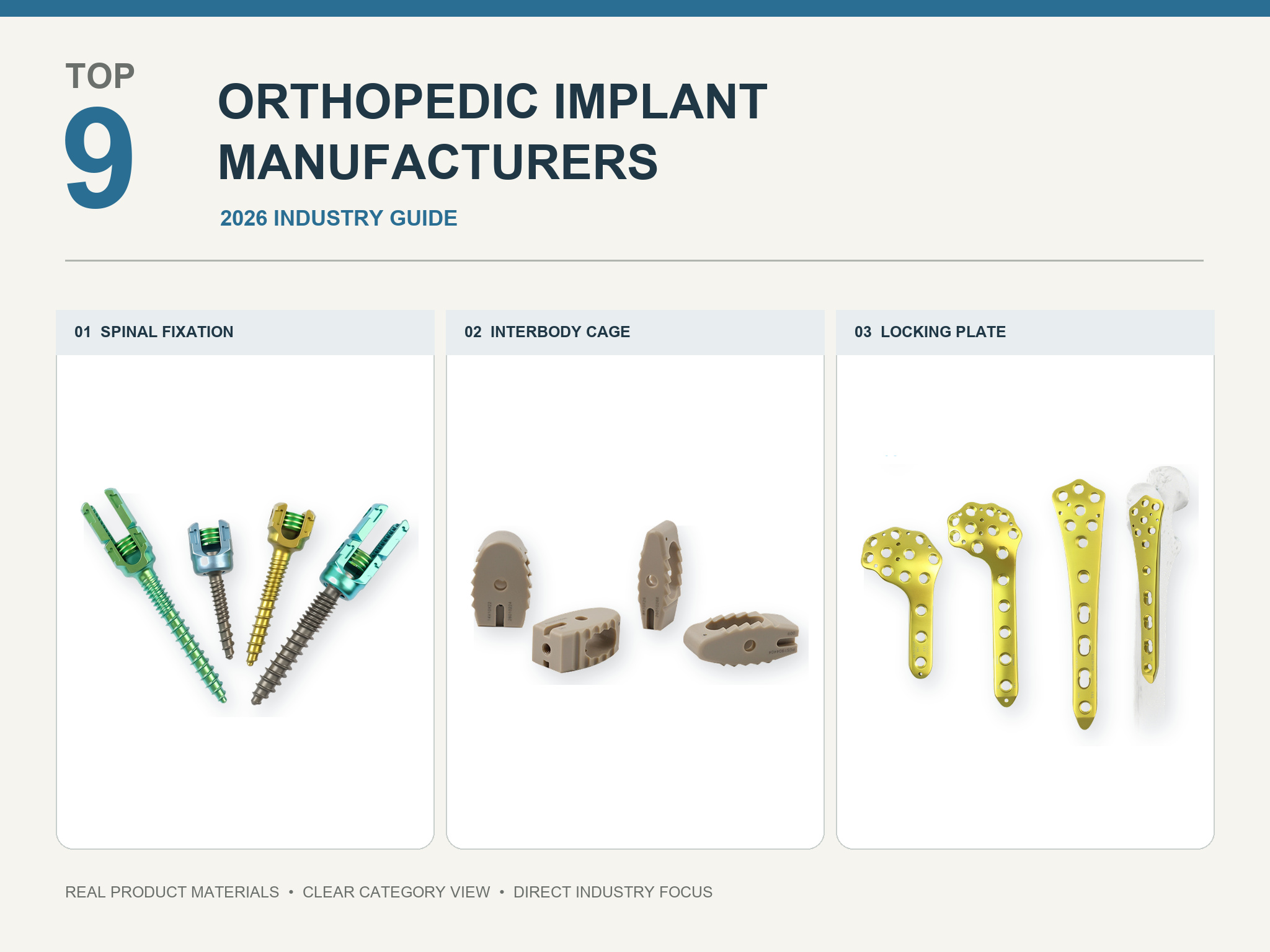
The global orthopedic implant industry continues to evolve in 2026. As demand for joint reconstruction, fracture fixation, spinal surgery, and sports medicine products develops, medical device distributors are looking for manufacturing partners that can offer reliable products, consistent quality, competitive sourcing options, and long-term cooperation.
But with hundreds of orthopedic implant manufacturers operating around the world, how do you identify the right supplier?
Some companies are global medical technology leaders with extensive implant portfolios and established hospital networks. Others specialize in particular product categories, such as trauma fixation, joint replacement, or spinal implants. There are also manufacturers that focus on OEM and ODM services, helping international medical device brands develop and manufacture products under their own specifications.
Who are the top 9 orthopedic implant manufacturers you should know in 2026?
This guide introduces nine companies worth knowing: Stryker, Johnson & Johnson MedTech (DePuy Synthes), Geasure Medical, Zimmer Biomet, Smith+Nephew, Medtronic, Globus Medical, Arthrex, and Enovis.
We compare their product portfolios, manufacturing positioning, technology development, and relevance to international distributors. We also explain what buyers should consider when selecting an orthopedic implant supplier and how to evaluate OEM/ODM manufacturing opportunities.
Whether you are sourcing bone plates, intramedullary nails, spinal fixation systems, joint prostheses, sports medicine implants, or craniomaxillofacial products, this article will help you understand the global supplier landscape and make more informed sourcing decisions.
Market information reviewed on November 24, 2026. The companies are presented as an editorial shortlist, not a strict ranking by market share, revenue, manufacturing capacity, or product quality.
Understanding the Global Orthopedic Implant Industry in 2026
Orthopedic implants are medical devices designed to stabilize, reconstruct, replace, or support parts of the human musculoskeletal system.
They are used in a wide range of orthopedic procedures, including fracture fixation, joint replacement, spinal reconstruction, sports injury repair, and craniofacial reconstruction.
The industry is not made up of one type of manufacturer. Different companies focus on different product categories, materials, engineering technologies, and commercial models.
For distributors, understanding these differences is the first step toward choosing an appropriate sourcing partner.
Major Orthopedic Implant Product Categories
The orthopedic implant industry covers several major product segments.
Trauma and Fracture Fixation Implants
Trauma implants are designed to stabilize fractures and support bone reconstruction.
Common products include:
Locking plates.
Non-locking bone plates.
Intramedullary nails.
Cannulated screws.
Compression screws.
Clavicle plates.
Distal radius plates.
Femoral and tibial fixation systems.
External fixation systems.
Manufacturers in this category need to manage product geometry, screw-plate compatibility, material specifications, and instrument coordination.
Spinal Implants
Spinal implants support different types of spinal fixation and reconstruction procedures.
Typical products include:
Pedicle screw systems.
Spinal rods and connectors.
Cervical fixation plates.
Interbody fusion cages.
PEEK cages.
Titanium cages.
TLIF, PLIF, OLIF, and ALIF systems.
Minimally invasive spinal fixation systems.
Laminoplasty systems.
Vertebral augmentation products.
For distributors, complete systems are often more important than individual components. A spinal fixation portfolio may require compatible implants, dedicated surgical instruments, technical documentation, and product-specific regulatory support.
Joint Reconstruction Implants
Joint reconstruction products are designed to replace or reconstruct damaged joint structures.
Common categories include:
Total hip replacement systems.
Total knee replacement systems.
Hip stems.
Femoral heads.
Acetabular cups.
Polyethylene liners.
Ceramic components.
Tibial baseplates.
Femoral knee components.
Revision joint systems.
Material selection, implant design, fixation methods, and available size configurations are important evaluation factors.
Sports Medicine Implants
Sports medicine products are commonly used in soft tissue repair and joint reconstruction procedures.
Examples include:
Suture anchors.
Interference screws.
Tendon fixation devices.
Ligament reconstruction implants.
Meniscus repair devices.
Arthroscopic instruments.
Related fixation accessories.
Manufacturers in this category may focus heavily on product design, surgical techniques, and instrument compatibility.
Craniomaxillofacial Implants
Craniomaxillofacial, or CMF, products are designed for facial and cranial bone fixation and reconstruction.
Typical products include:
Maxillofacial plates.
Cranial fixation plates.
Titanium screws.
Orbital reconstruction systems.
Mandibular fixation systems.
Bone reconstruction implants.
Related surgical instruments.
These systems often require a wide selection of small implant dimensions and specialized instrumentation.
What Is Driving Competition Among Manufacturers?
The competitive landscape is changing as manufacturers invest in more comprehensive product portfolios and supporting technologies.
Several developments are particularly important.
Product portfolio expansion: Manufacturers are broadening their offerings to cover more surgical specialties and procurement requirements.
Advanced manufacturing: Precision machining, additive manufacturing, surface treatments, and automated inspection are becoming important parts of implant production.
Digital and robotic technologies: Surgical navigation, robotics, planning software, and procedure-related technologies are increasingly connected with implant systems.
OEM/ODM cooperation: International distributors and medical device brands are exploring manufacturing partnerships to develop differentiated product portfolios.
Regulatory compliance: International market access requires manufacturers and commercial partners to understand product-specific regulatory requirements and maintain appropriate technical documentation.
According to ORTHOWORLD's 2026 industry research, global orthopedic companies are competing across joint replacement, spine, trauma, sports medicine, orthobiologics, and enabling technologies. The research also highlights the increasing importance of digital technologies and changes in the competitive structure of the spine market.
For distributors, this means choosing a manufacturer requires more than comparing a few catalog prices. It requires understanding the supplier's overall business capabilities.
How Were These 9 Orthopedic Implant Manufacturers Selected?
Before looking at the individual companies, let's clarify the selection criteria.
This list combines large international orthopedic businesses with a specialized multi-category manufacturer that provides OEM/ODM cooperation.
It is designed to help buyers understand different types of suppliers, rather than present an official ranking of the world's nine largest companies.
Product Portfolio Coverage
We considered whether each company publicly presents implant products across important orthopedic categories, such as:
Trauma and fracture fixation.
Spine and spinal reconstruction.
Hip and knee replacement.
Sports medicine.
Extremities and foot and ankle.
Craniomaxillofacial products.
Not every company covers all these categories. Some have broader portfolios, while others concentrate on particular specialties.
Manufacturing and Engineering Capabilities
Manufacturing is one of the main factors that distinguishes orthopedic implant suppliers.
Important areas include precision machining, product development, material processing, surface finishing, cleaning, inspection, and packaging.
For companies offering OEM or ODM cooperation, additional considerations include engineering support, prototype evaluation, and production transfer.
Quality Management and Regulatory Information
We also considered the availability of public quality and regulatory information.
For distributors, important documents may include:
ISO 13485 certification.
Applicable CE marking documentation.
FDA 510(k) clearance or other relevant regulatory status.
National market registrations.
Product specifications.
Material certificates.
Instructions for use.
Applicable traceability information.
Regulatory documents must always be reviewed according to the exact device and destination market.
Relevance to International Distributors
We also considered how relevant each company may be to international buyers.
Some are established global brands with direct commercial networks. Others are specialized suppliers or manufacturers that may be worth evaluating for OEM/ODM and private-label projects.
Comparison of the Top 9 Orthopedic Implant Manufacturers in 2026
The following table summarizes their main business positioning.
Manufacturer | Main Location | Key Orthopedic Product Areas | Business Positioning |
|---|---|---|---|
Stryker | United States | Joint replacement, trauma, spine, CMF, sports medicine | Global medical technology leader |
Johnson & Johnson MedTech / DePuy Synthes | United States / Global | Hip, knee, spine, trauma, sports medicine, CMF | Comprehensive orthopedic portfolio |
Geasure Medical | Changzhou, China | Spine, trauma, joint, sports medicine, CMF, external fixation | Multi-category manufacturer with OEM/ODM capabilities |
Zimmer Biomet | United States | Hip, knee, trauma, extremities, sports medicine, CMF | Joint reconstruction and orthopedic technologies |
Smith+Nephew | United Kingdom | Hip, knee, trauma, extremities, sports medicine | Orthopedic reconstruction and sports medicine |
Medtronic | Ireland / Global operations | Spinal implants, biologics, navigation, robotics | Spine and surgical technology specialist |
Globus Medical | United States | Spine, trauma, joint reconstruction, surgical technologies | Spine-focused musculoskeletal technology company |
Arthrex | United States | Sports medicine, trauma, spine, arthroplasty | Minimally invasive orthopedic technology |
Enovis | United States | Hip, knee, shoulder, elbow, foot and ankle | Reconstructive orthopedic implants and surgical solutions |
The order is editorial and should not be interpreted as a direct comparison of company size.
The first eight companies also appear in ORTHOWORLD's 2026 analysis of major orthopedic businesses exceeding US$1 billion in annual orthopedic sales in 2025. Geasure is included separately because of its relevant multi-category manufacturing and OEM/ODM positioning. Its business scale is not directly comparable with the reported revenue figures of the eight global groups.
1.Stryker — A Global Leader in Orthopedic Implants and Surgical Technology
Company: Stryker Corporation
Headquarters: Portage, Michigan, United States.
Website: https://www.stryker.com/

Stryker is one of the largest global medical technology companies, with a broad orthopedic portfolio covering joint replacement, trauma, spine, sports medicine, foot and ankle, and craniomaxillofacial solutions.
The company combines implant manufacturing with surgical instruments, enabling technologies, and digital solutions.
For international distributors, Stryker is an important reference point when evaluating established orthopedic product systems.
Major Orthopedic Product Categories
Stryker's orthopedic portfolio includes several major product families.
Joint Replacement Systems
Its joint replacement portfolio includes:
Total hip replacement systems.
Total knee replacement systems.
Revision joint implants.
Limb salvage products.
Related surgical instrumentation.
The company also offers Mako SmartRobotics, which supports robotic-assisted orthopedic procedures involving joint replacement.
Trauma and Extremity Implants
Stryker's trauma portfolio includes products for different anatomical regions and fracture fixation requirements.
Examples include:
Femoral and tibial intramedullary nails.
Locking plate systems.
Distal radius plates.
Clavicle fixation systems.
Ankle and foot fixation products.
Shoulder and elbow reconstruction products.
External fixation systems.
Spine and CMF Products
Stryker also participates in spine-related technologies, surgical visualization, and craniomaxillofacial products.
Its spine portfolio includes spinal implants and related surgical technologies, while its CMF portfolio covers products for craniofacial trauma and reconstruction.
Technology and Manufacturing Positioning
Stryker's competitive positioning extends beyond implants.
It invests in robotic technologies, surgical navigation, digital systems, and procedure-related solutions.
For distributors, this creates a broad ecosystem of products and services but may also require more specialized training and technical support.
Why Distributors Should Know Stryker
Stryker is particularly relevant to distributors who want to understand the global orthopedic market and evaluate established implant brands.
Its advantages include:
Broad orthopedic product coverage.
Multiple surgical specialties.
Established international commercial operations.
Surgical technology and instrument ecosystems.
A substantial portfolio of orthopedic implant systems.
Official resources:
Johnson & Johnson MedTech / DePuy Synthes — Comprehensive Orthopedic Solutions
Company: DePuy Synthes, currently part of Johnson & Johnson MedTech.
Business base: United States / Global operations.
Website: https://www.jnj.com/

DePuy Synthes is one of the internationally recognized orthopedic businesses, with a long history in implant development and surgical technologies.
Its portfolio covers joint reconstruction, spine, trauma, sports medicine, foot and ankle, shoulder, CMF, and related surgical products.
Joint Reconstruction Products
DePuy Synthes offers orthopedic reconstruction products across several joint categories.
Its portfolio includes:
Total hip replacement systems.
Total knee replacement systems.
Revision joint components.
Shoulder reconstruction products.
Associated surgical instruments.
For distributors, the breadth of the joint portfolio may be relevant when developing hip and knee product categories.
Trauma and Extremity Fixation
Trauma is another important part of the business.
The product range covers different fracture fixation requirements, including:
Bone plates.
Locking plate systems.
Intramedullary nails.
Cannulated screws.
Clavicle fixation.
Foot and ankle implants.
Upper extremity fixation systems.
Associated instruments.
Spine and Sports Medicine Products
The company also presents a range of spinal products, including posterior fixation systems, cervical implants, interbody fusion solutions, and minimally invasive spinal technologies.
Its sports medicine business includes products for ligament reconstruction, soft tissue repair, and related procedures.
Corporate Structure to Watch in 2026
One important development for buyers researching DePuy Synthes is Johnson & Johnson's announced plan to separate its orthopedics business.
In its third-quarter 2026 earnings update, Johnson & Johnson stated that it remained on track for the planned separation of DePuy Synthes by mid-2027.
Therefore, as of November 2026, buyers should continue to verify the current legal and commercial entity when evaluating supply agreements, product registrations, or distribution arrangements.
Why Distributors Should Know DePuy Synthes
The company is relevant to distributors seeking an established orthopedic product portfolio across several major surgical specialties.
Its strengths include:
Wide implant product coverage.
Joint reconstruction expertise.
Trauma fixation systems.
Spine and sports medicine solutions.
International product and support infrastructure.
Official resources:
Geasure Medical — Multi-Category Orthopedic Implant Manufacturer and OEM/ODM Partner
Company: Changzhou Geasure Medical Apparatus and Instruments Co., Ltd.
Location: Changzhou, Jiangsu, China.
Website: https://www.orthogeasure.com/
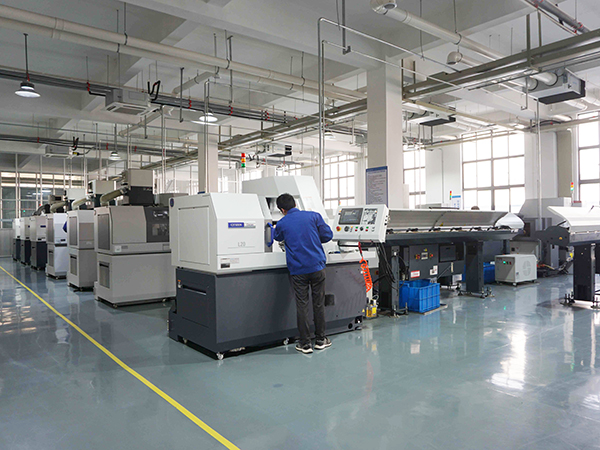
Geasure Medical is a Chinese orthopedic implant and surgical instrument manufacturer serving international distributors, medical device importers, and orthopedic brands.
Unlike multinational groups that mainly operate through established branded product and distribution networks, Geasure presents itself as a manufacturing partner with a broader multi-category product portfolio and OEM/ODM co-development capabilities.
For buyers looking to source orthopedic products from China, this makes Geasure a manufacturer worth evaluating.
A Broad Orthopedic Product Portfolio
Geasure's product portfolio covers several important orthopedic categories.
Trauma and Fracture Fixation Systems
The trauma portfolio includes:
Locking plate systems.
Small fragment plates.
Clavicle plates.
Distal radius plates.
Cannulated screws.
Compression screws.
Intramedullary nail systems.
Related fracture fixation instruments.
These products are relevant to distributors developing a trauma implant portfolio.
For example, a buyer sourcing an intramedullary nail system may also need compatible locking screws, end caps, targeting instruments, and other dedicated tools.
Geasure's product offering provides an opportunity to evaluate implants and instruments together.
Spinal Implant Systems
Geasure's spine portfolio includes:
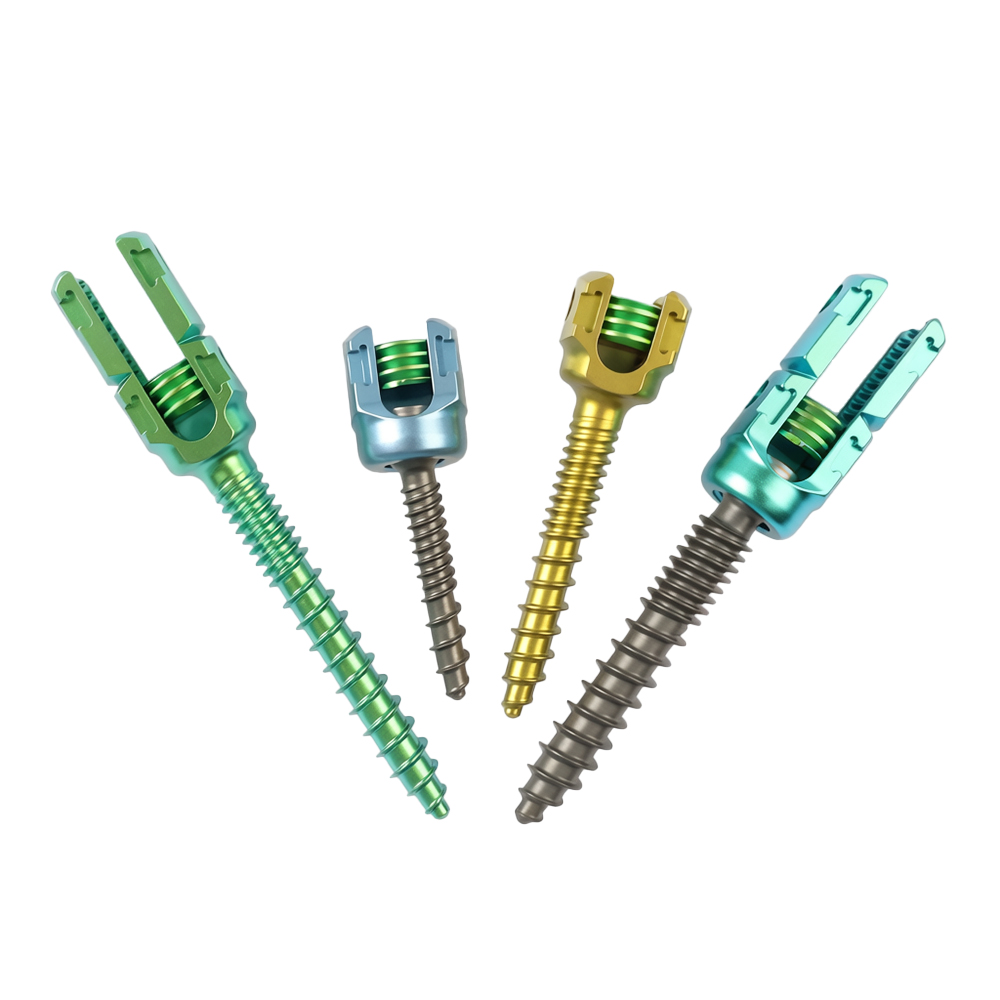


For distributors, these product categories provide a foundation for building a spinal implant portfolio around fixation and fusion systems.
Product specifications, compatible instruments, and market availability should be confirmed for each system.
Joint Reconstruction Implants
The joint reconstruction portfolio includes products for hip and knee replacement.
Depending on the product family, available components may include:
Femoral stems.
Acetabular components.
Femoral heads.
Polyethylene liners.
Bipolar heads.
Knee femoral components.
Tibial components.
Polyethylene inserts.
Revision systems.
For distributors specializing in joint reconstruction, the availability of multiple product categories can create opportunities to develop a wider orthopedic business.
Sports Medicine Products
Geasure also offers sports medicine products.
Relevant product categories include fixation devices and instruments used in sports medicine procedures.
Distributors should review the specific product models, material specifications, instrument configurations, and technical documentation according to their target market.
CMF and Maxillofacial Products
The CMF portfolio covers cranial and facial fixation products, including plates, screws, and related instruments.
These systems may be relevant to distributors serving hospitals and specialists focused on maxillofacial reconstruction.
Other Orthopedic Solutions
Geasure's broader product range also includes:
External fixation systems.
Orthopedic powered instruments.
Laparoscopic instruments.
Additional surgical instruments.
This provides an opportunity for buyers to evaluate multiple product categories through one manufacturing partner.
Manufacturing and Research & Development Capabilities
Geasure presents its manufacturing capabilities as a combination of product engineering, precision machining, quality inspection, and process control.
According to the company's current website, its manufacturing campus covers approximately 33,100 square meters, with more than 350 CNC, inspection, and finishing assets.
The company also reports a team of more than 360 specialists and over 50 R&D engineers working across mechanical design, materials engineering, biomechanics, and product development.
These are company-reported figures and should be confirmed directly during formal supplier qualification.
For international distributors, the important consideration is how these resources support actual product requirements.
Relevant areas include:
Product drawing review.
Manufacturing feasibility assessment.
Precision CNC machining.
Surface treatment.
Cleaning and finishing.
Dimensional inspection.
Material traceability.
Product development.
OEM/ODM engineering support.
Quality Management and Regulatory Information
Geasure publicly presents ISO 13485, CE documentation under the applicable EU Medical Device Regulation, FDA 510(k) records for selected products, and NMPA registrations for products in China.
The distinction between company-level certification and product-specific market authorization is important.
For example, the U.S. FDA database identifies Changzhou Geasure Medical Apparatus and Instruments Co., Ltd. as the applicant for:
K222031 — Spinal Inner Fixation System: Listed under the Thoracolumbosacral Pedicle Screw System classification. The FDA decision date was October 28, 2022, with a substantially equivalent determination.
K223776 — PEEK Spinal Infusion Cage: Listed under the Intervertebral Fusion Device With Bone Graft, Lumbar classification. The FDA decision date was March 3, 2023, also with a substantially equivalent determination.
These records relate to the named devices. They should not be interpreted as FDA approval of every Geasure product.
Buyers should review the latest certificates, legal manufacturer details, and product-specific regulatory status when qualifying a particular device.
OEM/ODM Cooperation for International Distributors
OEM/ODM cooperation is one of the important parts of Geasure's business positioning.
For distributors and medical device brands, project discussions may include:
Standard product sourcing.
OEM production according to agreed specifications.
ODM product development.
Customized implant configurations.
Private-label branding.
Customized packaging and labeling.
Matched surgical instrument sets.
Prototype evaluation.
Technical documentation.
Manufacturing and inspection arrangements.
For an OEM project, buyers can begin by providing existing drawings, product specifications, or reference samples.
For an ODM project, the initial discussion may start with a product concept, intended application, design requirements, target market, and expected order volume.
The technical team can then evaluate feasibility and identify the information required to proceed.
Development responsibilities, intellectual property ownership, design verification, product changes, and regulatory obligations should be defined before project commitments are made.
Why International Distributors May Consider Geasure Medical
Geasure may be worth evaluating for distributors who:
Need multiple orthopedic implant categories.
Want to source implants and surgical instruments together.
Are looking for Chinese orthopedic manufacturers.
Want to compare standard products and OEM/ODM opportunities.
Need customized product configurations.
Are developing spine, trauma, or joint reconstruction product lines.
Prefer to build long-term manufacturing partnerships.
Geasure's position is different from that of large international orthopedic groups. Its value proposition is centered on manufacturing, product portfolio integration, and customized cooperation rather than competing with multinational companies on global sales scale.
Explore Geasure's official resources:
Zimmer Biomet — A Major Player in Joint Reconstruction and Orthopedic Implants
Company: Zimmer Biomet Holdings, Inc.
Headquarters: Warsaw, Indiana, United States.
Website: https://www.zimmerbiomet.com/

Zimmer Biomet is one of the largest global orthopedic medical technology companies.
Its portfolio focuses on joint reconstruction, sports medicine, trauma and extremities, craniomaxillofacial products, bone cement, and integrated digital and robotic technologies.
For distributors, the company is particularly important in hip and knee replacement.
Hip and Knee Replacement Systems
Zimmer Biomet has a broad joint reconstruction portfolio.
Its products include:
Total hip replacement systems.
Cemented and cementless hip stems.
Acetabular components.
Femoral heads.
Revision hip implants.
Total knee replacement systems.
Cruciate-retaining and posterior-stabilized knee components.
Revision knee systems.
Polyethylene inserts.
Some well-known product families include Persona Knee, NexGen Knee, Vanguard Knee, Taperloc Hip, and G7 Acetabular System.
The company offers products across primary and revision joint reconstruction.
For a distributor, this broad selection may be relevant when developing a comprehensive hip and knee implant business.
Trauma and Extremity Implants
Zimmer Biomet also provides products for fracture fixation and extremity reconstruction.
These include solutions for:
Foot and ankle fixation.
Upper extremity reconstruction.
Fracture fixation.
Biologics.
Shoulder reconstruction.
Bone and joint reconstruction.
Sports Medicine and CMF Products
Zimmer Biomet's sports medicine portfolio includes products for rotator cuff repair, shoulder labral repair, biceps repair, ACL reconstruction, meniscus repair, and related procedures.
Its CMF business includes products for craniofacial fixation and reconstruction.
This makes Zimmer Biomet relevant to distributors who serve multiple orthopedic specialties.
Digital and Robotic Technologies
The company also invests in digital and robotic technologies.
ROSA robotic systems are part of its technology portfolio and are used in selected orthopedic procedures.
For distributors, this means Zimmer Biomet's product offering extends beyond implants into surgical technology and digital support.
Why Distributors Should Know Zimmer Biomet
Zimmer Biomet is particularly relevant to buyers focused on:
Hip replacement systems.
Knee replacement systems.
Revision joint implants.
Sports medicine.
Trauma and extremities.
CMF products.
Robotic-assisted orthopedic technology.
Official resources:
Smith+Nephew — Orthopedic Reconstruction, Trauma and Sports Medicine
Company: Smith+Nephew plc
Headquarters: Watford, United Kingdom.
Website: https://www.smith-nephew.com/
Smith+Nephew is a global medical technology company with an orthopedic portfolio covering joint reconstruction, trauma and extremities, sports medicine, and enabling technologies.
It has a long history in orthopedic medical devices and serves healthcare markets worldwide.
Hip and Knee Replacement Products
Its orthopedic reconstruction business includes:
Hip replacement systems.
Knee replacement systems.
Revision joint products.
Shoulder implants.
Surgical instruments.
Robotic-assisted technologies.
The company also presents OXINIUM technology and the CORI Surgical System as part of its joint reconstruction portfolio.
For joint implant distributors, the broad hip and knee offering is a major part of the company's business.
Trauma and Extremity Fixation
Smith+Nephew offers trauma products for fracture fixation and bone reconstruction.
Its portfolio includes:
Bone plates and screws.
Intramedullary nails.
Hip fracture fixation products.
Limb restoration products.
Shoulder replacement systems.
Extremity reconstruction solutions.
These product categories are relevant to distributors building a trauma implant portfolio.
Sports Medicine Implants
Sports medicine is another important part of the business.
Its products cover:
Suture anchor systems.
Rotator cuff repair.
Shoulder instability repair.
Hip labral repair.
Meniscus repair.
Cartilage repair.
Arthroscopic instruments.
Enabling technologies.
The company provides procedural solutions rather than focusing only on individual implants.
Why Distributors Should Know Smith+Nephew
Smith+Nephew may be particularly relevant for distributors focusing on:
Hip and knee reconstruction.
Trauma fixation.
Extremity implants.
Sports medicine.
Arthroscopic surgical technology.
Robotic-assisted joint replacement.
Its product coverage makes it a useful company to study when researching the global orthopedic implant market.
Official resources:
Medtronic — A Major Manufacturer in Spinal Implants and Surgical Technology
Company: Medtronic plc
Business headquarters: Ireland, with global operations.
Website: https://www.medtronic.com/

Medtronic is one of the most important companies in the global spine technology market.
Unlike manufacturers whose main orthopedic strengths are hip replacement or trauma fixation, Medtronic has a particularly strong position in spinal implants, surgical navigation, robotics, and related technologies.
For distributors specializing in spine products, it is an essential company to know.
Spinal Implant Portfolio
Medtronic's spinal product categories include:
Posterior thoracolumbar screw systems.
Cervical fixation systems.
Posterior interbody fusion devices.
Expandable interbody spacers.
Vertebral body replacement systems.
Cervical artificial discs.
Spinal fixation instruments.
Bone grafting and biologic products.
Vertebral augmentation systems.
Examples of product families include CD Horizon, Solera, Catalyft, Adaptix, and other spinal technologies.
The availability of specific products may vary by geography.
Spine Navigation and Robotics
Medtronic also offers technologies supporting spinal surgery, including:
StealthStation surgical navigation.
Mazor robotic guidance systems.
O-arm surgical imaging.
Midas Rex surgical drills.
Intraoperative neuromonitoring.
Planning and surgical intelligence technologies.
These technologies form part of a wider spinal surgery ecosystem.
For distributors, this means the company competes not only in conventional spinal implants but also in enabling technologies that may influence hospital purchasing decisions.
Why Distributors Should Know Medtronic
Medtronic is particularly relevant to distributors focused on:
Pedicle screw systems.
Interbody fusion products.
Minimally invasive spine procedures.
Cervical reconstruction.
Vertebral augmentation.
Spine navigation and robotics.
Its broad spine portfolio makes it an important benchmark when evaluating alternative spinal implant suppliers.
Official resources:
Globus Medical — A Spine-Focused Musculoskeletal Technology Company
Company: Globus Medical, Inc.
Headquarters: Audubon, Pennsylvania, United States.
Website: https://www.globusmedical.com/

Globus Medical is a major musculoskeletal technology company with a strong focus on spinal implants, orthopedic trauma, joint reconstruction, biologics, and enabling technologies.
Its acquisition of NuVasive strengthened its spinal portfolio and expanded the company's presence in different spinal procedures and technologies.
Spinal Implant Systems
Globus Medical offers spinal implant products for a range of surgical applications.
These include:
Pedicle screw systems.
Posterior cervical fixation systems.
Anterior cervical fusion systems.
TLIF cages.
PLIF cages.
ALIF cages.
XLIF and lateral fusion products.
Expandable interbody devices.
Sacroiliac joint fusion systems.
Spinal deformity products.
Related surgical instruments.
The company also provides products for minimally invasive spinal surgery.
Advanced Spine Technologies
Globus Medical's technology portfolio includes Excelsius technology, which combines robotic guidance and navigation for spinal procedures.
Its enabling technology portfolio is an important part of its commercial positioning.
For distributors, this is an example of how spine manufacturers are increasingly combining implants with digital and robotic systems.
Beyond Spine: Trauma and Joint Reconstruction
Globus Medical also presents orthopedic trauma and joint reconstruction products.
Its portfolio includes musculoskeletal solutions intended to address different orthopedic needs.
This expands its business beyond traditional spinal implant manufacturing.
Why Distributors Should Know Globus Medical
Globus Medical is particularly relevant to companies interested in:
Spinal fixation systems.
Interbody fusion cages.
Minimally invasive spinal products.
Expandable implant technologies.
Spine robotics and navigation.
Orthopedic trauma and joint reconstruction.
For distributors evaluating the global spine market, Globus Medical is one of the key companies to understand.
Official resources:
Arthrex — A Global Leader in Sports Medicine and Minimally Invasive Orthopedic Technology
Company: Arthrex, Inc.
Headquarters: Naples, Florida, United States.
Website: https://www.arthrex.com/

Arthrex is a privately held medical device company known for arthroscopy, sports medicine, and minimally invasive orthopedic technology.
Its product development covers sports medicine, trauma, spine, cardiothoracic procedures, orthobiologics, and arthroplasty.
The company has a particularly strong presence in soft tissue repair and sports-related orthopedic procedures.
Sports Medicine Implants
Sports medicine is one of Arthrex's most recognized product areas.
Its portfolio includes:
Suture anchors.
All-suture anchors.
Interference screws.
ACL reconstruction products.
Meniscus repair devices.
Rotator cuff repair products.
Shoulder reconstruction implants.
Arthroscopic surgical instruments.
These products are widely relevant to distributors serving sports medicine and orthopedic surgery customers.
Trauma and Extremity Products
Arthrex also develops products for trauma and extremity fixation.
These may include:
Fracture fixation plates.
Foot and ankle implants.
Small bone fixation products.
Osteotomy fixation systems.
Related surgical instruments.
The company also supports minimally invasive surgical techniques through its product and instrument development.
Spine and Arthroplasty Solutions
Arthrex's wider orthopedic development also includes spinal and arthroplasty-related innovation.
This is particularly interesting because the company has expanded beyond its traditional sports medicine identity into additional orthopedic procedure categories.
Why Distributors Should Know Arthrex
Arthrex may be relevant to distributors who specialize in:
Sports medicine.
Arthroscopic procedures.
Soft tissue fixation.
Foot and ankle.
Trauma.
Minimally invasive orthopedic products.
The company is also a useful benchmark for studying how specialized product innovation can support an orthopedic manufacturer's market position.
Official resources:
Enovis — Reconstructive Joint and Extremity Implant Solutions
Company: Enovis Corporation
Headquarters: Wilmington, Delaware, United States.
Website: https://enovis.com/
Enovis is a medical technology company with two primary operating segments: Prevention & Recovery and Reconstructive.
Its reconstructive business provides surgical implant solutions for multiple joints and anatomical areas.
For orthopedic distributors, Enovis is particularly relevant to foot and ankle, extremity reconstruction, and joint replacement.
Reconstructive Implant Portfolio
Enovis presents reconstructive products covering:
Hip reconstruction.
Knee reconstruction.
Shoulder reconstruction.
Elbow reconstruction.
Foot and ankle implants.
Finger reconstruction.
Related surgical productivity tools.
These products support different types of orthopedic reconstruction and implant procedures.
Foot and Ankle Implants
Foot and ankle reconstruction is one of Enovis's important product areas.
Its products include:
Foot and ankle fixation plates.
Fusion systems.
Fracture fixation products.
Total ankle replacement solutions.
Dynamic compression technologies.
Associated surgical instruments.
Its DynaNail family is one example of its foot and ankle implant technologies.
Broader Orthopedic Business
Beyond reconstructive implants, Enovis also provides products for orthopedic recovery, bracing, rehabilitation, and patient support.
This broader offering creates a connection between surgical products and other stages of orthopedic care.
For distributors, it can be useful to examine both the reconstructive and recovery portions of the business.
Why Distributors Should Know Enovis
Enovis is relevant to distributors who:
Focus on foot and ankle implants.
Supply reconstructive joint products.
Need shoulder or extremity reconstruction solutions.
Are interested in differentiated surgical implant technologies.
Want to evaluate companies with both surgical and orthopedic recovery portfolios.
Official resources:
How Do These 9 Manufacturers Compare?
After reviewing the companies individually, let's look at their differences from a distributor's perspective.
No manufacturer offers exactly the same product range or commercial arrangement. Some have more extensive portfolios, while others focus on particular surgical specialties.
Manufacturer | Strongest Publicly Presented Areas | Particularly Relevant To |
|---|---|---|
Stryker | Joint replacement, trauma, spine, sports medicine, CMF | Multi-category orthopedic procurement |
DePuy Synthes | Hip, knee, trauma, spine, CMF, sports medicine | Broad orthopedic product portfolios |
Geasure Medical | Spine, trauma, joint, sports medicine, CMF, external fixation | OEM/ODM and multi-category sourcing |
Zimmer Biomet | Hip, knee, trauma, sports medicine, CMF | Joint reconstruction and extremities |
Smith+Nephew | Hip, knee, trauma, sports medicine | Joint replacement and sports medicine |
Medtronic | Spinal implants, biologics, navigation, robotics | Spine-focused distribution |
Globus Medical | Spine, trauma, joint reconstruction, enabling technology | Spinal implants and advanced technology |
Arthrex | Sports medicine, trauma, foot and ankle, spine | Minimally invasive orthopedic products |
Enovis | Joint reconstruction and foot and ankle | Extremity and reconstructive implants |
Best Companies to Study for Joint Reconstruction
For distributors focused on hip and knee implants, Stryker, DePuy Synthes, Zimmer Biomet, Smith+Nephew, and Enovis are particularly relevant.
Their portfolios include different joint replacement designs, fixation options, and product configurations.
When comparing manufacturers, review the available primary and revision systems, implant materials, size coverage, instrumentation, and market-specific documentation.
Best Companies to Study for Trauma Implants
For trauma and fracture fixation, Stryker, DePuy Synthes, Zimmer Biomet, Smith+Nephew, Arthrex, and Geasure offer relevant product categories.
Buyers should pay particular attention to plate and screw compatibility, intramedullary nail systems, available sizes, materials, and dedicated instruments.
Best Companies to Study for Spine Implants
For spinal implants, Medtronic, Globus Medical, DePuy Synthes, Stryker, and Geasure are important companies to evaluate.
Their portfolios differ in fixation systems, cervical products, interbody fusion technologies, minimally invasive systems, and enabling technologies.
Best Companies to Study for Sports Medicine
Arthrex, Smith+Nephew, Stryker, and Zimmer Biomet are relevant to sports medicine products.
Consider their suture anchors, soft tissue fixation systems, arthroscopic instruments, and procedure-specific solutions.
Best Companies to Study for OEM/ODM Manufacturing
A critical point for distributors:
Not every large orthopedic brand is an OEM/ODM manufacturer for third-party private-label businesses.
Many multinational groups primarily develop and sell their own branded implant systems through direct sales organizations and authorized distribution networks.
Geasure's public business positioning specifically includes OEM/ODM co-development and manufacturing discussions for international brands.
Canwell Medical is another Chinese manufacturer that publicly describes OEM and contract manufacturing services, although it is not included in this particular nine-company shortlist.
For an OEM/ODM project, buyers should compare actual manufacturing services rather than assume that a large global brand offers the same cooperation model as a specialized manufacturer.
What Should Buyers Look for in an Orthopedic Implant Manufacturer?
Choosing the right manufacturer requires a structured evaluation.
A good supplier should fit your product requirements, target market, technical capabilities, quality expectations, and commercial strategy.
Here are eight important areas to review.
Product Portfolio and Technical Specifications
Start with the products you intend to purchase.
Do you need trauma implants, spinal systems, hip and knee prostheses, sports medicine products, or a wider orthopedic portfolio?
Review:
Available models.
Size ranges.
Material grades.
Product configurations.
Component compatibility.
Matched surgical instruments.
Product specifications.
Technical documentation.
A large catalog is useful, but it does not guarantee that every model will fit your market requirements.
Quality Management System
Quality management is especially important in medical device manufacturing.
Check whether the supplier maintains an appropriate quality management system, such as ISO 13485, and whether the certification applies to the relevant manufacturing site and product activities.
Ask about:
Supplier qualification.
Raw material inspection.
Production process control.
Dimensional inspection.
Nonconforming product management.
Corrective and preventive actions.
Complaint handling.
Product traceability.
Change management.
Do not rely only on certificate logos displayed on a website.
Request the actual document and review its scope and validity.
Manufacturing Capabilities
For orthopedic implants, manufacturing capability directly influences whether a supplier can meet the agreed product specifications.
Review:
CNC precision machining.
Turning and milling.
Wire EDM and other relevant machining processes.
Surface finishing.
Cleaning and passivation.
Dimensional measurement.
Material testing.
Packaging.
Sterilization arrangements, where applicable.
Ask the manufacturer which operations are performed in-house and which are outsourced to qualified external suppliers.
The goal is to understand how manufacturing processes are controlled.
Material Selection and Traceability
Common orthopedic implant materials include:
Titanium alloy, such as Ti-6Al-4V.
Commercially pure titanium.
PEEK.
CoCrMo alloy.
Medical-grade stainless steel.
Other specified implant materials.
Different materials have different mechanical and physical characteristics, and their suitability depends on the product design and intended use.
For buyers, important documentation includes material specifications, certificates, batch identification, and relevant inspection or testing records.
Regulatory Documentation
Regulatory requirements vary by product and destination market.
Depending on the device, buyers may need to review:
ISO 13485 quality management certificates.
CE marking documentation under the applicable EU MDR pathway.
FDA 510(k) clearance where required.
FDA De Novo or PMA status where applicable.
NMPA registration or filing information.
National market authorization.
Instructions for use.
Product labels.
Technical specifications.
Always identify the exact legal manufacturer and the products covered by each document.
An ISO certificate is not a substitute for device-specific market authorization.
Research and Development Support
For distributors interested in product customization, engineering and development support can be an important supplier-selection factor.
Ask whether the manufacturer can:
Review customer-provided drawings.
Assess manufacturing feasibility.
Discuss materials and dimensions.
Develop prototypes within the agreed scope.
Manage design changes.
Support required product verification and validation.
Prepare manufacturing documentation.
For OEM/ODM projects, clear technical communication is essential.
Surgical Instrument Compatibility
Orthopedic implants should be evaluated together with their associated instruments.
For example, a spinal pedicle screw system may require compatible screwdrivers, rod holders, reducers, taps, and other dedicated instruments.
A trauma plate system may require suitable drill guides, drill sleeves, depth gauges, screwdrivers, and plate-bending tools.
Before placing an order, request a detailed instrument list and compatibility information.
Supply Reliability and After-Sales Support
Long-term sourcing involves more than the initial purchase.
Evaluate:
Minimum order quantities.
Production lead times.
Inventory arrangements.
Sample availability.
Export packaging.
Shipping documentation.
Product change notifications.
Complaint management.
Replacement components.
Technical communication.
A supplier who can respond clearly and manage problems systematically can be more valuable than one offering a lower initial quotation without sufficient support.
OEM vs. ODM: Which Manufacturing Model Should Distributors Choose?
For international distributors and medical device brands, OEM and ODM cooperation can provide additional ways to develop an orthopedic product portfolio.
However, the two models involve different levels of design participation and manufacturing responsibility.
What Is OEM in Orthopedic Implant Manufacturing?
OEM generally refers to a manufacturer producing products according to customer-defined designs or specifications.
A buyer may provide:
Product drawings.
Technical specifications.
Material requirements.
Dimensional tolerances.
Sample products.
Packaging and labeling requirements.
The manufacturer then reviews production feasibility and agrees on the manufacturing scope.
OEM may be suitable for distributors who already have an established product design or private-label product specification.
What Is ODM in Orthopedic Implant Manufacturing?
ODM generally involves the manufacturer contributing more substantially to design and development.
A project may begin with a concept, reference product, or initial technical requirements.
The manufacturer may then support:
Design review.
Engineering feasibility assessment.
Product configuration.
Prototype preparation.
Design refinement.
Verification and validation planning.
Manufacturing preparation.
The actual project scope depends on the manufacturer and the product.
Which Model Is Right for Your Business?
Requirement | OEM | ODM |
|---|---|---|
Existing drawings | Usually available | Not always required |
Customer design input | High | Varies |
Manufacturer design contribution | Usually limited or agreed | Generally greater |
Prototype development | Depends on project | Often relevant |
Product customization | Based on defined specifications | May involve broader design work |
Intellectual property | Must be defined | Particularly important to define |
Regulatory responsibilities | Depend on legal roles | Depend on legal roles |
For orthopedic devices, the parties must clearly define design ownership, product verification, quality responsibilities, labeling, and applicable regulatory obligations.
The terms OEM and ODM alone do not determine who is legally considered the manufacturer under medical device regulations.
How to Evaluate Orthopedic Implant Suppliers: A Practical Checklist
Before selecting a manufacturer, use a standardized checklist.
Evaluation Category | Questions to Ask |
|---|---|
Product portfolio | Does the manufacturer offer the required orthopedic product categories? |
Product specifications | Are drawings, models, dimensions, and material details available? |
Quality system | Is the applicable quality certificate current and properly scoped? |
Manufacturing | Which production processes are performed in-house? |
Material traceability | Can materials be linked to relevant production records? |
Inspection | Which characteristics are checked and documented? |
Regulatory | Which product-specific registrations or clearances are available? |
Instruments | Are dedicated and compatible surgical instruments available? |
OEM/ODM | What customization and engineering services are supported? |
Supply | What are the MOQ, lead time, and delivery arrangements? |
Communication | How are inquiries, quality issues, and changes managed? |
Long-term support | Is there a clear process for after-sales service and repeat supply? |
A Simple Supplier Scoring Method
For an initial supplier comparison, you can assign each category a score from 0 to 2.
0 — Not demonstrated: Relevant information has not been provided.
1 — Partially demonstrated: Some evidence is available, but important questions remain.
2 — Demonstrated: Supporting information has been reviewed and appears consistent with the requirements being evaluated.
With twelve categories, the maximum score would be 24.
Use this score to compare suppliers and identify missing information.
However, do not allow a high total score to override a critical regulatory or quality gap. A supplier that cannot meet an essential product requirement should not automatically be considered acceptable because it scored well in other categories.
What Documents Should You Request from an Orthopedic Implant Manufacturer?
A reliable supplier should be able to identify and provide the relevant product and manufacturing information required for supplier evaluation.
The exact documentation package depends on the device and target market.
Product Documentation
Request:
Product catalog.
Detailed product specifications.
Model and size lists.
Compatible component lists.
Instructions for use.
Surgical technique guides.
Instrument lists.
Packaging information.
Quality Documentation
Depending on the qualification stage, ask for:
ISO 13485 certificate.
Certificate scope.
Quality system overview.
Relevant material certificates.
Inspection records, where appropriate.
Traceability information.
Applicable supplier audit information.
Regulatory Documentation
The required documents depend on the target country.
Examples may include:
EU Declaration of Conformity.
Applicable notified body certificate.
FDA 510(k) clearance information.
NMPA registration.
National market authorization.
Applicable free sale documentation.
Do not assume that one certificate covers every product in a manufacturer's portfolio.
OEM/ODM Project Documents
For customized manufacturing, additional documents may include:
Technical drawings.
Approved specifications.
Confidentiality agreements.
Product development plans.
Design review records.
Verification and validation plans, where applicable.
Quality agreements.
Intellectual property arrangements.
Change control procedures.
These records help both parties establish clear expectations before production begins.
Frequently Asked Questions About Orthopedic Implant Manufacturers
Who are the leading orthopedic implant manufacturers in 2026?
Companies worth knowing include Stryker, Johnson & Johnson MedTech (DePuy Synthes), Geasure Medical, Zimmer Biomet, Smith+Nephew, Medtronic, Globus Medical, Arthrex, and Enovis.
They represent different orthopedic business models, from large international medical technology groups to specialized multi-category manufacturers.
Which companies manufacture trauma implants?
Several manufacturers offer trauma and fracture fixation products, including Stryker, DePuy Synthes, Zimmer Biomet, Smith+Nephew, Arthrex, Geasure Medical, and others.
Product categories may include locking plates, intramedullary nails, cannulated screws, compression screws, and external fixation systems.
Which manufacturers specialize in spinal implants?
Medtronic and Globus Medical have particularly strong spinal implant portfolios.
DePuy Synthes and Stryker also offer spinal products, while Geasure Medical provides spinal systems as part of its broader orthopedic manufacturing portfolio.
Which companies are major hip and knee implant manufacturers?
Stryker, DePuy Synthes, Zimmer Biomet, Smith+Nephew, and Enovis are important companies to evaluate for hip and knee reconstruction products.
Their portfolios include primary and revision joint systems, components, and related surgical instruments.
Which manufacturer offers the widest orthopedic product portfolio?
The answer depends on how product categories are defined and how current product availability is measured.
Large companies such as Stryker, DePuy Synthes, and Zimmer Biomet offer broad orthopedic portfolios.
Geasure also publicly presents multiple orthopedic product lines, including spine, trauma, joint reconstruction, sports medicine, CMF, external fixation, and powered instruments.
Which orthopedic implant manufacturers provide OEM/ODM services?
OEM/ODM availability varies by company and product category.
Geasure Medical publicly describes OEM/ODM co-development and manufacturing support. Canwell Medical also describes OEM and contract manufacturing services.
For large multinational implant brands, distributors should not assume that branded product sales automatically include third-party private-label manufacturing.
What certifications should an orthopedic implant manufacturer have?
The applicable certifications depend on the product, manufacturing activities, and target market.
ISO 13485 is an important quality management standard for medical devices. EU products may require CE marking under the relevant MDR conformity assessment pathway. U.S. products may require applicable FDA clearance or other market authorization.
Always verify the certificate holder, product scope, manufacturing site, and document validity.
What is the difference between an orthopedic implant manufacturer and a supplier?
A manufacturer produces the medical device under the applicable manufacturing and regulatory arrangements.
A supplier may manufacture products directly or distribute products produced by another company.
Before choosing a supplier, identify the legal manufacturer, manufacturing site, brand owner, and responsible commercial entity.
How do I choose the right orthopedic implant supplier for my distribution business?
Start by defining the product categories you want to distribute.
Then compare companies based on:
Product specifications.
Quality management.
Regulatory documentation.
Manufacturing capabilities.
Instrument availability.
OEM/ODM support.
Delivery and supply reliability.
Technical communication.
Long-term commercial conditions.
The right manufacturer is the one that fits your actual business and market requirements, not necessarily the biggest company on a ranking list.
Can I source multiple orthopedic product categories from one manufacturer?
Yes, some orthopedic manufacturers offer several product families.
For example, a supplier may provide trauma fixation, spine implants, joint reconstruction, and surgical instruments.
However, product availability, system compatibility, regulatory documentation, and technical capabilities should be confirmed separately for each category.
Final Thoughts: Finding the Right Orthopedic Implant Manufacturing Partner
The global orthopedic implant industry offers many types of manufacturers.
Large multinational companies such as Stryker, DePuy Synthes, Zimmer Biomet, Smith+Nephew, and Medtronic have established product portfolios and international business operations.
Specialized and technology-focused companies such as Globus Medical, Arthrex, and Enovis provide additional options across spine, sports medicine, joint reconstruction, and extremity products.
For international distributors looking for multi-category manufacturing and OEM/ODM opportunities, Geasure Medical provides another sourcing option to evaluate.
There is no universal best manufacturer for every distributor.
The right partner depends on your product portfolio, target market, quality requirements, regulatory needs, budget, customization expectations, and long-term supply strategy.
Before making a final decision:
Define the orthopedic product categories you need.
Review the available product specifications and models.
Verify the quality management system and regulatory documents.
Evaluate manufacturing and inspection processes.
Confirm implant and instrument compatibility.
Discuss MOQ, lead times, and delivery arrangements.
Clarify OEM/ODM responsibilities and intellectual property.
Establish a clear process for long-term supply and quality support.
A successful sourcing partnership is not built on price alone. It depends on the manufacturer's ability to provide consistent products, reliable documentation, technical communication, and a sustainable cooperation model.
Looking for an Orthopedic Implant Manufacturer and OEM/ODM Partner?
Geasure Medical is a China-based manufacturer of orthopedic implants and surgical instruments, serving international distributors, importers, and medical device brands.
Our product portfolio covers several orthopedic specialties:
Spine Systems: Pedicle screw systems, MIS systems, cervical plates, PEEK cages, and titanium interbody fusion cages.
Trauma Systems: Locking plates, intramedullary nails, cannulated screws, and fracture fixation products.
Joint Reconstruction: Hip and knee prostheses and related components.
Sports Medicine: Orthopedic fixation products and associated instruments.
CMF/Maxillofacial: Cranial and facial fixation systems.
External Fixation: External fixation components and systems.
Surgical Instruments: Orthopedic instruments and powered tools.
Whether you are sourcing standard orthopedic implants or exploring an OEM/ODM project, our team welcomes discussions about your product requirements.
Share your requirements with us:
Product category and preferred models.
Product specifications and material requirements.
Target market and applicable regulatory requirements.
Estimated initial order quantity.
OEM, ODM, or private-label requirements.
Required instruments and packaging configurations.
Explore Geasure Orthopedic Products
We look forward to discussing potential long-term manufacturing partnerships with orthopedic distributors and medical device companies worldwide.
References and Further Reading
Global Orthopedic Market Information
Manufacturer Websites
Geasure Medical Regulatory References
Related Blogs
-
 The global orthopedic implant industry continues to evolve in 2026. As demand for joint reconstruction, fracture fixation, spinal surgery, and sports medicine products develops, medical device distributors are looking for manufacturing partners that can offer reliable products, consistent quality, c

