
 EN
EN



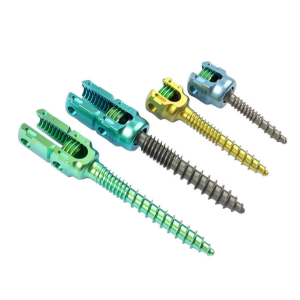
Engineering Biological Safety: The Science and Clinical Reality of Biocompatible Pedicle Screws in Spinal Fixation
In the field of spinal reconstruction, mechanical stability has historically been the primary metric of surgical success. However, as implant materials remain inside the human body for decades, the biological interface between the hardware and host tissue has become just as critical. While traditional hardware successfully stabilizes the spine, a small but significant percentage of patients experience localized tissue irritation, chronic inflammation, or hypersensitivity to trace metals.
The clinical development of the biocompatible pedicle screw represents a crucial evolution in spine surgery. By aligning advanced metallurgy with surface biochemistry, these implants reduce adverse biological reactions while maintaining the rigid mechanical fixation required for a successful spinal fusion.
1. The Cellular Interface: Moving Beyond Basic Inertness
For decades, surgical implants were considered acceptable if they were simply "inert"—meaning they did not cause overt, immediate tissue necrosis. Today, modern orthopedic immunology recognizes that the body actively interacts with every foreign object introduced into it.
When standard hardware undergoes microscopic wear or reacts with surrounding fluids, it can release metal ions. In sensitive individuals, this triggers a macrophage-led inflammatory response, resulting in a localized chronic tissue reaction that can cause unexplained postoperative pain, delayed healing, or premature implant loosening.
Clinical Case Study: Resolving Chronic Postoperative Inflammation
Clinical Scenario: A 45-year-old female underwent a single-level lumbar fusion for degenerative spondylolisthesis using standard stainless steel hardware. While her initial post-operative imaging showed excellent alignment and early bone bridging, she developed persistent, deep-seated muscular back pain and localized tenderness nine months after surgery. Repeated imaging showed no hardware failure or nonunion, but advanced blood panels indicated elevated levels of inflammatory cytokines.
The Problem: The patient was experiencing a low-grade, localized hypersensitivity reaction to trace nickel and chromium elements present in her standard spinal implants. Her body was treating the hardware as a chronic irritant, preventing her from achieving full functional recovery.
Surgical Intervention & Outcome: Because her fusion was fully consolidated, the surgeon opted to remove the old hardware. In revision cases where fusion is incomplete but hypersensitivity is present, transitioning to a biocompatible pedicle screw system made entirely of ultra-pure titanium or coated with specialized bio-ceramic layers is the standard line of defense. Following hardware removal and tissue transition, the patient’s localized inflammatory symptoms subsided within six weeks, demonstrating the profound impact of material selection on patient recovery.
2. Advanced Metallurgy and Surface Technologies
The term "biocompatible" is achieved through strict material selection and advanced surface engineering designed to trick the body into accepting the foreign object as natural bone structure.
1. Ultra-Pure Titanium Alloys ($Ti-6Al-4V\ EL$)
Modern biocompatible screws utilize Extra Low Interstitial (ELI) titanium alloys. These formulations strictly limit trace elements like iron, oxygen, and notably nickel—the leading cause of metal-induced contact dermatitis and deep-tissue hypersensitivity. Titanium naturally forms a microscopic, stable oxide layer ($TiO_2$) upon exposure to oxygen, which acts as a protective shield, preventing corrosion and isolating the metal ions from surrounding biological tissues.
2. Bio-Ceramic Coatings (Hydroxyapatite & Titanium Nitride)
To further isolate the metal and enhance integration, premium biocompatible pedicle screws often leverage specialized coatings:
-
Titanium Nitride (TiN) Coating: This physical vapor deposition (PVD) coating gives screws a gold-like finish. It increases surface hardness, drastically reduces the coefficient of friction, and creates an impenetrable barrier that prevents ion release, making it the premier choice for patients with known multi-metal allergies.
-
Porous Hydroxyapatite (HA) Coating: HA is a naturally occurring mineral form of calcium apatite, which makes up 70% of human bone. Coating the threads of a biocompatible pedicle screw with HA switches the body's reaction from "rejection" to "integration" by directly encouraging osteoblast attachment and true osseointegration over standard fibrous encapsulation.
3. Biomechanical Advantage: Mitigating Stress Shielding
True biocompatibility also extends to mechanical harmony with the human skeleton. When an implant is significantly stiffer than the surrounding bone, it absorbs all the physiological loads—a phenomenon known as stress shielding. Over time, the surrounding bone atrophies from lack of use, leading to bone loss (osteopenia) around the screw and eventual hardware loosening.
The elasticity modulus of a highly biocompatible pedicle screw made of advanced titanium ($\sim 110\text{ GPa}$) is much closer to natural cortical bone ($\sim 15-20\text{ GPa}$) than traditional stainless steel ($\sim 200\text{ GPa}$). This closer match allows for a more natural transfer of weight-bearing forces across the construct, stimulating the patient’s own bone cells to remain dense and strong right up to the thread interface.
4. Authoritative Consensus and Safety Standards
The transition toward highly biocompatible materials in spinal hardware is supported by extensive orthopedic and toxicological research:
-
Reduction in Metallosis and Loosening: According to research published in The Journal of Bone and Joint Surgery (JBJS), trace element hypersensitivity can masquerade as aseptic loosening or low-grade infection. Eliminating nickel and optimizing implant purity drastically lowers the incidence of late-onset implant rejection and periprosthetic osteolysis.
-
Enhanced Fixation in Osteoporotic Bone: The North American Spine Society (NASS) highlights that surface-treated biocompatible screws significantly increase pull-out strength in compromised or osteoporotic bone. By encouraging true osseointegration rather than a fibrous scar tissue reaction around the threads, these screws achieve a more permanent, biologically locked stability.
Summary
The deployment of a biocompatible pedicle screw system ensures that a patient's spinal fusion is built on a foundation of safety. By eliminating toxic trace elements, matching bone elasticity, and leveraging advanced surface coatings, these implants protect patients from chronic inflammatory complications—allowing the body to focus its energy on what truly matters: achieving a solid, pain-free fusion.