
 EN
EN



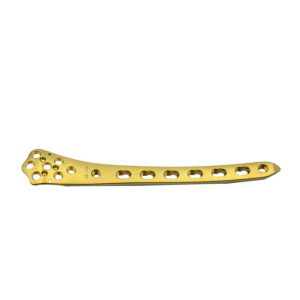
Engineering Stability in Complex Articular Fractures: The Biomechanics and Clinical Execution of Custom Contoured Locking Plates for the Distal Femur
Fractures of the distal femur—specifically AO/OTA Type 33-C complete articular fractures—present some of the most formidable challenges in orthopedic traumatology. The combination of comminuted metaphyseal bone, short distal fragments, osteoporosis, and the intense deforming forces of the surrounding quadriceps and gastrocnemius muscles makes achieving stable internal fixation exceptionally difficult.
While conventional anatomically pre-contoured plates have significantly improved outcomes, they operate on a population average. In cases of severe bone loss, atypical anatomy, or revision arthroplasty, standard hardware often falls short. The clinical adoption of the custom contoured locking plate for distal femur represents a paradigm shift, moving internal fixation from a strategy of "approximation" to one of "patient-specific precision."
The Proprioceptive Shift: Navigating the "Perfect Fit" in High-Energy Trauma
For a trauma surgeon, achieving a perfect anatomical reduction requires a delicate balance between mechanical stability and the preservation of soft-tissue vascularity. Conventional plating often requires intraoperative bending. This not only alters the structural integrity of the metal but can also cause the plate to act as a tether, pulling fragments out of their optimal alignment if the contour does not perfectly match the bone's surface topology.
Clinical Case Study: Revision Fixation of a Comminuted Nonunion
Clinical Scenario: A 48-year-old female sustained a high-energy motor vehicle accident resulting in a highly comminuted, open distal femur fracture. After initial bridging external fixation and subsequent failed standard lateral plating, she presented nine months later with a symptomatic hypertrophic nonunion, a $5^\circ$ varus deformity, and significant hardware failure.
Operational Challenge: The metaphyseal bone stock was severely compromised by previous screw tracks, and the distal articular block was highly osteopenic. A standard pre-contoured plate would not sit flush against the distorted lateral condyle without manual over-bending, risking construct asymmetry and premature fatigue failure of the plate.
Instrument and Implant Deployment: Utilizing high-resolution bilateral CT data, a 3D virtual reconstruction of the femur was generated, allowing engineers and the surgical team to map the exact morphology of the patient's distal femur. A custom contoured locking plate for distal femur was fabricated.
Intraoperatively, the custom plate acted as its own reduction guide. Because the undersurface precisely matched the patient’s unique cortical contours, it snapped into place over the reduced fragments. This eliminated the need for extensive periosteal stripping to "force" a fit, protecting the periosteal blood supply. The predetermined screw trajectories avoided old screw voids while capturing the maximum available bone stock in the osteoporotic condyle.
Advanced Structural Mechanics: Angular Stability and Stress Distribution
The success of a custom contoured locking plate relies on its integration of patient-specific geometry with fixed-angle locking technology.
-
Multi-Planar Screw Trajectories: Standard plates offer fixed screw paths that may drive hardware into intra-articular spaces or areas of critical bone loss when treating atypical anatomy. Custom plates allow engineers to alter screw trajectories during the pre-operative design phase. In the distal articular block, screws can be directed in a convergent or divergent "fan" pattern to maximize subchondral bone purchase, effectively creating a rigid structural scaffold beneath the joint surface.
-
Minimizing Stress Concentration: When a standard plate is forcefully clamped to a bone that it does not perfectly fit, it creates areas of high localized stress concentration once weight-bearing begins.
$$Stress (\sigma) = \frac{Force (F)}{Area (A)}$$By perfectly maximizing the contact surface area ($A$) and ensuring a contour-accurate fit without pre-stressing the metal, the custom plate uniformly distributes the physiological loads across the entire construct. This biomechanical harmony dramatically reduces the risk of isolated plate bending or set-screw backing out under cyclic loading.
Metallurgy and Additive Manufacturing Integrity
A patient-specific implant demands manufacturing processes that maintain the highest standards of fatigue resistance and biocompatibility.
Material Selection Matrix
| Property | Medical-Grade Titanium (Ti-6Al-4V ELI) | Cobalt-Chromium Alloy (Co-Cr-Mo) |
| Modulus of Elasticity | ~110 GPa (Closer to human bone) | ~240 GPa (Highly rigid) |
| Fatigue Strength | Excellent under cyclic physiological loads | Exceptional; highly resistant to wear |
| Clinical Rationale | Reduces stress shielding; encourages micro-motion for secondary bone healing. | Selected for massive segmental defects or tumor reconstructions requiring maximum rigidity. |
Direct Metal Laser Sintering (DMLS)
Custom plates are typically manufactured using additive Direct Metal Laser Sintering (DMLS) or advanced CNC milling of medical-grade titanium blocks. DMLS builds the plate layer-by-layer using a high-powered fiber laser to fuse fine metallic powder. This allows for the creation of variable plate thicknesses—making the plate thicker in areas of expected high stress (such as the metaphyseal-diaphyseal junction) and lower in profile distally to prevent soft-tissue irritation beneath the iliotibial band. Post-manufacturing heat treatment eliminates residual thermal stresses, ensuring the implant meets or exceeds all ASTM international standards for surgical hardware.
Biomechanical Consensus and Safety Frameworks
The clinical transition from standard generic plating to customized internal fixation is heavily supported by modern orthopedic biomechanical data:
-
Varus Collapse Prevention: A study published in The Journal of Orthopaedic Trauma highlights that varus collapse remains the most common mechanical failure mode in distal femur fractures, particularly in elderly populations. Custom-contoured constructs allow for optimized placement of a medial-to-lateral kickstand screw, significantly increasing the construct's resistance to varus axial loads compared to standard off-the-shelf locking plates.
-
Preservation of the Pericortical Microcirculation: Literature from the Association for the Study of Internal Fixation (AO Foundation) emphasizes that traditional plate osteosynthesis often causes localized bone necrosis due to the heavy compression of the plate against the periosteum. Because a custom locking plate fits flush without needing to be compressed tightly against the bone to achieve stability, it preserves the delicate pericortical microcirculation, accelerating the timeline for bony bridging and clinical union.
By matching patient anatomy, optimization of multi-planar screw trajectories, and preserving local soft-tissue biology, the custom contoured locking plate for distal femur represents a reliable, clinically sound advancement for the management of complex, non-standard periarticular trauma.